

In an era defined by rapid technological advancement and complex global challenges, the demand for minds skilled in science, technology, engineering, and mathematics (STEM) has never been more pronounced. From the algorithms that power artificial intelligence to the renewable energy solutions shaping our planet’s future, STEM fields are the bedrock of innovation and progress. Yet, a persistent disparity in representation, particularly among women and underrepresented groups, continues to challenge the full potential of these critical sectors. This is precisely why initiatives that champion early and inclusive engagement are not just commendable, but absolutely essential.
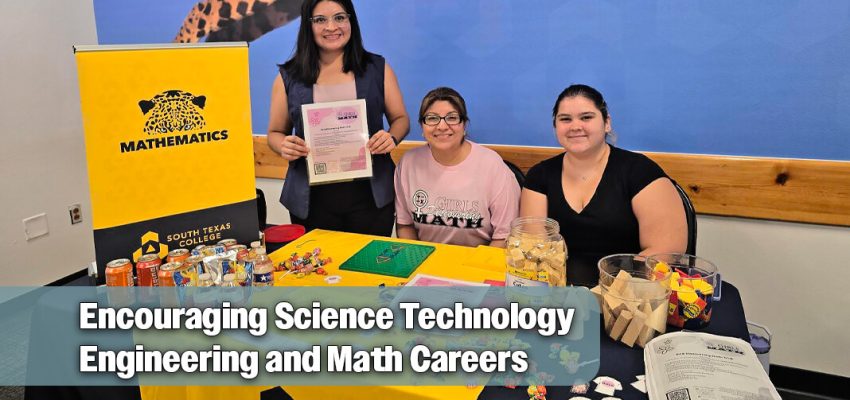
Consider the South Texas College (STC) Girls Discovering Math Club, an inspiring example that, within a mere six months of its inception at the Starr County campus, has already expanded its reach to the Mid-Valley Campus. While the name highlights mathematics, its mission is expansive: to encourage more women, and indeed all students, to delve into STEM fields. As an AI specialist and tech enthusiast, I believe such grassroots efforts are pivotal. They don’t just teach equations or scientific principles; they ignite curiosity, build confidence, and demystify pathways to fulfilling STEM careers, shaping the very future of our technological landscape.
Inspiring STEM Careers: The Power of Early Engagement
The journey into a successful STEM career often begins long before university or professional training. It starts with a spark of interest, a challenge that captivates, or a role model who illuminates the path. For many students, especially girls, this crucial early exposure can be lacking. Societal stereotypes, a scarcity of visible female role models in STEM, and even unconscious biases can subtly steer young minds away from these rewarding disciplines. This is where clubs like STC’s Girls Discovering Math Club make an indelible impact.
By providing an accessible, supportive, and engaging environment, these clubs transform abstract concepts into tangible experiences. They make mathematics, often perceived as daunting, approachable and even exciting. Imagine a young girl, perhaps initially hesitant about her mathematical abilities, finding a newfound passion for problem-solving through collaborative projects or interactive workshops. This hands-on, experiential learning is far more effective than rote memorization. It fosters critical thinking, resilience, and a deeper understanding of how mathematical principles underpin everything from coding to engineering design.
Moreover, these clubs offer a safe space for experimentation and failure – both vital components of scientific inquiry. Students learn that mistakes are not setbacks but opportunities for growth and refinement. This iterative process, central to scientific discovery and technological development, builds a foundation of perseverance. When students are given opportunities to apply theoretical knowledge to real-world scenarios, they not only grasp the concepts more deeply but also begin to envision themselves as future innovators, engineers, scientists, or AI developers. Early engagement also helps in demystifying the various types of STEM careers available, broadening horizons beyond the commonly perceived roles.
Research consistently demonstrates that early intervention and sustained engagement are key to increasing diversity in STEM pipelines. A study by the National Science Foundation, for instance, highlights that students who participate in STEM-related extracurricular activities are significantly more likely to pursue STEM majors in college. The STC initiative, by extending its reach to multiple campuses, amplifies this effect, potentially influencing hundreds of students who might not otherwise have considered a future in science or technology. It’s about planting the seeds of curiosity and nurturing them into thriving interests that can blossom into formidable STEM careers.
Breaking Barriers: Why Diversity in STEM Matters
The call for greater diversity in STEM isn’t merely about social justice; it’s an imperative for innovation and economic competitiveness. Diverse teams, composed of individuals from varied backgrounds, genders, and perspectives, are demonstrably more innovative and effective at problem-solving. They bring a wider range of experiences, insights, and approaches to challenges, leading to more robust solutions and breakthroughs. For example, a 2019 analysis by McKinsey & Company found that companies in the top quartile for gender diversity on executive teams were 25% more likely to have above-average profitability than companies in the fourth quartile.
Despite significant progress, women remain underrepresented in many critical STEM fields. According to the U.S. Census Bureau, women make up nearly half of the U.S. workforce but hold only 27% of STEM jobs. This gap is even wider in specific areas like engineering and computer science. Beyond gender, racial and ethnic minorities are also vastly underrepresented. This lack of diversity means we are missing out on an enormous pool of talent and perspective, limiting our collective capacity for discovery and progress. When half of the population is underrepresented in the fields shaping our future, we are inevitably losing out on crucial insights and innovations.
Initiatives like the Girls Discovering Math Club directly address this disparity by providing mentorship and community. For many young women, seeing other girls excel in mathematics and science, and having access to female mentors who have navigated their own STEM careers, can be incredibly empowering. These role models demonstrate that a career in technology or science is not only achievable but also incredibly rewarding. They help dismantle the pervasive stereotypes that often dissuade girls from pursuing these paths, showing them that intelligence, creativity, and problem-solving skills know no gender.
Moreover, by fostering an inclusive environment, these clubs help students develop a sense of belonging within the STEM community. This sense of belonging is crucial for retention, as feelings of isolation or inadequacy can lead students to abandon their STEM aspirations. When students feel supported and valued, they are more likely to persevere through challenges and ultimately thrive in their chosen STEM careers. The impact extends beyond individual students; it gradually shifts the cultural perception of who belongs in STEM, paving the way for a more equitable and innovative future.
Beyond the Classroom: Cultivating a Future-Ready Workforce
The landscape of STEM careers is constantly evolving, driven by rapid advancements in fields such as artificial intelligence, biotechnology, cybersecurity, and sustainable energy. Preparing students for this dynamic future requires more than just foundational knowledge; it demands adaptability, critical thinking, creativity, and the ability to collaborate across disciplines. Clubs like STC’s Girls Discovering Math Club play a vital role in developing these essential 21st-century skills that extend far beyond the specific curriculum.
The emphasis on problem-solving within these clubs cultivates analytical prowess and innovative thinking. Students are often presented with open-ended challenges that require them to strategize, experiment, and articulate their solutions. These are precisely the skills sought after in modern tech companies and research institutions. Furthermore, the collaborative nature of many club activities hones teamwork and communication skills, which are indispensable in any professional setting, especially in complex project-based STEM careers.
As an AI specialist, I can attest to the accelerating pace of change in technology. The skills acquired today might be refined or even superseded tomorrow. What remains constant, however, is the ability to learn, adapt, and apply foundational principles to novel situations. Programs that encourage a growth mindset and foster a love for continuous learning are therefore invaluable. They equip students not just with specific knowledge, but with the intellectual agility needed to navigate future technological shifts and embrace lifelong learning.
Ultimately, the goal is to cultivate a workforce that is not only skilled but also diverse, resilient, and forward-thinking. Initiatives that bridge the gap between classroom learning and real-world application, that offer mentorship, and that create supportive communities are the linchpins of this effort. They are helping to build a pipeline of talent that is ready to tackle the grand challenges of our time, drive economic growth, and ensure that humanity continues to push the boundaries of what is possible, leading to exciting new STEM careers for generations to come.
The success of the STC Girls Discovering Math Club, expanding its reach in just six months, underscores the immense appetite and need for such programs. It serves as a powerful reminder that investing in early STEM education and fostering an inclusive environment is not just an educational goal, but a societal imperative. By nurturing curiosity, building confidence, and breaking down barriers, we empower a new generation of innovators to envision themselves as architects of the future, capable of shaping the next wave of technological and scientific advancement.
As we look ahead, the complexity of global issues – from climate change to public health crises – will increasingly demand ingenious solutions born from diverse minds in STEM. Supporting and replicating initiatives like the one at South Texas College is therefore crucial. It’s an investment in intellectual capital, in a more equitable society, and ultimately, in a brighter, more innovative future for us all. Let us continue to champion these efforts, ensuring that every student, regardless of background, has the opportunity to explore, excel, and contribute meaningfully to the world of science, technology, engineering, and mathematics.










