
The landscape of global industries is undergoing a profound transformation, driven largely by the relentless pace of technological innovation, particularly in the realm of Artificial Intelligence. As an AI specialist and tech enthusiast, I’ve observed firsthand how this shift is redefining job roles, creating entirely new sectors, and intensifying the demand for a highly skilled workforce. In this dynamic environment, the question is no longer *if* our future workforce needs to be adept in science, technology, engineering, and mathematics (STEM), but *how early* we begin to cultivate these essential skills and interests.
It is within this context that initiatives designed to spark curiosity and provide foundational exposure to critical industries become not just beneficial, but absolutely vital. One such commendable effort is the ‘Adopt A Class’ program in Northern Kentucky. This initiative isn’t just about introducing children to potential jobs; it’s a strategic investment in the region’s future, creating a vital pipeline for upcoming employees in burgeoning fields like advanced manufacturing, information technology, supply chain logistics, and biosciences. By engaging elementary school students, the program acknowledges a fundamental truth: the seeds of innovation and professional interest are best sown in fertile young minds, long before college applications or even high school graduation become a reality. This proactive approach to **early career development** is a model for how communities can ensure their relevance and prosperity in an increasingly tech-centric world.
### Early Career Development: Sowing the Seeds for a Future Workforce
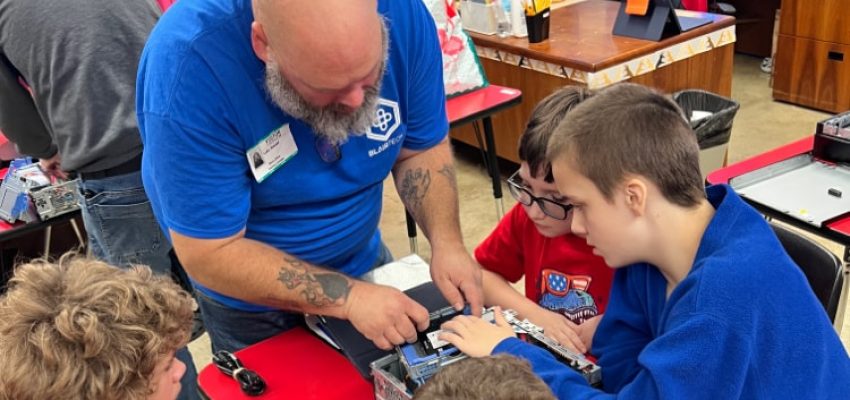
The ‘Adopt A Class’ program serves as a brilliant example of proactive engagement in `early career development`, particularly in regions poised for technological and industrial growth like Northern Kentucky. Its core philosophy recognizes that inspiring the next generation cannot wait until they are choosing a major or even considering vocational training. Instead, it advocates for igniting passion and curiosity at a foundational level – during elementary school – when minds are most impressionable and open to new ideas. The program facilitates direct interaction between elementary school students and professionals from leading Northern Kentucky companies in life sciences and IT. Imagine a nine-year-old child visiting a state-of-the-art manufacturing plant, witnessing robots working in symphony, or exploring a bioscience lab where researchers are developing life-saving treatments. These aren’t abstract concepts from a textbook; they are tangible, real-world experiences that can shape a child’s perception of what’s possible and what they might aspire to become.
Northern Kentucky, a region strategically located and experiencing significant economic development, serves as an ideal incubator for such an initiative. The area is becoming a hub for advanced manufacturing, with companies leveraging automation, data analytics, and AI to optimize production processes. Its growing IT sector fuels digital transformation across various industries, while a robust logistics and supply chain network is vital for regional and national commerce. The biosciences sector, with its focus on medical innovation and research, represents another critical area of growth. Each of these industries is not only growing but is also profoundly influenced by advancements in Artificial Intelligence. For instance, AI is revolutionizing drug discovery in biosciences, predictive maintenance in manufacturing, cybersecurity in IT, and route optimization in supply chain management. By introducing children to these fields early, the ‘Adopt A Class’ program doesn’t just show them existing jobs; it exposes them to the foundations of the industries that will define their adult working lives, implicitly preparing them for a world where AI proficiency will be a core competency.
This kind of proactive `early career development` is vital because it addresses a looming skills gap that many developed nations are facing. Reports from organizations like the World Economic Forum consistently highlight a mismatch between the skills employers need and those available in the workforce, especially in STEM fields. By fostering an interest in these areas from a young age, programs like ‘Adopt A Class’ begin to bridge this gap, ensuring a steady stream of talent for the future. Moreover, these interactions help demystify complex industries, breaking down stereotypes and broadening horizons. For many children, their understanding of a “career” might be limited to what they see in their immediate family or community. Introducing them to diverse roles – from data scientists and software developers to biomanufacturing engineers and logistics analysts – opens up a world of possibilities they might never have considered. It transforms abstract academic subjects like math and science into concrete, exciting applications, giving purpose to their learning and cultivating a problem-solving mindset that is crucial in any technologically advanced field. The program is not merely about job placement; it’s about fostering an understanding of societal contributions and the value of innovation.
### Navigating the AI Frontier: The Imperative for Foundational STEM Exposure
The urgency behind programs promoting foundational STEM exposure, like ‘Adopt A Class’, is further amplified by the accelerating integration of Artificial Intelligence into every facet of our economy and society. As an AI specialist, I’ve witnessed how AI is not just automating tasks but fundamentally reshaping entire industries, demanding new skill sets and problem-solving approaches. The industries targeted by ‘Adopt A Class’ – life sciences, IT, advanced manufacturing, and supply chain – are at the forefront of this AI revolution. In life sciences, AI-driven drug discovery platforms can analyze vast datasets to identify potential compounds much faster than traditional methods, while machine learning algorithms are enhancing diagnostic accuracy in medical imaging. The IT sector is intrinsically linked with AI, as it provides the infrastructure and software necessary for AI development and deployment, from cloud computing to sophisticated algorithms. Advanced manufacturing leverages AI for everything from predictive maintenance on machinery to optimizing production lines for efficiency and defect detection. Even the seemingly traditional supply chain sector is being transformed by AI, with intelligent systems predicting demand, optimizing delivery routes, and managing inventory with unprecedented precision.
Without an early and strong foundation in STEM, particularly with an understanding of computational thinking, future generations risk being left behind in this AI-powered landscape. Programs that facilitate `early career development` expose students not just to specific job titles, but to the underlying principles of these industries. They learn about data, logic, problem-solving, and the iterative nature of scientific discovery and technological innovation. These are precisely the skills that will be crucial for working alongside, designing, and managing AI systems. It’s not about teaching elementary students to code advanced neural networks, but about building the cognitive framework that makes such learning possible and appealing later on. By showing them how science and technology are applied in real-world scenarios, these initiatives inspire a curiosity that translates into academic pursuits and, eventually, professional pathways that are aligned with future workforce demands. For instance, a child fascinated by a robot on a factory floor might later pursue robotics engineering, while one captivated by DNA sequencing might become a computational biologist, roles increasingly reliant on AI.
Moreover, early exposure helps address the significant challenge of diversity and inclusion in STEM fields. Historical biases and lack of role models can deter individuals from underrepresented groups from pursuing careers in science and technology. By bringing diverse professionals into elementary classrooms and exposing all students to a wide array of career possibilities, programs like ‘Adopt A Class’ can dismantle preconceived notions and demonstrate that STEM careers are for everyone. A study by Microsoft found that girls’ interest in STEM often wanes in middle school, highlighting the critical importance of fostering this interest at an even younger age. By creating positive and inspiring interactions with STEM professionals, such programs can sustain that initial spark, encouraging a broader talent pool to consider these vital fields. This not only benefits individual students by opening up rewarding career paths but also strengthens the industries themselves, as diverse teams are consistently shown to be more innovative and effective.
### Building Resilient Communities Through Educational Partnerships
The success of initiatives like ‘Adopt A Class’ underscores the profound impact that strategic partnerships between educational institutions and industries can have on community development and economic resilience. These collaborations move beyond mere philanthropy, evolving into symbiotic relationships where businesses invest in their future workforce, and schools gain invaluable real-world context for their curriculum. For the companies involved, participating in **early career development** programs is not just a civic duty; it’s a savvy talent acquisition strategy. By engaging with elementary students, they are, in essence, planting seeds for their future talent pipeline, ensuring a steady supply of local candidates who are already familiar with their industry, and perhaps even their company culture, by the time they are ready to enter the workforce. This proactive approach significantly reduces future recruitment costs and ensures a more aligned, passionate workforce.
Furthermore, these partnerships help to keep educational curricula relevant and up-to-date with industry demands. As technology evolves at lightning speed, it can be challenging for schools to keep pace. When industry professionals share their insights and experiences, they provide educators with a clearer understanding of the skills and knowledge that will be most critical for students’ success. This feedback loop can inform curriculum design, ensuring that what is taught in the classroom directly correlates with the needs of the job market. It also provides opportunities for teachers to engage in professional development, exposing them to the latest industry trends and technological advancements, which they can then integrate into their teaching methodologies. The benefits extend beyond academics, fostering a sense of community pride and engagement, as local businesses visibly contribute to the well-being and future prospects of the region’s youth. This strengthens the social fabric and creates a more vibrant, economically stable environment.
Ultimately, the vision behind programs that promote `early career development` is far-reaching. It’s about nurturing an entire ecosystem where innovation thrives, and individuals are empowered to reach their full potential. The elementary school years are a critical period for cognitive and social-emotional development. Introducing complex concepts in an accessible, engaging manner during this time can ignite a lifelong passion for learning and discovery. It’s about more than just filling job vacancies; it’s about cultivating a generation of critical thinkers, problem-solvers, and innovators who are prepared not just to adapt to the future, but to actively shape it. As AI continues to redefine industries, the ability to think creatively, collaborate effectively, and adapt to new technologies will be paramount. By fostering these attributes from a young age through hands-on exposure and mentorship, communities like Northern Kentucky are making a powerful statement about their commitment to building a resilient, future-ready workforce, capable of leveraging AI for positive societal impact.
The proactive engagement exemplified by initiatives like ‘Adopt A Class’ in Northern Kentucky serves as a powerful testament to the value of investing in **early career development**. By connecting elementary school students with the cutting-edge worlds of life sciences, IT, advanced manufacturing, and supply chain, these programs are doing far more than just introducing career options. They are cultivating curiosity, fostering critical thinking, and laying the foundational groundwork for a future workforce equipped to navigate and innovate within an increasingly complex, AI-driven global economy.
As we look ahead, the success of such community-driven partnerships will be paramount. They not only address immediate talent pipeline needs but also contribute to the long-term economic vitality and social well-being of a region. By igniting a passion for STEM at a young age, we empower the next generation to become the pioneers and problem-solvers who will harness the power of AI and other emerging technologies to create a better future for us all. It is a strategic, human-centric approach to preparing for tomorrow, today.