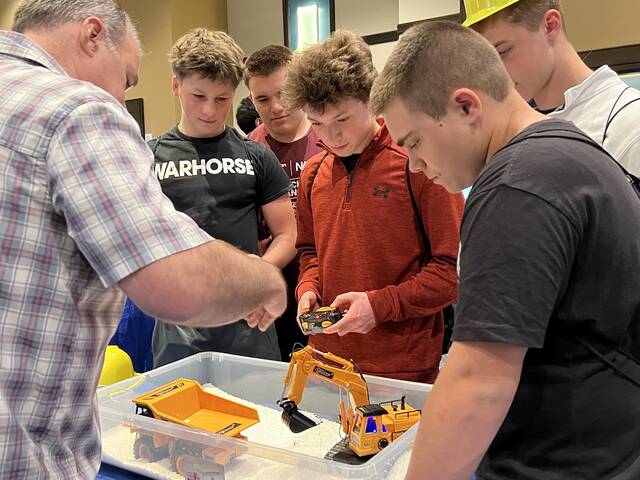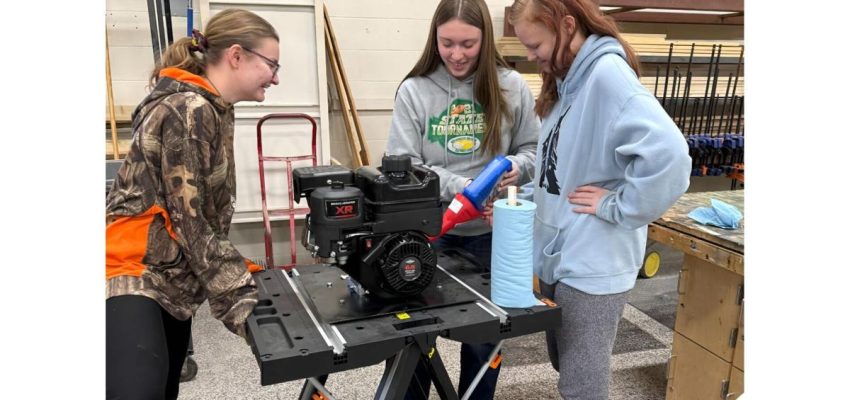

In an era defined by rapid technological advancement and a constantly shifting job market, the traditional educational paradigm is under increasing scrutiny. As an AI specialist and tech enthusiast, I often ponder how we best prepare the next generation for a future where artificial intelligence and automation are not just tools, but fundamental collaborators in virtually every industry. It’s a future that demands not just theoretical knowledge, but practical skills, adaptability, and critical thinking. This is precisely where initiatives like **Career and Technical Education** (CTE) step onto the stage, offering a pragmatic and powerful pathway for students to not only navigate, but thrive in the evolving professional landscape.
For too long, the narrative around education has often dichotomized academic and vocational paths, implying a lesser value for those pursuing hands-on skills. This perspective, however, is not only outdated but actively detrimental to students’ potential and the needs of a modern economy. CTE is revolutionizing this perception, providing high school students with an incredible opportunity: to earn college credit, gain industry-recognized certifications, and develop real-world, career-ready skills long before they don their graduation caps. It’s a strategic investment in individual futures and, by extension, in the collective economic resilience and innovation of our communities. It offers a tangible bridge between the theoretical lessons of the classroom and the practical demands of a professional environment, ensuring that students emerge not just with diplomas, but with demonstrable capabilities.
### Career and Technical Education: Bridging the Gap Between Classroom and Career
At its core, **Career and Technical Education** is a comprehensive educational approach that combines rigorous academic content with technical and occupational skills relevant to specific career pathways. It’s designed to prepare students for a wide range of careers, from high-tech manufacturing and healthcare to information technology, hospitality, and advanced cybersecurity. Unlike older vocational programs that might have focused on a narrower set of trades, modern CTE is dynamic and responsive to current and future workforce demands. It’s not about tracking students away from college; it’s about providing them with multiple options and a head start, whether they choose to enter the workforce directly after high school, pursue further education at a two or four-year institution, or even launch their own entrepreneurial ventures.
One of the most compelling aspects of CTE is its ability to offer dual enrollment or early college credit opportunities. Imagine a high school student, still in their teenage years, completing courses that not only count towards their high school diploma but also simultaneously earn them credits at a local community college or university. This isn’t a hypothetical scenario; it’s a daily reality for thousands of students enrolled in CTE programs across the nation. This early accumulation of college credit can significantly reduce the overall cost and time required to complete a post-secondary degree, easing the financial burden on families and accelerating students’ entry into their chosen professions. Data from organizations like Advance CTE consistently show that students who participate in **Career and Technical Education** programs are more likely to graduate from high school, enroll in postsecondary education, and achieve higher earnings post-graduation.
Beyond college credits, CTE programs also often culminate in industry-recognized certifications. These certifications are invaluable credentials that signal to employers that an individual possesses a specific set of skills and knowledge, often validated by industry leaders. For instance, a student completing a CTE program in IT might earn certifications in CompTIA A+, Cisco Certified Entry Networking Technician (CCENT), or even more advanced credentials depending on the program’s scope. These aren’t mere academic distinctions; they are practical badges of competence that can open doors to immediate employment opportunities, often with competitive salaries, directly out of high school. In a rapidly evolving job market, having these tangible, verifiable skills becomes an unparalleled asset.
### Beyond the Textbooks: The Tangible Advantages of CTE in a Modern Economy
The benefits of robust **Career and Technical Education** extend far beyond the individual student. From a broader economic perspective, CTE plays a critical role in addressing persistent skill gaps that many industries face. As automation and AI redefine workflows, the demand for highly skilled technicians, operators, and creative problem-solvers who can work alongside these technologies is growing. CTE programs are meticulously designed, often in collaboration with local businesses and industry leaders, to ensure that the curriculum aligns with current and projected workforce needs. This synergistic relationship means that schools are producing graduates with precisely the skills that employers are actively seeking, fostering a stronger local economy and reducing unemployment.
Consider the manufacturing sector, which has undergone a profound transformation, moving from repetitive manual labor to advanced robotics, additive manufacturing (3D printing), and sophisticated data analytics. Modern CTE programs in manufacturing prepare students for careers as robotics technicians, CAD designers, quality control specialists, and mechatronics engineers—roles that require a blend of technical expertise, critical thinking, and problem-solving abilities. Similarly, in healthcare, CTE pathways prepare future nurses, medical assistants, dental hygienists, and lab technicians, equipping them with both the medical knowledge and the hands-on patient care skills essential for these vital professions. These are not merely jobs; they are careers that offer stability, growth, and the profound satisfaction of contributing to society.
Moreover, CTE fosters essential 21st-century skills that are universally applicable, regardless of career path. Collaboration, communication, critical thinking, creativity, and adaptability—often referred to as “soft skills” or “human skills”—are inherently woven into the fabric of CTE instruction. Project-based learning, teamwork on simulated real-world scenarios, and direct engagement with industry professionals hone these capabilities in ways traditional classroom settings sometimes struggle to emulate. These are the very skills that AI excels at complementing rather than replacing, making CTE graduates uniquely positioned to thrive in an AI-augmented future. The ability to innovate, troubleshoot complex systems, and communicate effectively with both human colleagues and intelligent machines will be paramount.
### Preparing for Tomorrow: CTE in an Evolving Digital Landscape
As someone deeply immersed in the world of artificial intelligence, I see an undeniable connection between the principles of **Career and Technical Education** and the requirements of an AI-driven future. While AI will automate many routine and predictable tasks, it will simultaneously create a demand for new roles that require human ingenuity, complex problem-solving, ethical reasoning, and interdisciplinary collaboration. CTE is uniquely positioned to cultivate these competencies.
For instance, as AI becomes more prevalent in data analysis and cybersecurity, there will be a growing need for professionals who can implement, manage, and secure these intelligent systems. CTE programs in IT and cybersecurity are already training students in areas like network administration, ethical hacking, data privacy, and cloud computing—skills that will be critical for maintaining the infrastructure that supports AI. Similarly, in fields like advanced manufacturing or renewable energy, where smart systems and IoT (Internet of Things) devices are integrating with physical processes, CTE graduates will be the ones installing, maintaining, and troubleshooting these intricate ecosystems. They will be the bridge between cutting-edge technology and its practical application in the real world.
Furthermore, CTE instills an entrepreneurial mindset. By exposing students to real-world business challenges and encouraging them to develop solutions, it fosters innovation and a readiness to adapt. In a future where career paths may be less linear and self-employment or gig economy work becomes more common, the ability to identify opportunities, develop marketable skills, and even create one’s own role will be invaluable. This proactive approach to career development is a hallmark of strong CTE programs, preparing students not just for existing jobs, but for jobs that haven’t even been invented yet, a future often shaped by AI’s continuous evolution.
In conclusion, **Career and Technical Education** is far more than just an alternative path; it is a fundamental pillar of modern education, providing students with the practical skills, academic foundation, and forward-looking perspective needed to succeed in an increasingly complex and technologically advanced world. It champions experiential learning, real-world application, and direct pathways to professional growth, effectively bridging the chasm between academic theory and practical vocational demands. By fostering critical thinking, adaptability, and hands-on expertise, CTE empowers individuals to make informed choices about their futures, whether that leads to higher education, immediate employment, or entrepreneurship.
As we navigate the exciting yet challenging frontiers presented by artificial intelligence and other emerging technologies, the value of CTE will only continue to grow. It’s an investment not just in individual careers, but in the collective capacity of our workforce to innovate, adapt, and drive progress. Supporting and expanding **Career and Technical Education** programs is not merely an educational policy choice; it is a strategic imperative for building resilient communities and preparing a generation of professionals who are not just spectators, but active architects of the future.