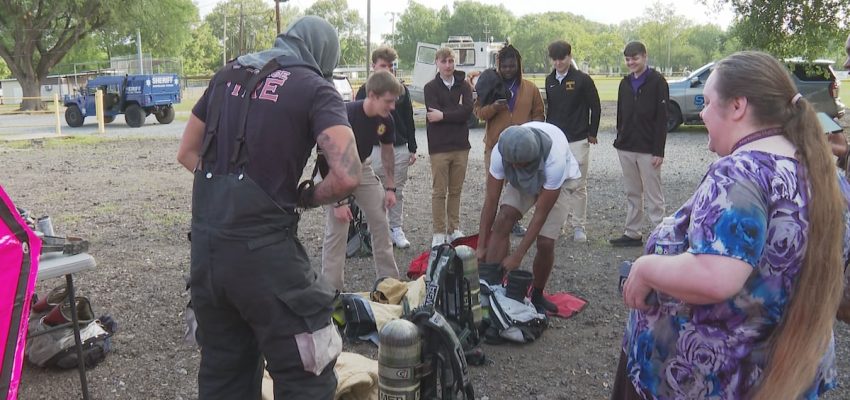

The selfless dedication of first responders forms the bedrock of community safety. From paramedics racing against time to firefighters battling blazes and law enforcement maintaining order, these professionals are our unwavering guardians. Events like the recent one in Avoyelles Parish, where students had the invaluable opportunity to engage with first responders and gain hands-on insight into their daily work, are crucial. They not only inspire the next generation but also highlight the fundamental human element at the heart of public safety. As an AI specialist, I find immense inspiration in these efforts, recognizing that while the core mission remains unchanged, the tools and technologies available to these heroes are evolving at an unprecedented pace. We are on the cusp of a new era where artificial intelligence isn’t just a futuristic concept but a vital partner in safeguarding our communities.
The traditional image of a first responder often evokes scenes of intense physical and mental strain, relying on honed skills, quick thinking, and profound empathy. These qualities remain indispensable. However, the complexity of modern emergencies, the sheer volume of data, and the need for rapid, informed decisions are pushing the boundaries of human capacity. This is where AI steps in, not to replace the human element, but to augment it, making our guardians more effective, efficient, and safer than ever before. This article explores the transformative potential of AI in public safety, from revolutionizing training methodologies to optimizing field operations, and how it’s shaping the future of these critical careers.
AI in Public Safety: Revolutionizing First Responder Training and Operations
While hands-on demonstrations, such as those witnessed by students in Avoyelles Parish, provide an excellent foundational understanding of public safety careers, the integration of advanced technologies, particularly artificial intelligence, is poised to elevate training and operational capabilities to new heights. Imagine a scenario where aspiring paramedics can practice intricate procedures on incredibly realistic virtual patients, whose vital signs and reactions are dynamically controlled by AI algorithms, simulating a wide array of medical emergencies with unparalleled fidelity. This goes far beyond traditional mannequins, offering nuanced feedback and adaptive challenges.
Virtual Reality (VR) and Augmented Reality (AR) platforms, powered by sophisticated AI, are already making significant strides in this domain. Firefighters can train in virtual burning buildings, navigating smoke-filled corridors, identifying structural weaknesses, and practicing hose deployment, all without putting themselves or others at risk. Police officers can engage in high-stress scenario training, confronting AI-driven avatars that react authentically to verbal commands and tactical maneuvers, offering a safe space to refine de-escalation techniques and critical decision-making under pressure. This form of immersive learning not only accelerates skill acquisition but also builds crucial muscle memory and psychological resilience. The global market for AI in public safety and security is projected to grow substantially, with reports indicating it could exceed $60 billion by 2029, a testament to the increasing recognition of its value.
Beyond training, the impact of AI in public safety extends profoundly into real-world operations. One of the most significant applications is in predictive analytics. AI models can analyze vast datasets—including historical crime statistics, weather patterns, social media trends, and even public transport schedules—to identify potential hotspots for criminal activity or predict surges in emergency calls. This allows law enforcement and emergency services to optimize resource allocation, deploying personnel and equipment proactively to areas where they are most likely to be needed, rather than reactively. This proactive approach can significantly reduce response times and potentially prevent incidents before they escalate.
Drones and robotics, often seen as futuristic concepts, are now becoming indispensable tools, with AI serving as their intelligent core. Drones equipped with AI-powered computer vision can quickly survey disaster zones, locate missing persons in vast terrains, or monitor large crowds during public events, transmitting real-time intelligence to ground teams. In hazardous material incidents or active shooter situations, robots can be deployed to assess threats, defuse explosives, or even deliver vital supplies, safeguarding human lives. These intelligent systems allow first responders to gather critical information and make safer, more informed decisions from a distance, extending their reach and reducing their exposure to danger.
Communication is another area where AI offers revolutionary improvements. AI-powered transcription and translation services can break down language barriers during emergencies, ensuring clear communication with non-English speakers or those with hearing impairments. Intelligent dispatch systems can analyze incoming emergency calls, rapidly prioritize them, and provide real-time instructions to callers while simultaneously dispatching the most appropriate resources. This optimization of the initial response phase can shave critical minutes off response times, which can be the difference between life and death.
The Evolving Role of First Responders in an AI-Augmented World
It is crucial to emphasize that the integration of artificial intelligence is not about replacing first responders but empowering them. AI systems are tools, sophisticated as they may be, designed to enhance human capabilities, not to diminish the need for human judgment, empathy, and courage. The role of a first responder in an AI-augmented world will increasingly shift towards collaboration with intelligent systems. This means leveraging AI for data analysis, threat assessment, and predictive insights, while focusing human efforts on complex problem-solving, direct community engagement, and critical decision-making that requires nuanced understanding and ethical consideration.
Consider a police officer using an AI system to analyze surveillance footage and identify suspects more rapidly, freeing them to focus on community policing and direct investigations. Or a firefighter using an AR overlay on their helmet that highlights structural weaknesses in a building, allowing them to navigate more safely and effectively. Paramedics might receive real-time AI-driven diagnostics from wearable sensors on a patient, guiding their immediate care decisions while en route to a hospital. In each instance, AI provides actionable intelligence and support, enabling the human responder to act with greater precision and confidence.
This evolving landscape necessitates a corresponding evolution in the skills required for future first responders. While traditional skills remain vital, new competencies will include data literacy, technological proficiency, and a deep understanding of how to ethically interact with and utilize AI systems. Training programs will need to incorporate modules on AI principles, machine learning basics, and the practical application of AI tools in specific public safety contexts. The ability to critically evaluate AI-generated insights, understand the potential for algorithmic bias, and maintain data privacy will become as important as physical fitness and tactical expertise. The emphasis will be on developing hybrid professionals who seamlessly blend human intuition with technological acumen.
Forging the Future: Nurturing the Next Generation of Public Safety Professionals with AI Insight
The enthusiasm shown by students at the Avoyelles Parish event underscores a critical opportunity: to inspire and prepare the next generation for careers that will be fundamentally shaped by technology. For these budding professionals, understanding the role of AI in public safety will not be an optional extra but a core competency. Early exposure to AI concepts, robotics, and data science can spark interest and lay the groundwork for future specialization. This means fostering STEM education with a focus on real-world applications in public service.
Educational institutions, in collaboration with public safety agencies and technology companies, must develop curricula that introduce students to the fundamentals of AI, machine learning, and automation from an early age. Imagine high school programs where students design simple AI algorithms to optimize emergency routes or build and program drones for simulated search and rescue missions. These hands-on experiences, mirroring the practical demonstrations in Avoyelles Parish, but infused with technological components, would make the abstract concepts of AI tangible and relevant.
Furthermore, internships and mentorship programs that pair students with current first responders who are actively integrating AI into their operations can provide invaluable real-world insights. This bridges the gap between theoretical knowledge and practical application, allowing students to see firsthand how AI tools are used to save lives and enhance safety. Such initiatives would not only demystify AI but also highlight the exciting and impactful career paths available at the intersection of public service and cutting-edge technology.
The goal is to cultivate a generation of public safety professionals who are not only courageous and compassionate but also technologically astute. They will be the innovators who further integrate AI, the critical thinkers who ensure its ethical deployment, and the leaders who champion its potential to create safer, more resilient communities. The journey begins with education and inspiration, ensuring that the foundational understanding of public service, as showcased in Avoyelles Parish, is continually enriched by the limitless possibilities of artificial intelligence.
The synergy between human valor and artificial intelligence is not a distant dream; it is an emerging reality that promises to redefine the landscape of public safety. From intelligent training simulations that prepare first responders for any contingency to predictive analytics that preemptively avert crises, and advanced robotics that extend our reach into danger zones, the potential of AI in public safety is immense and transformative. It empowers our guardians with unprecedented tools, enhances their capabilities, and ultimately makes our communities safer and more secure.
As we look to the future, it is imperative that we continue to invest in both human capital and technological innovation. The human element—courage, compassion, and critical thinking—will always remain the cornerstone of public safety. However, by embracing and intelligently integrating AI, we can ensure that the next generation of first responders is equipped to face the challenges of an increasingly complex world, blending traditional skills with cutting-edge technology to protect and serve. The journey to a truly AI-augmented public safety ecosystem is an ongoing one, but its promise of a more efficient, safer, and responsive future is undeniably compelling.