
In an era increasingly defined by rapid technological advancement and the evolving demands of the global economy, the conversation often gravitates towards digital literacy, coding, and abstract problem-solving. While these skills are undeniably critical, it is equally important, perhaps even more so, to acknowledge and nurture the foundational pillars of any thriving society: the skilled trades. From the intricate networks of plumbing that bring water to our homes to the structural integrity ensured by expert welders, these professions form the bedrock of our modern world. In Northwest Arkansas (NWA), a region experiencing significant growth and transformation, a remarkable initiative is actively bridging the gap between education and industry, preparing the next generation of professionals for a future where practical expertise is paramount. This is the story of programs like Build My Future NWA, a testament to the enduring value of hands-on learning and strategic investment in human potential.
The challenge is universal: industries across the board are grappling with a growing skills gap, a chasm between available jobs and adequately trained workers. The construction sector, manufacturing, and infrastructure development, in particular, face critical shortages that threaten to stifle progress and economic stability. Build My Future NWA steps into this void, offering local students an immersive experience that goes beyond textbooks and classroom theory. It’s an opportunity for young minds to connect directly with the tools, techniques, and seasoned professionals who are shaping their communities, igniting a passion for careers that are both financially rewarding and deeply impactful. This proactive approach to skill-building is not just about filling immediate job vacancies; it’s about cultivating a resilient, adaptable, and highly capable talent pool ready to navigate the complexities of tomorrow’s challenges.
### Workforce Development: Nurturing Northwest Arkansas’s Talent Pipeline
Northwest Arkansas is more than just a scenic landscape; it’s a dynamic economic hub, home to global corporate giants, a burgeoning entrepreneurial scene, and a rapidly expanding population. This growth, while indicative of prosperity, places immense pressure on the region’s infrastructure and services, amplifying the demand for skilled labor. From residential construction to commercial complexes, from maintaining essential utilities to operating heavy machinery on large-scale projects, the need for proficient tradespeople is undeniable. Initiatives like Build My Future NWA are explicitly designed to address this critical need, serving as a vital conduit in the regional workforce development strategy.
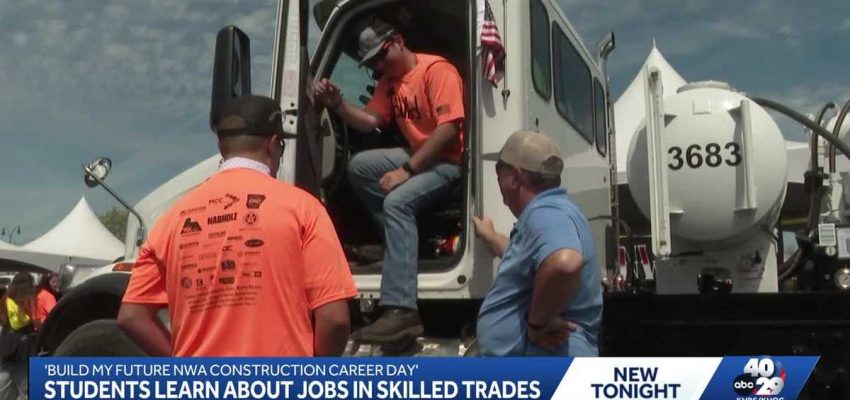
At the core of Build My Future NWA’s success is its commitment to experiential learning. Imagine a high school student, perhaps unsure of their post-graduation path, stepping onto a simulated job site. They’re not just observing; they’re actively engaged. They might try their hand at welding, feeling the heat and precision required to join metal, understanding the principles of structural integrity. Another student could be learning the nuances of plumbing, from pipe fitting to understanding complex water systems, gaining an appreciation for the meticulous planning involved in ensuring clean, accessible water. Others might explore the exhilarating world of heavy equipment operation, getting a feel for the controls of excavators or forklifts under expert supervision, grasping the scale and power of these machines that literally move mountains and shape landscapes. These aren’t mere demonstrations; they are authentic, hands-on encounters designed to demystify trades and showcase them as viable, exciting career options.
The impact extends far beyond the immediate thrill of operating machinery or perfecting a weld. These experiences provide tangible insights into potential career paths, helping students make informed decisions about their future education and training. It connects classroom knowledge to real-world applications, making subjects like mathematics and physics relevant in a way abstract theories often fail to. More importantly, it fosters a sense of accomplishment and self-efficacy. When a student successfully completes a task, even a small one, under the guidance of a professional, it builds confidence and demonstrates their innate capability. This early exposure helps dismantle outdated perceptions that skilled trades are somehow less prestigious than four-year college degrees. On the contrary, these professions offer excellent earning potential, job security, and opportunities for entrepreneurship and leadership, often with significantly less student debt.
The organizers of Build My Future NWA recognize that preparing the next generation isn’t just about technical skills; it’s about cultivating a strong work ethic, problem-solving abilities, and an understanding of safety protocols. These are transferable skills that benefit individuals regardless of their chosen career trajectory. By bringing together educators, industry leaders, and students, the program creates a powerful ecosystem for talent cultivation, directly feeding the regional demand for skilled labor and ensuring that Northwest Arkansas continues its trajectory of economic prosperity. This forward-thinking approach to preparing the local talent pool is a cornerstone of sustainable economic growth and a vibrant community.
### The Evolving Landscape of Skilled Trades: Beyond the Blueprint
The perception of skilled trades as static, manual professions is rapidly becoming an anachronism. Just as every sector is being reshaped by technological innovation, the trades are evolving at an unprecedented pace. The modern welder, for instance, might be programming robotic welding arms or utilizing augmented reality (AR) to visualize complex joints before fabrication. Plumbers increasingly rely on sophisticated diagnostic tools, leak detection technologies, and smart home integration systems. Heavy equipment operators leverage GPS-guided machinery, telematics for predictive maintenance, and advanced safety systems that incorporate AI-driven sensors. The tools of the trade are no longer just wrenches and hammers; they now include tablets, diagnostic software, and advanced robotics.
This fusion of traditional craftsmanship with cutting-edge technology underscores a vital truth: success in the trades of tomorrow demands more than just manual dexterity. It requires a blend of critical thinking, adaptability, and continuous learning. Professionals in these fields must be lifelong learners, constantly updating their skills to integrate new technologies and processes. For an AI specialist and tech enthusiast like myself, this intersection is particularly fascinating. It highlights that human ingenuity, paired with advanced tools, remains irreplaceable. While AI can optimize designs or automate repetitive tasks, the human element of problem-solving, creative adaptation to unforeseen challenges, and the nuanced understanding of complex systems, especially in dynamic environments, is paramount. This dynamic nature of skilled trades presents a compelling argument for students considering these paths: they are entering fields that are not only stable but also intellectually stimulating and constantly innovating.
Moreover, the career prospects in skilled trades are robust. The U.S. Bureau of Labor Statistics projects consistent growth in many trade occupations over the next decade, with median annual wages often exceeding those of some bachelor’s degree holders, particularly when factoring in the cost of education. Beyond the financial incentives, these careers offer immense satisfaction. There’s a tangible sense of accomplishment that comes from building something, fixing something, or contributing directly to the physical infrastructure of a community. From custom fabrication to large-scale construction, these professionals are quite literally building the future, piece by painstaking piece. This emphasis on tangible outcomes and direct impact is a powerful draw for many young people seeking a meaningful career.
### Investing in Tomorrow: A Regional Imperative for Sustainable Growth
The success of programs like Build My Future NWA is not merely anecdotal; it represents a strategic investment in the future of Northwest Arkansas. By proactively addressing the skills gap and cultivating a local talent pipeline, the region is laying the groundwork for sustained economic growth and community resilience. When local students are trained in essential trades, they are more likely to find fulfilling employment within their community, reducing outward migration of talent and strengthening the local economy. This creates a virtuous cycle: businesses have access to skilled labor, which encourages further investment, leading to more job opportunities and an even more robust local economy.
Such initiatives are also powerful examples of effective public-private partnerships. They demonstrate how collaboration between educational institutions, local businesses, community organizations, and government entities can yield significant benefits for all stakeholders. Schools gain valuable industry insight, ensuring their curricula remain relevant; businesses secure a reliable source of future employees; and the community benefits from a strong, skilled workforce development that can support its evolving needs. This integrated approach ensures that the investment in vocational education and technical training is well-placed and yields maximum impact.
Beyond economic benefits, these programs contribute significantly to social equity. They provide accessible pathways to successful careers for students who may not thrive in traditional academic environments or who seek alternatives to the often-burdensome costs of a four-year university degree. By offering practical, hands-on training, Build My Future NWA democratizes access to high-demand professions, empowering a diverse range of students to achieve financial independence and contribute meaningfully to society. This is particularly important for fostering a diverse and inclusive **workforce development** landscape, ensuring opportunities are available to all, regardless of their background or initial academic inclinations. It’s an investment not just in trades, but in people, recognizing their inherent potential and guiding them towards fulfilling and productive futures.
### Conclusion
The journey from student to skilled professional is one of discovery, dedication, and practical application. In Northwest Arkansas, programs like Build My Future NWA are illuminating this path for countless young individuals, offering them invaluable hands-on experience in vital trades such as welding, plumbing, and heavy equipment operation. This proactive engagement is not just about filling immediate job vacancies; it is a visionary commitment to long-term **workforce development**, ensuring the region possesses the human capital necessary to sustain its remarkable growth and tackle the challenges of tomorrow.
As we look ahead, the blend of traditional craftsmanship with technological innovation will continue to define the skilled trades. The success of any economy hinges on its ability to adapt and to empower its people with relevant skills. By investing in practical education and fostering strong partnerships between industry and learning institutions, Northwest Arkansas is not only preparing a new generation of workers but is also building a more resilient, prosperous, and adaptable community for years to come. The future is built, quite literally, by the hands and minds we equip today, proving that the value of a skilled trade is as timeless as the structures they create.