
The rhythmic hum of machinery, the intricate dance of robotics, and the silent revolution of data analytics – these are the hallmarks of modern industry. Yet, for many, manufacturing remains an abstract concept, rooted in outdated perceptions of assembly lines and heavy labor. This is precisely why initiatives like Manufacturing Day, and the proactive engagement from institutions such as the Institute for Advanced Manufacturing (IAM) in Plattsburgh, are not just valuable but absolutely critical. By opening its doors to students, IAM created an immersive experience, inviting young minds to truly explore the dynamic world of STEM studies and the burgeoning career opportunities within contemporary manufacturing. It’s an essential step in bridging the gap between perception and reality, revealing an industry transformed by innovation, technology, and boundless potential.
In an era dominated by rapid technological evolution, the manufacturing sector is undergoing a profound transformation. What was once characterized by manual processes and repetitive tasks is now a vibrant ecosystem of automation, artificial intelligence, and sophisticated digital control. This paradigm shift, often referred to as Industry 4.0, demands a new breed of professionals – individuals equipped not just with technical proficiency but also with critical thinking, problem-solving skills, and a deep understanding of integrated systems. Events like Manufacturing Day serve as crucial touchpoints, offering a tangible glimpse into this exciting future and demonstrating how manufacturing is no longer just about making things, but about intelligently designing, optimizing, and innovating the very process of creation.
### Advanced Manufacturing: Paving the Way for Tomorrow’s Industry
The term **Advanced Manufacturing** encapsulates a range of innovative technologies and processes that enhance productivity, competitiveness, and sustainability. It’s not merely an upgrade; it’s a complete reimagining of how goods are produced, utilizing cutting-edge tools and methodologies that were once the stuff of science fiction. At its core, advanced manufacturing integrates technologies like robotics, artificial intelligence (AI), machine learning (ML), the Internet of Things (IoT), big data analytics, additive manufacturing (3D printing), and augmented reality (AR) into production processes. This fusion creates highly efficient, flexible, and responsive manufacturing systems capable of producing customized products at scale, with unprecedented precision and quality.
Consider the impact of AI in this context. AI algorithms can analyze vast datasets from production lines to predict equipment failures before they occur, optimizing maintenance schedules and dramatically reducing downtime. This concept, known as predictive maintenance, is just one example of how AI enhances operational efficiency and cost-effectiveness. Furthermore, AI-powered vision systems can inspect products with superhuman accuracy, identifying defects that human eyes might miss, thereby ensuring consistent quality control. Robotics, once confined to repetitive tasks, are now becoming collaborative, working alongside human operators in dynamic environments, augmenting human capabilities rather than replacing them entirely. These collaborative robots, or ‘cobots,’ learn from human interaction, adapt to new tasks, and handle complex assembly operations, making factory floors safer and more productive.
Moreover, **Advanced Manufacturing** is deeply intertwined with sustainability. By optimizing material usage, reducing waste through precision manufacturing, and enabling more localized production through technologies like 3D printing, the environmental footprint of industrial processes is significantly lessened. This focus on eco-friendly practices resonates with a new generation of workers and consumers who prioritize environmental responsibility. For students exploring career paths, understanding these multifaceted aspects of advanced manufacturing—from technological innovation to environmental stewardship—is vital. It paints a picture of an industry that is not only technologically progressive but also socially and environmentally conscious, offering purpose-driven careers that go beyond mere fabrication.
### Manufacturing Day: Bridging Education and Industry Through Hands-on Experiences
Manufacturing Day, typically observed nationwide in October, is more than just an open house; it’s a strategic initiative designed to address common misconceptions about the manufacturing sector and to inspire the next generation of innovators. For decades, manufacturing was often perceived as a realm of repetitive, manual labor in dark, dirty factories. However, the reality of **Advanced Manufacturing** today is vastly different, characterized by bright, clean, technologically sophisticated environments where highly skilled professionals collaborate with intelligent machines. The primary goal of Manufacturing Day is to showcase this evolution, highlight the diverse, high-tech career opportunities available, and demonstrate manufacturing’s vital role in local and national economies.
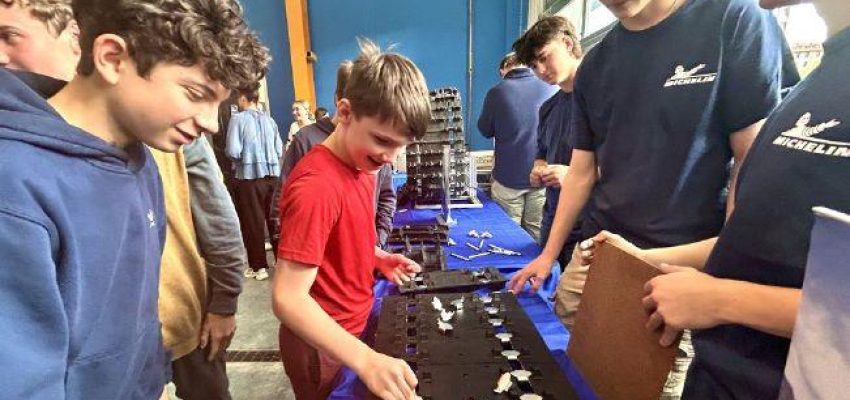
Institutions like IAM play a crucial role in bringing this vision to life. By hosting students, they provide a tangible, immersive experience that textbooks alone cannot offer. Imagine a high school student, perhaps undecided about their future, walking into a facility like IAM. Instead of abstract lectures, they might witness a 3D printer meticulously building a complex prototype layer by layer, or observe a robotic arm performing intricate assembly tasks with incredible precision. They could participate in a simulated CAD/CAM design session, turning their ideas into virtual models, or even try their hand at programming a simple automated system. These hands-on activities are transformative. They demystify complex technologies, spark curiosity, and allow students to envision themselves in these roles.
Beyond the technological marvels, Manufacturing Day also introduces students to the human element. They meet engineers, technicians, data scientists, and designers who are passionate about their work. These interactions provide invaluable mentorship and insight, offering real-world perspectives on career paths, educational requirements, and the exciting challenges and rewards of working in modern manufacturing. Furthermore, such events often feature career panels and discussions, where industry leaders and educators elaborate on the vast array of opportunities, from industrial engineering and robotics programming to supply chain management and quality assurance. This direct engagement helps students connect their academic pursuits in STEM (Science, Technology, Engineering, and Mathematics) to practical, impactful careers, making the learning journey more meaningful and goal-oriented.
### The Institute for Advanced Manufacturing (IAM): Cultivating Tomorrow’s Innovators
The Institute for **Advanced Manufacturing** (IAM) in Plattsburgh exemplifies the kind of forward-thinking institution essential for nurturing the talent pipeline for the future. While the specific details of IAM’s programs are best explored directly, institutions of this caliber typically serve as vital hubs for specialized education and workforce development, collaborating closely with local industries to ensure their curricula meet real-world demands. Such institutes are often equipped with state-of-the-art laboratories and workshops, providing students with access to the same advanced machinery and software used in leading industrial facilities. This hands-on training is paramount, allowing students to gain practical experience with CNC machines, robotics platforms, automation systems, and advanced metrology tools.
The curriculum at an institute like IAM would likely span a wide range of critical disciplines. Students might delve into mechatronics, a multidisciplinary field combining mechanical engineering, electronics, computer engineering, and control engineering, which is fundamental to designing and maintaining automated systems. They could study industrial design and rapid prototyping, learning how to take an idea from concept to a physical product using CAD software and 3D printers. Data analytics for manufacturing is another increasingly important area, teaching students how to collect, analyze, and interpret production data to optimize processes, improve quality, and reduce costs. Cybersecurity in industrial control systems, a burgeoning field, ensures the integrity and safety of interconnected factory environments against digital threats.
IAM’s commitment to providing an environment where students can explore STEM studies and careers firsthand is a testament to its understanding of the evolving educational landscape. It recognizes that theoretical knowledge must be complemented by practical application and direct industry exposure. By fostering a learning environment that mirrors a modern factory floor, IAM empowers students to develop the competencies required for roles that didn’t even exist a decade ago. It prepares them not just for current job openings but also for lifelong learning and adaptation in an industry that is in a constant state of flux. This proactive approach ensures that the region’s workforce remains competitive and that local industries have access to a pool of highly skilled professionals ready to innovate and lead.
The future of manufacturing is not a distant concept; it is being built today, brick by technological brick. From the smallest sensor providing real-time data to the most complex AI algorithm orchestrating an entire production line, **Advanced Manufacturing** is creating a future where efficiency, innovation, and sustainability converge. Events like Manufacturing Day at IAM are invaluable in demystifying this complex world, making it accessible and exciting for young individuals. They represent a critical investment in human capital, inspiring the next generation to embrace STEM fields and understand that a career in manufacturing today is a career at the cutting edge of technological advancement and global impact.
In conclusion, the journey from traditional industry to the era of intelligent factories is ongoing, and it necessitates a continuous effort to educate and inspire. The Institute for Advanced Manufacturing, through initiatives such as Manufacturing Day, stands as a beacon for this transformation, demonstrating the vital link between education and industrial progress. By offering students immersive, hands-on experiences and a clear pathway into STEM careers, IAM is not merely preparing a workforce; it is cultivating a generation of innovators who will shape the very fabric of our technological future. The legacy of these efforts will be seen not just in the products manufactured, but in the intelligent, sustainable, and thriving industries they help build.