

In an era defined by rapid technological advancement, the world of work is undergoing a profound transformation. Industries that once evoked images of assembly lines and manual labor are now at the forefront of innovation, driven by artificial intelligence, automation, and advanced robotics. Among these, manufacturing stands out as a sector that has not only embraced change but is actively shaping the future. Yet, a persistent perception gap often prevents the brightest young minds from recognizing the incredible opportunities it presents. This is precisely why initiatives that allow local students to gain hands-on experience are not just beneficial, but absolutely crucial for inspiring the next generation of innovators, engineers, and skilled technicians.
The global economy relies heavily on robust manufacturing capabilities. From the devices we hold in our hands to the infrastructure that supports our cities, manufacturing is the silent engine of progress. However, the image of manufacturing often lags behind its reality. Many still picture the factories of the past – noisy, repetitive, and uninspiring. The truth, however, is dramatically different. Today’s manufacturing plants are increasingly clean, highly automated, and brimming with cutting-edge technology, demanding a workforce equipped with advanced digital, analytical, and problem-solving skills. These environments are laboratories of innovation, where complex challenges are solved daily through ingenuity and technological prowess. Understanding this shift is the first step in attracting a new wave of talent, and there is no better way to foster this understanding than through direct, immersive engagement.
### Modern Manufacturing Careers: A Gateway to Innovation and Growth
The landscape of manufacturing has been revolutionized by what is often termed Industry 4.0, and increasingly, Industry 5.0. This paradigm shift integrates cyber-physical systems, the Internet of Things (IoT), cloud computing, and, most significantly, artificial intelligence into every facet of production. Gone are the days of purely manual labor; modern factories are sophisticated ecosystems where data flows seamlessly, machines communicate with each other, and human expertise is augmented by intelligent systems. This evolution has not diminished the need for human talent; rather, it has elevated it, creating a demand for new, higher-skilled roles.
Today, a career in manufacturing might involve programming collaborative robots (cobots) that work alongside humans, developing AI algorithms for predictive maintenance, designing products using advanced CAD/CAM software, or managing complex global supply chains with data analytics. These are not just jobs; they are pathways to impactful careers that contribute directly to societal progress and economic stability. The sector offers diverse opportunities ranging from robotics engineers and data scientists to automation specialists, quality control technicians, and even industrial designers who blend aesthetics with functionality. Furthermore, the push for sustainable manufacturing practices, focusing on energy efficiency and waste reduction, opens up roles for environmental engineers and sustainability strategists. The idea that modern manufacturing careers are limited or uninspiring is simply outdated. They are, in fact, vibrant fields brimming with possibilities for those eager to learn, innovate, and make a tangible difference.
The economic impact of a thriving manufacturing sector cannot be overstated. It stimulates local economies, creates high-paying jobs, and fosters innovation that can spin off into other industries. Countries worldwide are actively investing in their manufacturing bases, recognizing its strategic importance for national security and resilience, particularly in the wake of global supply chain disruptions. This focus on revitalizing domestic manufacturing, often referred to as reshoring, further underscores the growing need for a skilled workforce. For students contemplating their future, these are critical factors to consider, as they point to a sector with long-term stability and significant growth potential.
### Bridging the Skills Gap: The Power of Hands-On Learning
Despite the exciting advancements, manufacturing faces a significant challenge: a widening skills gap. An aging workforce is nearing retirement, and there aren’t enough young people entering the pipeline to replace them. This gap is exacerbated by a lack of awareness among students and educators about the true nature of contemporary manufacturing. Many educational institutions are still catching up to the pace of industrial change, meaning traditional curricula may not adequately prepare students for the demands of the modern factory floor.
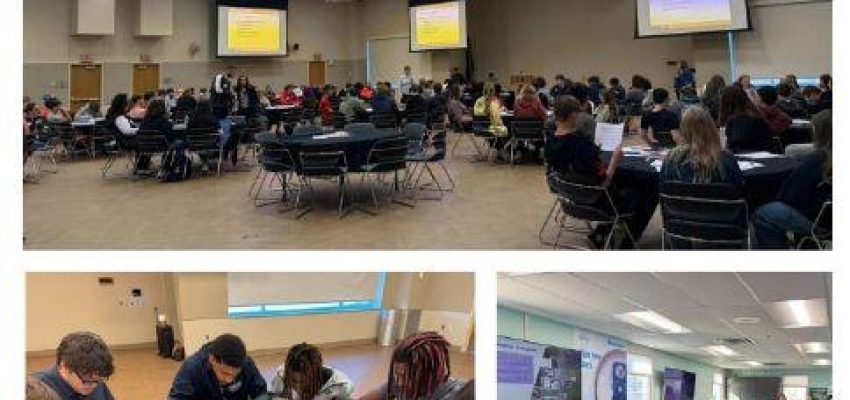
This is precisely where initiatives offering hands-on experience become invaluable. These events serve as vital bridges, connecting the classroom with the factory, theory with practice. When local students have the opportunity to step into a manufacturing facility, interact with real equipment, and speak directly with professionals, myths are shattered, and new passions are ignited. Imagine a student, perhaps initially skeptical, being guided through a production line where robotic arms precisely assemble components, or seeing an engineer use virtual reality to design a new product. Such experiences are far more impactful than any textbook description.
During such events, students might engage in various activities: operating simulation software to understand production flows, programming a basic robotic sequence, witnessing 3D printers bring complex designs to life, or even performing quality checks using advanced optical inspection systems. They might learn about lean manufacturing principles, observe how data from sensors is used to optimize processes, or explore the intricacies of supply chain logistics. These practical engagements provide a tangible understanding of what a career in manufacturing truly entails. They reveal the problem-solving, teamwork, and critical thinking skills required, showcasing that these aren’t just jobs for manual laborers, but for bright minds who can adapt, learn, and innovate.
The psychological impact of these experiences is profound. Students gain confidence, clarify their career interests, and can visualize themselves in these roles. For many, it’s the first time they connect their STEM (Science, Technology, Engineering, and Mathematics) classroom learning to real-world applications, making subjects like physics, mathematics, and computer science suddenly relevant and exciting. Furthermore, these events foster networking opportunities, allowing students to meet industry leaders and potential mentors, opening doors to internships and future employment. By proactively engaging with students, the manufacturing sector isn’t just filling a pipeline; it’s inspiring a new generation to build the future.
### The AI Imperative: Shaping the Future of Production
As an AI specialist and tech enthusiast, I find the integration of artificial intelligence into manufacturing to be one of the most compelling developments of our time. AI is not merely an add-on; it is fundamentally reshaping every aspect of production, from design and planning to execution and maintenance. For students exploring modern manufacturing careers, understanding AI’s role is no longer optional—it’s essential.
Consider the transformative power of AI in several key areas:
* **Predictive Maintenance:** AI algorithms analyze vast amounts of sensor data from machinery to predict when a component is likely to fail. This allows for proactive maintenance, preventing costly downtime and extending the lifespan of equipment. Students engaged in these roles might work with machine learning engineers to refine these prediction models.
* **Generative Design:** AI can rapidly explore countless design iterations for a product, optimizing for factors like material strength, weight, and cost. This speeds up the product development cycle significantly, pushing the boundaries of what’s possible in engineering.
* **AI-Powered Quality Control:** Computer vision systems, trained with machine learning, can identify minuscule defects on a production line with far greater accuracy and speed than the human eye. This ensures higher product quality and reduces waste.
* **Supply Chain Optimization:** AI analyzes market trends, weather patterns, geopolitical events, and logistics data to optimize supply chain routes, manage inventory levels, and predict demand with unprecedented precision, making global operations more resilient and efficient.
* **Human-Robot Collaboration (Cobots):** AI enables robots to work safely and intuitively alongside human operators, taking on repetitive or dangerous tasks while humans focus on complex problem-solving, supervision, and creative input. This collaboration maximizes efficiency and safety on the factory floor.
These applications are not futuristic concepts; they are already being deployed in advanced manufacturing facilities worldwide. For the students gaining hands-on experience today, these insights are foundational. They learn that a career in manufacturing increasingly involves working with intelligent systems, interpreting data, and continuously learning new technologies. The skills demanded include not just mechanical aptitude, but also data literacy, critical thinking, ethical considerations for AI deployment, and adaptability. These are the skills that will empower them to thrive in an AI-driven industrial landscape.
The integration of AI also creates entirely new job categories. We need AI ethicists for manufacturing, specialists in human-robot interaction, data scientists who understand industrial processes, and automation architects who can design and implement these intelligent systems. The factories of tomorrow will be managed by individuals who possess a blend of traditional engineering knowledge and cutting-edge AI expertise. Providing students with early exposure to these technologies and their real-world applications ensures they are not just ready for the future, but instrumental in shaping it.
In conclusion, the journey of local students exploring manufacturing careers through hands-on experiences is far more than a simple field trip; it is an investment in the future of our industrial landscape and a testament to the transformative power of direct engagement. The manufacturing sector has shed its outdated image and emerged as a dynamic, high-tech frontier, powered by advancements in automation, robotics, and crucially, artificial intelligence. By allowing young minds to witness these innovations firsthand, we are not only dispelling misconceptions but actively inspiring a new generation to pursue fulfilling and impactful careers.
These pivotal interactions are vital for bridging the existing skills gap and ensuring a robust pipeline of talent for an increasingly complex and technologically advanced industry. As an AI specialist, I firmly believe that fostering an understanding of AI’s role in production from an early age is paramount. The individuals who will lead the factories of tomorrow are the students exploring these opportunities today – armed with curiosity, empowered by knowledge, and ready to harness technology to build a better, more efficient, and more sustainable world. Continued collaboration between educational institutions and industry is not just beneficial; it is essential for driving innovation and securing a prosperous future for all.










