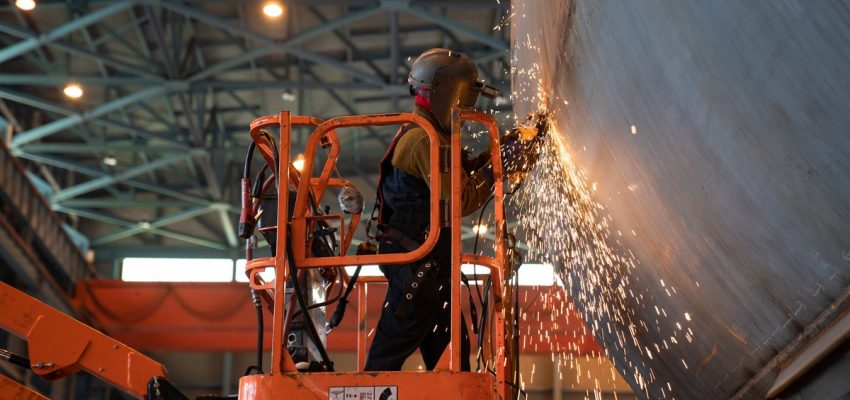

Hello everyone, André Lacerda here, stepping away briefly from the digital frontier of AI to focus on a different kind of innovation – one that builds tangible futures and empowers communities. While my passion often lies in the algorithms and data that shape tomorrow, I firmly believe that the foundation of any prosperous future is a skilled, capable workforce. Today, I want to shine a light on an exciting initiative right here in Philadelphia that promises to do just that: re-ignite a storied industry and create high-quality jobs for local residents.
Philadelphia, with its rich industrial heritage, is on the cusp of a significant revival in a sector that has long been a cornerstone of its identity: shipbuilding. In an era where discussions often revolve around automation and advanced technologies, the enduring value of skilled trades, like welding, remains undeniably critical. A groundbreaking partnership involving The Skills Initiative, PIDC, and Hanwha Philly Shipyard is set to transform lives by launching the Welder B Program, offering a clear and direct pathway to rewarding careers. This isn’t just about learning a trade; it’s about rebuilding a vital industry, fostering economic resilience, and equipping individuals with the tools to forge their own stable and prosperous futures. This initiative directly contributes to strengthening **Philadelphia shipbuilding careers** for generations to come.
Philadelphia Shipbuilding Careers: A New Horizon for Local Talent
Philadelphia’s relationship with the sea and its maritime industries is deeply woven into the fabric of its history. From its role as a pivotal port in the American Revolution to the bustling Navy Yard that once launched some of the nation’s most formidable vessels, the city has long been a center for naval innovation and industrial might. The Philadelphia Naval Shipyard, established in 1776, served as a crucial hub for naval construction and repair for over two centuries, playing a significant role in every major conflict from the Civil War through the Cold War. While the landscape of global manufacturing has shifted dramatically over the decades, the fundamental need for skilled craftsmanship in industries like shipbuilding has never truly vanished; rather, it has evolved.
Today, the historic Philadelphia Navy Yard, no longer primarily an active naval base, has gracefully transformed into a vibrant, mixed-use campus, a testament to adaptive reuse and forward-thinking urban development. It’s a hub for modern businesses, research, and yes, still a place where impressive ships are built and maintained. Amidst this evolution, a critical demand has emerged: a new generation of skilled welders. This is where the Welder B Program steps in, designed specifically to meet the needs of a revitalized industry and, more importantly, to create tangible opportunities for the city’s residents to embark on fulfilling **Philadelphia shipbuilding careers**.
This innovative program is not merely a training course; it is a strategic investment in human capital and the city’s economic future. Hanwha Philly Shipyard, a significant employer at the Navy Yard, finds itself at the forefront of this industrial resurgence, requiring a robust and skilled workforce to fulfill its current and future contracts. The company, formerly Philly Shipyard and acquired by Hanwha Systems in 2024, has a proven track record of building high-quality commercial vessels and specialized ships for the U.S. government, including the National Security Multi-Mission Vessels (NSMV) for maritime academies. The demand for qualified welders, capable of intricate work under stringent safety and quality standards, is consistently high, driven by a growing order book and the need to replace an aging workforce.
Recognizing this crucial need, the partnership with The Skills Initiative and PIDC (Philadelphia Industrial Development Corporation) was forged. PIDC, the city’s public-private economic development corporation, plays a vital role in identifying economic needs and facilitating programs that bridge skill gaps, ensuring that local residents can access the opportunities created by local industry. The Skills Initiative, in turn, focuses on developing and funding targeted training programs that lead directly to employment, making them an ideal partner in this endeavor. Together, they have crafted a program that is both comprehensive in its curriculum and impactful in its potential for socioeconomic mobility, creating real pathways to sustainable **Philadelphia shipbuilding careers**.
Forging Futures: The Welder B Program’s Design and Impact
The Welder B Program is meticulously structured to equip participants with the precise skills and knowledge required for entry-level positions within the shipbuilding industry. It goes beyond generic welding instruction, delving into the specific techniques, materials, and safety protocols essential for constructing and maintaining large maritime vessels. Participants can expect a rigorous curriculum that balances classroom theory with extensive hands-on training, often using state-of-the-art equipment that mirrors what they will encounter on the job. This immersive approach ensures that graduates are not just conceptually aware but practically proficient.
A key aspect of this program is its focus on practical application. Trainees learn various welding processes, such as Shielded Metal Arc Welding (SMAW), Gas Metal Arc Welding (GMAW), and Flux-Cored Arc Welding (FCAW), which are all critical in shipyard environments. These techniques are taught with an emphasis on the specific challenges of marine environments, including working with different types of steel, aluminum, and other alloys, as well as understanding structural integrity in a maritime context. They also gain proficiency in interpreting blueprints, understanding material science, and adhering to strict quality control standards—skills that are indispensable for any successful career in shipbuilding. Safety, naturally, is paramount. Shipyard environments present unique challenges, and the program emphasizes comprehensive safety training, covering everything from personal protective equipment (PPE) to hazardous material handling and emergency procedures, ensuring that graduates are not only skilled but also acutely aware of the protocols necessary to maintain a secure working environment.
The ‘B’ in Welder B signifies an entry-level position, but it also implies a clear upward trajectory. Graduates of this program are positioned to step into well-paying jobs with competitive hourly wages right from the start. For instance, entry-level welders in the shipbuilding sector can expect to earn significantly above the average manufacturing wage, often with comprehensive benefits packages. But the journey doesn’t stop there. Shipbuilding is an industry that values experience and continuous learning. With dedication and further training, a Welder B can progress to a Welder A, a journeyman, and even into supervisory or specialized fabrication roles. The average salary for experienced welders can reach substantial figures, reflecting the high demand and specialized nature of the work. These are not merely temporary jobs; they are foundations for long-term, sustainable **Philadelphia shipbuilding careers**, offering robust opportunities for professional growth and financial security.
This program stands as a beacon of opportunity, particularly for individuals who may have faced barriers to accessing high-quality employment. It targets eligible Philadelphia residents, offering a pathway into an industry that provides stability, excellent benefits, and the satisfaction of contributing to significant engineering feats. In a city grappling with economic disparities, initiatives like the Welder B Program are crucial for fostering inclusive growth and ensuring that the benefits of industrial resurgence are widely shared across all communities. It provides a tangible path out of unemployment or underemployment, empowering individuals to achieve self-sufficiency and build a rewarding future in their own city.
Beyond the Torch: A Stable Career Path and Economic Revival
The impact of the Welder B Program extends far beyond the individual participants; it ripples outwards to strengthen the entire Philadelphia economy. Addressing the national skills gap in skilled trades, particularly welding, is more critical now than ever. According to the American Welding Society (AWS), the demand for welders continues to outpace the supply, with hundreds of thousands of new welders needed in the coming years across various industries, including manufacturing, construction, and, crucially, shipbuilding. The shortage is exacerbated by an aging workforce nearing retirement, making programs like this vital for replenishing the talent pipeline. By proactively training local residents, Philadelphia is not only creating jobs but also solidifying its position as a hub for skilled industrial labor and ensuring its competitiveness in the national maritime sector.
Furthermore, a robust local workforce reduces reliance on external hiring, ensuring that the economic benefits of Hanwha Philly Shipyard’s operations largely remain within the city. This localized talent pipeline enhances the shipyard’s operational efficiency and long-term viability, creating a virtuous cycle of investment, training, and employment. The presence of a highly skilled local workforce also makes Philadelphia more attractive for future industrial investments, potentially drawing in ancillary businesses and further diversifying the city’s economic portfolio. This kind of organic growth is what builds resilient local economies, less susceptible to external shocks.
For the individuals embarking on these new **Philadelphia shipbuilding careers**, the benefits are profound. These are jobs that cannot be easily offshored or fully automated, providing a high degree of job security, a crucial factor in today’s dynamic labor market. The competitive wages allow for financial stability, homeownership, and investment in personal and family well-being. Moreover, the sense of pride derived from building something tangible, something that sails the oceans and serves critical functions for commerce or national security, is immeasurable. Imagine pointing to a massive vessel and knowing you played a direct hand in its creation – that’s a powerful motivator and a source of deep professional satisfaction, fostering a strong sense of purpose and contribution to society.
As an AI enthusiast, I often ponder the future of work. While AI and automation will undoubtedly reshape many sectors, the human element of skilled craftsmanship, problem-solving, and hands-on construction remains indispensable. Programs like the Welder B highlight the synergy between technological advancement and foundational human skills. A future where robots perform repetitive tasks alongside human experts who design, build, and maintain complex machinery is not only plausible but desirable. Investing in these essential skills today prepares us for that intricate tomorrow, ensuring a balanced and resilient workforce where human ingenuity and skill remain at the core of industrial progress.
The launch of the Welder B Program represents more than just a training initiative; it is a significant step forward for Philadelphia, its residents, and the vital shipbuilding industry. By fostering a powerful partnership between public agencies and private enterprise, the city is not only addressing an immediate need for skilled labor but also investing in the long-term prosperity of its communities. This program offers a clear, accessible, and high-quality pathway for individuals to secure stable, rewarding **Philadelphia shipbuilding careers**, directly contributing to the economic fabric of the region. It exemplifies how targeted workforce development can ignite industrial resurgence and empower a new generation of skilled workers.
As we look to the future, the success of programs like this underscores the enduring importance of vocational training and the critical role it plays in empowering individuals and strengthening local economies. It reminds us that while innovation often conjures images of digital frontiers, true progress also lies in equipping people with the practical skills to build, create, and maintain the physical world around us. The Welder B Program is truly forging futures, one weld at a time, ensuring that Philadelphia continues to thrive as a hub of industry and opportunity, fostering both economic growth and individual empowerment.