

The landscape of work is constantly evolving, driven by technological innovation, global shifts, and a renewed focus on national resilience. In this dynamic environment, the ability to adapt and acquire new skills is not just an advantage, but a necessity. This is precisely why a recent announcement from the U.S. Department of Labor (DoL) holds such profound significance: a commitment of $30 million in federal grants designed to funnel individuals into high-demand roles across a spectrum of **emerging industry jobs**, including, notably, the modern mining sector. As an AI specialist and tech enthusiast, I find this initiative particularly compelling. It’s not merely about filling vacancies; it’s about strategically investing in the human capital that will define America’s economic future, ensuring our workforce is equipped for the challenges and opportunities of tomorrow.
This substantial federal investment underscores a critical understanding: the jobs of yesterday are not the jobs of today, and certainly not of tomorrow. From advanced manufacturing to renewable energy, and even the often-misunderstood field of mining, industries are undergoing rapid transformation. The DoL’s proactive approach aims to bridge the skills gap, providing pathways for workers to transition into these vital sectors. It speaks to a recognition that economic growth and national security are inextricably linked to a skilled, adaptable workforce, ready to embrace roles that integrate cutting-edge technology and sustainable practices.
### Emerging Industry Jobs: Redefining the American Workforce
The term “emerging industries” often conjures images of Silicon Valley startups and digital unicorns. While those sectors are undeniably crucial, the DoL’s grant program highlights a broader, more nuanced understanding. It acknowledges that traditional sectors are being revolutionized from within, creating a demand for new types of expertise. The modern workforce requires a blend of digital literacy, problem-solving capabilities, and specialized technical skills. These grants are not just about training; they are about reimagining career trajectories for countless Americans.
Consider the global economic shifts post-pandemic, the increasing focus on supply chain resilience, and the strategic importance of domestic production. Nations worldwide are reassessing their reliance on international supply chains, leading to a push for reshoring and revitalizing key industries. This renewed emphasis on domestic production, particularly in critical sectors like semiconductor manufacturing, advanced materials, and clean energy, generates a significant demand for highly skilled labor. The $30 million in grants is a direct response to this call, funding programs that will prepare individuals for these pivotal roles. These are not merely temporary fixes; they are long-term investments in sectors poised for sustained growth and innovation, fostering a robust pipeline of talent for future-focused careers.
The Department of Labor’s initiative aims to support a diverse array of training programs, from apprenticeships that combine on-the-job learning with theoretical instruction, to reskilling initiatives for workers in transitioning industries. This multi-faceted approach ensures that individuals from various backgrounds can access the education and experience needed to thrive in these new economic landscapes. The focus is on practical, industry-aligned training that directly addresses the needs of employers, ensuring that participants gain not just qualifications, but marketable skills for high-wage, high-demand **emerging industry jobs**.
### Mining’s Modern Frontier: High-Tech, Sustainable, and Essential
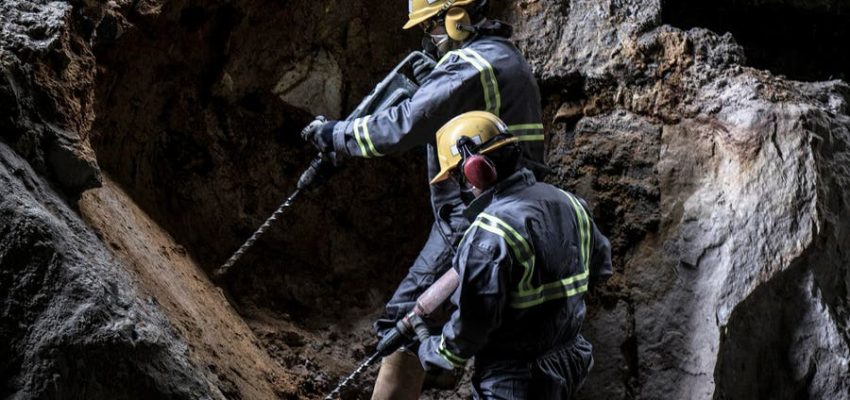
When most people hear “mining,” they might still picture dusty, dangerous operations from a bygone era. However, the reality of modern mining couldn’t be more different. Today’s mining sector is a high-tech, data-driven industry that leverages advanced robotics, artificial intelligence, and sophisticated environmental engineering to extract critical resources more safely, efficiently, and sustainably than ever before. This transformation has opened up an entirely new array of **emerging industry jobs** that require a highly specialized and technically proficient workforce.
The demand for minerals and metals, from lithium for electric vehicle batteries to rare earth elements for advanced electronics, is surging. This isn’t just about economic opportunity; it’s a matter of national security and technological independence. Modern mines utilize autonomous haulage systems, remotely operated drilling equipment, and drones for geological surveying and environmental monitoring. Artificial intelligence and machine learning algorithms are employed to analyze vast datasets from seismic imaging and geological samples, optimizing exploration efforts and predicting mineral deposits with unprecedented accuracy. These technologies dramatically reduce human exposure to hazards, improve operational efficiency, and minimize environmental impact.
Consequently, the types of roles available in modern mining have shifted dramatically. We’re seeing a significant demand for data scientists who can interpret sensor data and optimize extraction processes, robotics engineers who design and maintain autonomous fleets, environmental specialists focused on reclamation and sustainable practices, and cybersecurity experts protecting critical operational technology (OT) systems. AI/ML engineers are crucial for developing predictive maintenance models, enhancing safety protocols, and even automating mineral processing. These are the kinds of high-value, technologically advanced careers that the DoL grants are designed to support, ensuring that the next generation of miners are not just laborers, but innovators and stewards of vital resources. The skills required are less about brute force and more about analytical acumen, technological proficiency, and an understanding of complex systems, making these roles truly cutting-edge **emerging industry jobs**.
### Beyond the Mine: Cultivating a Diverse Ecosystem of Future Careers
While mining serves as a compelling example of an evolving traditional industry, the scope of **emerging industry jobs** targeted by the DoL grants extends far beyond. The initiative seeks to bolster a wide array of sectors critical to America’s economic vitality and technological leadership. These include, but are not limited to, advanced manufacturing, renewable energy, biotechnology, and cybersecurity.
In **advanced manufacturing**, for instance, the integration of automation, the Internet of Things (IoT), and additive manufacturing (3D printing) has created a need for a workforce adept at programming robots, managing intelligent production lines, and designing new materials. Jobs like industrial automation technicians, materials scientists, and digital manufacturing specialists are increasingly vital. Similarly, the rapid expansion of the **renewable energy** sector – from solar farms to wind turbine installations – requires a legion of skilled professionals: wind turbine technicians, solar panel installers, grid modernization engineers, and energy storage specialists. These roles combine traditional engineering principles with new energy technologies, offering sustainable and impactful career paths.
The **biotechnology** and life sciences sectors are also experiencing explosive growth, driven by advancements in genomics, personalized medicine, and biopharmaceutical development. Here, demand is high for lab automation engineers, bioinformaticians who can process massive biological datasets, and clinical trial coordinators. These fields are at the forefront of human health and environmental sustainability, offering intellectually stimulating and impactful **emerging industry jobs**. Even the seemingly abstract world of **cybersecurity** plays a critical role, as the increasing digitalization of all industries necessitates robust protection for critical infrastructure, intellectual property, and personal data. Cybersecurity analysts, ethical hackers, and security architects are indispensable across virtually every modern enterprise.
What unites these diverse fields is the pervasive influence of technology, particularly artificial intelligence. AI is not just creating new jobs in its own right; it’s augmenting existing roles and transforming virtually every sector. From predictive analytics in manufacturing to AI-driven diagnostics in biotech, and intelligent grid management in energy, an understanding of AI principles and data literacy is becoming a foundational skill. The DoL grants are strategically designed to equip workers with these cross-cutting competencies, ensuring they are prepared for a future where human ingenuity and machine intelligence collaborate to drive progress. By investing in these varied yet interconnected fields, the United States is actively building a resilient, innovative economy capable of navigating the complexities of the 21st century.
The $30 million in grants will facilitate collaborations between educational institutions, industry partners, and community organizations. This ecosystem approach ensures that training programs are relevant, accessible, and lead directly to employment opportunities. Whether through vocational training, community college programs, or targeted apprenticeships, the goal is to create clear pathways to prosperity in these high-growth sectors, empowering individuals and strengthening local economies across the nation. This isn’t just about jobs; it’s about fostering a culture of lifelong learning and adapting to the future of work.
In essence, the U.S. Department of Labor’s $30 million investment signifies more than just financial aid; it represents a forward-thinking commitment to the American workforce. By focusing on **emerging industry jobs** and providing the necessary resources for training and skill development, the nation is proactively addressing the challenges of a rapidly changing global economy. This initiative ensures that workers are not left behind by technological advancement, but rather are empowered to lead the charge into new frontiers.
As industries continue to evolve at an unprecedented pace, driven by innovations in AI, automation, and sustainable technologies, such strategic investments become increasingly vital. The grants will cultivate a workforce that is not only robust and resilient but also innovative and adaptable, capable of seizing the opportunities that arise from the ongoing digital and industrial revolutions. It’s a testament to the idea that by investing in people, we invest in progress, securing a prosperous and competitive future for all.










