

In an era defined by rapid technological advancement, few fields capture the imagination and promise of transformation quite like Artificial Intelligence. From powering the personalized recommendations we receive daily to driving groundbreaking scientific discoveries, AI is not merely a tool; it’s a paradigm shift, reshaping industries and creating entirely new avenues for innovation. For those captivated by its potential, the question isn’t whether to engage with AI, but how to effectively navigate its complex and ever-evolving landscape to forge a successful and impactful path. As an AI specialist and enthusiast, I find immense excitement in contemplating the myriad opportunities that lie ahead, and how aspiring professionals can best prepare to seize them.
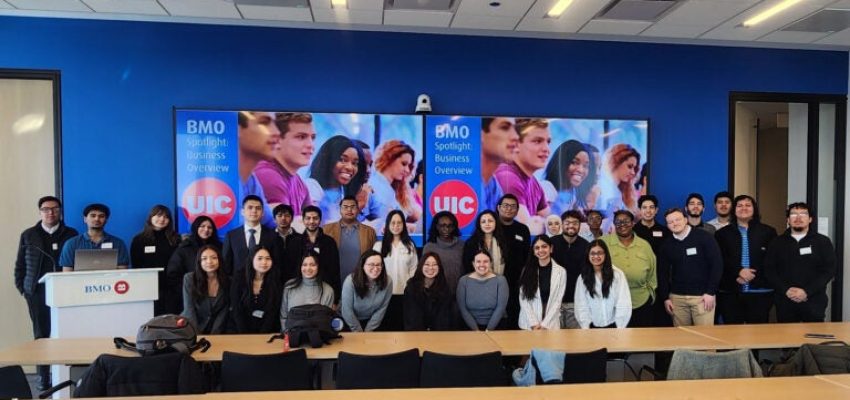
Just as students in traditional fields benefit immensely from direct exposure to potential employers and real-world environments—envisioning their future by walking the halls of a company they might one day join—the journey into artificial intelligence demands its own form of immersive exploration. It’s not enough to simply study algorithms or understand theoretical concepts; true understanding and preparedness come from hands-on engagement, community participation, and a proactive approach to skill development. The world of AI is a vast, interconnected ecosystem, and those who seek to contribute meaningfully must actively immerse themselves in its challenges, ethics, and groundbreaking applications. This article delves into how we can cultivate such an immersive experience, opening doors to fulfilling and impactful AI Careers.
AI Careers: Charting Your Course in a Dynamic Landscape
The perception of working in AI often conjures images of highly specialized data scientists or machine learning engineers, meticulously coding complex algorithms. While these roles are indeed critical, the reality of the AI job market is far broader and more diverse than many imagine. The rapid proliferation of AI across virtually every sector—from healthcare and finance to entertainment and environmental science—has spurred the creation of a vast array of specialized positions, each demanding a unique blend of technical prowess, creativity, and strategic thinking. According to a report by Statista, the global artificial intelligence market is projected to grow from 86.9 billion U.S. dollars in 2023 to 407 billion U.S. dollars by 2027, indicating a burgeoning demand for talent across the spectrum.
Consider the expansive opportunities within this domain: alongside the core roles of Machine Learning Engineer and Data Scientist, we now see a rise in demand for AI Ethicists, who ensure responsible and fair development; Prompt Engineers, specializing in crafting effective inputs for large language models; AI Product Managers, bridging the gap between technical teams and market needs; Robotics Engineers, integrating AI into physical systems; and AI Researchers, pushing the boundaries of what’s possible. Each of these professional paths requires not just a foundational understanding of AI principles but also domain-specific knowledge and a keen eye for problem-solving. For instance, an AI specialist in healthcare might focus on developing diagnostic tools or personalized treatment plans, while one in finance could be building fraud detection systems or algorithmic trading models. The versatility of AI Careers means that individuals from diverse academic backgrounds—including mathematics, computer science, philosophy, psychology, and even arts—can find their niche, contributing their unique perspectives to this multifaceted field.
The interdisciplinary nature of AI means that collaboration is paramount. Rarely does an AI project succeed in isolation. It typically involves teams comprising experts in data engineering, software development, user experience design, and business strategy. This collaborative environment fosters innovation and demands strong communication skills, an often-overlooked yet vital attribute for success in any AI-related role. Understanding the various roles and how they intersect is the first step in charting a meaningful course, allowing aspiring professionals to identify areas that align with their strengths and passions. The World Economic Forum, in its ‘Future of Jobs Report 2023’, highlighted roles such as AI and Machine Learning Specialists, Data Analysts and Scientists, and Digital Transformation Specialists as among the top fastest-growing jobs, underscoring the urgency and opportunity in this sector.
Beyond the Classroom: Immersive Experiences in the AI Ecosystem
Formal education provides a crucial theoretical foundation, but the true ‘site visits’ into the world of AI come from hands-on, immersive experiences. These are the opportunities that transform abstract concepts into tangible skills and provide a genuine sense of what a future in AI truly entails. Think of these as your direct engagement with the ‘employers’ and ‘work environments’ of AI, even if they’re not traditional office settings. One of the most effective ways to gain practical experience is through personal projects. Building and deploying even a small machine learning model, perhaps for image classification or natural language processing, allows you to grapple with real-world data, troubleshoot common issues, and understand the end-to-end pipeline of an AI solution. Platforms like Kaggle offer datasets and competitions that simulate industry challenges, providing a safe yet competitive environment to hone your skills and benchmark your performance against a global community.
Furthermore, contributing to open-source AI projects on platforms like GitHub or Hugging Face is akin to joining an AI research and development team. It offers invaluable experience in collaborative coding, version control, and understanding complex existing codebases, while simultaneously building a public portfolio of your work. This is a direct insight into how large-scale AI projects are managed and developed in a community setting. For those seeking structured learning with a practical slant, online learning platforms have become indispensable. Coursera, edX, and deeplearning.ai, founded by AI luminary Andrew Ng, offer specialized courses and certifications in machine learning, deep learning, computer vision, and natural language processing. These programs often incorporate practical assignments and capstone projects, simulating the challenges faced by AI professionals. Companies like Google, IBM, and Microsoft also offer their own AI training and certification programs, often providing access to their proprietary tools and cloud infrastructure, giving learners a ‘virtual tour’ of enterprise-level AI development environments.
Beyond self-paced learning, active participation in the broader AI community is paramount. Attending virtual meetups, webinars, and conferences—such as NeurIPS, CVPR, or KDD—provides exposure to cutting-edge research, industry trends, and networking opportunities. These gatherings are the equivalent of a grand ‘career fair’ for AI, allowing you to connect with leading researchers, engineers, and potential mentors. Engaging in discussions on platforms like Reddit’s r/MachineLearning, LinkedIn groups, or specialized Discord servers can offer peer insights, problem-solving assistance, and a sense of belonging within the vast AI ecosystem. Finally, traditional internships and apprenticeships remain one of the most direct and invaluable ‘site visits’ into the corporate or academic AI world. Working alongside seasoned professionals provides an unparalleled learning experience, exposing you to real business problems, team dynamics, and the specific tools and methodologies employed in a professional setting. Many leading tech companies, from startups to global giants like Google, Meta, and NVIDIA, offer extensive internship programs specifically tailored for aspiring AI talent.
Cultivating the Mindset: Skills and Ethics for Tomorrow’s AI Leader
Successfully navigating the terrain of AI Careers requires more than just technical proficiency; it demands a specific mindset characterized by continuous learning, critical thinking, and a profound sense of ethical responsibility. The technical toolkit for an AI professional is constantly expanding. A strong foundation in programming languages like Python and R is essential, complemented by familiarity with popular machine learning frameworks such as TensorFlow, PyTorch, and Scikit-learn. Proficiency in cloud platforms like AWS, Azure, and Google Cloud Platform is also increasingly vital, as AI models are often developed and deployed in scalable cloud environments. Database management skills (SQL, NoSQL) and an understanding of big data technologies (Spark, Hadoop) are likewise crucial for handling the vast datasets that fuel AI.
However, the rapid pace of innovation means that today’s cutting-edge tool might be tomorrow’s legacy technology. Therefore, the ability to adapt, learn new paradigms, and quickly master new tools is arguably more important than mastery of any single technology. This necessitates a proactive approach to lifelong learning, embracing online courses, research papers, and industry publications as continuous sources of knowledge. Beyond the technical, a suite of ‘soft skills’ is indispensable. Problem-solving is at the heart of AI; identifying complex issues, breaking them down, and devising innovative solutions is a daily reality. Creativity is also surprisingly important, especially in designing novel architectures or finding unique ways to apply existing models. Strong communication skills are vital for translating technical insights to non-technical stakeholders, collaborating with diverse teams, and even explaining the limitations and biases of an AI system.
Perhaps most critically, the future of AI Careers is inextricably linked to ethical considerations. As AI systems become more powerful and pervasive, the potential for unintended consequences—such as algorithmic bias, privacy violations, job displacement, and even the spread of misinformation—grows exponentially. An ethical mindset is no longer an optional add-on but a fundamental requirement for anyone working in AI. This involves understanding principles of fairness, transparency, accountability, and interpretability. Professionals must proactively consider the societal impact of their creations, striving to develop AI that is beneficial, equitable, and respects human values. For instance, an AI ethicist might work on developing guidelines for data collection, auditing models for bias, or designing human-in-the-loop systems to ensure oversight. This ethical dimension is increasingly integrated into curricula and industry best practices, reflecting its critical importance in shaping a responsible AI future.
The human element in AI extends beyond ethics to the very nature of work itself. While AI automates many tasks, it also elevates the demand for uniquely human capabilities: critical thinking, creativity, emotional intelligence, and complex problem-solving. Future AI leaders will be those who can not only build intelligent systems but also thoughtfully integrate them into human processes, enhancing productivity and fostering innovation. This symbiotic relationship between human and AI intelligence will define the next generation of professional roles and responsibilities.
Conclusion
The journey into artificial intelligence is a thrilling expedition into the unknown, a frontier brimming with untapped potential and profound challenges. For those eager to contribute to this transformative field, the path to successful AI Careers is paved not just with academic rigor but with a commitment to continuous, immersive learning. By actively engaging with real-world projects, participating in vibrant online communities, embracing practical training, and never shying away from direct industry exposure, aspiring AI professionals can gain the invaluable experience needed to thrive.
As André Lacerda, I believe that the future of AI belongs to those who are not just technically proficient but also ethically conscious, creatively driven, and relentlessly curious. The landscape of artificial intelligence is vast and ever-changing, demanding adaptability and a willingness to learn anew each day. By embracing the spirit of exploration and immersing ourselves in the dynamic ecosystem of AI, we can unlock doors to groundbreaking innovation, solve some of humanity’s most pressing problems, and shape a future where technology truly serves humanity’s best interests. Your adventure into AI begins now; step forward with passion, purpose, and a commitment to making a meaningful impact.










