
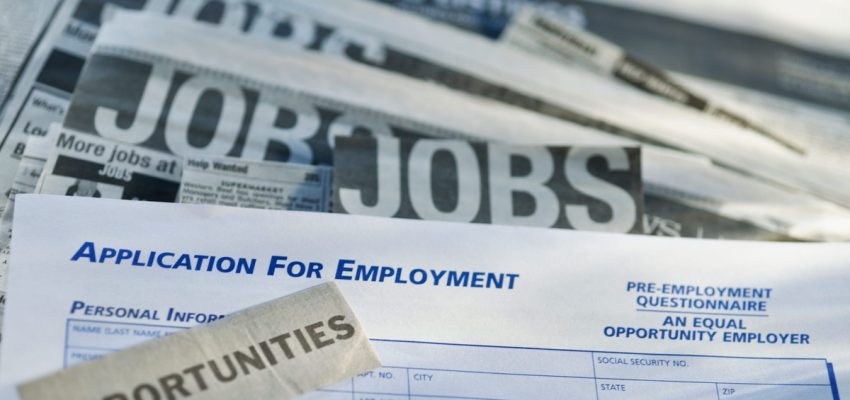

The culmination of years of hard work, late-night study sessions, and countless academic challenges arrives with the toss of a graduation cap. For many, this joyous moment is quickly followed by the daunting reality of the job hunt – a rite of passage that has always been fraught with anxiety. However, for today’s college graduates, the path from cap and gown to career appears more intricate and demanding than ever before. We are witnessing a confluence of economic headwinds, technological disruption, and an increasingly competitive landscape that is fundamentally reshaping the journey into professional life.
Historically, the transition into the workforce has had its peaks and valleys, often tied to economic cycles. Yet, the current environment presents unique hurdles that go beyond typical boom-and-bust patterns. Young professionals are entering a world grappling with rapid automation, the pervasive influence of artificial intelligence, and a globalized economy where local opportunities are often challenged by worldwide talent pools. Understanding these shifts is not just about identifying problems; it’s about empowering the next generation of leaders to adapt, innovate, and ultimately thrive.
Graduate Job Market: Navigating a Shifting Landscape
To truly grasp the challenges facing today’s new professionals, we must first acknowledge the multifaceted pressures at play within the **graduate job market**. It’s an ecosystem in constant flux, influenced by macroeconomic trends, demographic shifts, and evolving industry demands. One of the most immediate pressures stems from global economic volatility. Post-pandemic recovery has been uneven, marked by inflationary pressures, rising interest rates, and geopolitical tensions that lead many companies to adopt a cautious hiring stance. Budgets tighten, and organizations often prioritize experienced hires over entry-level positions, seeking to maximize immediate return on investment in uncertain times.
Adding to this complexity is the sheer volume of graduates entering the workforce each year. While higher education is more accessible than ever, this also means increased competition for a finite number of entry-level roles. Universities around the globe are producing millions of degree holders annually, all vying for similar positions. This global talent pool is further amplified by the rise of remote work, which, while offering flexibility, also means that a job posted in one city can now attract applicants from virtually anywhere in the world, intensifying the competitive pressure for local graduates.
Perhaps one of the most critical factors influencing the **graduate job market** is the persistent and growing skills gap. Traditional academic curricula, while excellent for foundational knowledge, often struggle to keep pace with the blistering speed of technological advancement and industry evolution. Employers increasingly lament that graduates lack practical, in-demand skills such as advanced digital literacy, data analytics, cybersecurity knowledge, or proficiency in emerging software tools. The World Economic Forum’s ‘Future of Jobs’ reports consistently highlight a gap between the skills taught in academia and those most sought after by employers. This mismatch forces graduates into a catch-22: needing experience to get a job, but unable to gain that experience without the initial opportunity.
The AI Imperative: Reshaping Skill Sets and Opportunities
As an AI specialist, I’ve observed firsthand how artificial intelligence is not merely a technological advancement but a transformative force fundamentally reshaping every sector, and consequently, the **graduate job market**. The narrative often fixates on job displacement, with legitimate concerns about automation replacing routine tasks. Indeed, industries from manufacturing to customer service and even aspects of content creation are seeing significant AI integration. Tasks that once required human input – data entry, basic analysis, repetitive coding, or even initial legal document review – are now being handled by algorithms with greater speed and accuracy.
However, focusing solely on displacement misses the larger picture: AI is also a prolific job creator and a catalyst for entirely new categories of work. For every role that might be automated, new opportunities emerge that require human oversight, ethical considerations, creative problem-solving, and the unique ability to *work with* AI systems. We’re seeing a surge in demand for roles like AI ethicists, prompt engineers, machine learning operations (MLOps) specialists, data scientists, and AI-driven user experience designers. These are not just niche roles; they represent a fundamental shift in the skills economy.
For today’s graduates, understanding AI is no longer optional; it’s an imperative. It’s not just about coding or advanced mathematics; it’s about AI literacy – comprehending how AI works, its capabilities, its limitations, and, crucially, how to leverage AI tools to enhance productivity and solve complex problems in *any* field. Whether you’re in marketing, finance, healthcare, or the arts, AI will be an integral part of your professional toolkit. Graduates who can effectively integrate AI into their workflows, interpret AI-generated insights, and contribute to ethical AI deployment will possess a significant competitive advantage. This paradigm shift underscores the critical importance of lifelong learning, embracing continuous upskilling and reskilling to remain relevant in an AI-driven economy.
Crafting Your Path: Strategies for Graduate Success
In this challenging yet dynamic environment, what can today’s graduates do to not just survive, but truly thrive? The answer lies in a proactive, adaptive, and strategic approach to career development. The era of simply earning a degree and expecting a job to materialize is largely behind us. Instead, graduates must become architects of their own professional destinies, building resilience and agility into their career plans.
**1. Strategic Skill Development**: Beyond your degree, actively identify and acquire in-demand skills. Utilize online learning platforms (Coursera, edX, LinkedIn Learning), bootcamps, and industry certifications. Focus on a blend of technical skills (e.g., data analytics, digital marketing, AI tools) and ‘human’ skills that AI cannot easily replicate: critical thinking, creativity, emotional intelligence, complex problem-solving, communication, and adaptability. The ability to collaborate effectively with diverse teams and to articulate complex ideas will always be invaluable.
**2. Experiential Learning is Key**: Internships, co-op programs, volunteer work, and personal projects are no longer optional extras – they are essential. These experiences bridge the gap between academic theory and practical application, providing tangible evidence of your capabilities. Even unpaid internships or contributing to open-source projects can provide invaluable experience and networking opportunities. Look for opportunities to apply your skills in real-world scenarios, building a portfolio that demonstrates your competence.
**3. Build a Robust Professional Network and Personal Brand**: The vast majority of jobs are found through networking. Leverage platforms like LinkedIn to connect with professionals in your desired field, engage in industry discussions, and showcase your expertise. Attend virtual and in-person industry events, conduct informational interviews, and don’t underestimate the power of a strong online presence. Your digital footprint should reflect your professional aspirations and demonstrate your value to potential employers. Showcase your projects, share your insights, and let your passion for your chosen field shine through.
**4. Master the Job Search Tools – Including AI**: Understand how Applicant Tracking Systems (ATS) work and optimize your resume and cover letter with relevant keywords. Crucially, learn to leverage AI tools in your job search. AI can help you refine your resume, draft compelling cover letters, prepare for interviews with mock questions, and even identify skills you might want to develop based on job descriptions. Using AI as a co-pilot can significantly enhance your efficiency and effectiveness in the job hunt.
**5. Embrace Adaptability and Resilience**: The first job post-graduation may not be your dream role, and that’s perfectly fine. View it as a stepping stone, an opportunity to gain experience, learn new skills, and expand your network. The modern career path is rarely linear. Be open to diverse roles, industries, and even unconventional career paths like entrepreneurship or freelancing. The most successful graduates will be those who can pivot, learn, and grow continuously throughout their professional lives.
The challenges facing today’s college graduates are undoubtedly significant, marking a departure from the more predictable **graduate job market** of previous generations. Economic uncertainties, heightened competition, and the pervasive, transformative power of artificial intelligence are all contributing factors to a landscape that demands more than just a degree.
However, within these challenges lie immense opportunities for those who are prepared to embrace a new paradigm of career development. By focusing on continuous skill development, gaining practical experience, building a strong professional network, leveraging innovative tools like AI, and cultivating a mindset of adaptability, today’s graduates can navigate this complex terrain not just successfully, but with the potential to lead and innovate in ways unprecedented. The future of work is not just about adapting to change; it’s about actively shaping it, and the next generation of professionals has the unique opportunity to do just that.










