
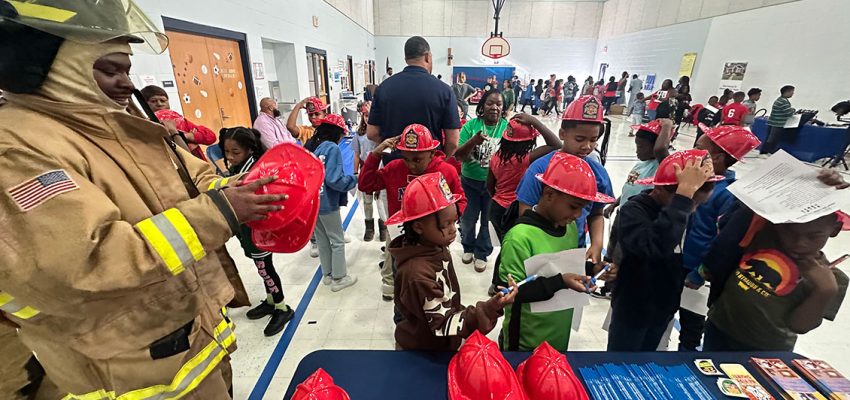

Imagine a bustling elementary school career fair – a kaleidoscope of professions, from firefighters to engineers, artists to scientists, all eager to inspire young minds. It’s a foundational moment, sparking dreams and shaping early perspectives on what one can ‘be’ when they grow up. But what if the very landscape of those future careers is undergoing a profound, almost unimaginable, transformation? As an AI specialist, writer, and tech enthusiast, I find myself constantly pondering this question, especially when I consider the generation currently exploring their nascent curiosities.
We are on the cusp of an unprecedented era, one where artificial intelligence isn’t just a tool, but a fundamental architect of our professional future. The discussions around AI’s impact often swing between utopian visions of enhanced productivity and dystopian fears of widespread job displacement. However, the reality, as always, lies somewhere in the nuanced middle. Understanding these shifts is not just an academic exercise; it’s a societal imperative, especially for those guiding the next wave of talent. The challenge – and the immense opportunity – lies in anticipating the **AI career paths** that are rapidly emerging and evolving, and ensuring we equip our youth with the foresight and skills to navigate them successfully.
### AI Career Paths: A New Frontier of Opportunity
The conversation about AI and employment frequently begins with concerns about job automation. Indeed, repetitive, rule-based tasks across various sectors are increasingly being handled by intelligent algorithms and robotic systems. However, this is only one side of a multi-faceted coin. What often gets less attention is the explosive creation of entirely new roles and industries that AI itself is catalyzing. This isn’t just about jobs *within* AI development, but a broad spectrum of professions that are either directly involved in building and deploying AI, or are profoundly augmented and transformed by it.
Consider the rapid growth in areas such as machine learning engineering, data science, and AI research. These are the architects of the new digital age, developing the algorithms, models, and systems that power everything from autonomous vehicles to personalized medicine. The demand for skilled professionals in these fields is skyrocketing. For instance, reports from sources like the World Economic Forum consistently highlight roles like AI and Machine Learning Specialists, Data Scientists, and Robotics Engineers as among the top emerging jobs globally, with projected growth rates far outpacing other sectors. LinkedIn’s 2024 Jobs on the Rise report similarly underscores the burgeoning need for AI-related expertise across industries.
Beyond these core technical roles, a fascinating array of new **AI career paths** is materializing. We’re seeing the rise of the ‘Prompt Engineer,’ a role focused on crafting effective queries and instructions for large language models to yield optimal results – a blend of technical understanding and linguistic artistry. There are also ‘AI Ethicists’ and ‘AI Governance Specialists,’ professionals dedicated to ensuring that AI systems are developed and deployed responsibly, equitably, and transparently, grappling with complex questions of bias, privacy, and accountability. The burgeoning field of ‘AI-driven UX/UI Design’ focuses on creating intuitive interfaces for AI-powered applications, blending human-computer interaction with artificial intelligence principles.
Furthermore, AI is not merely replacing jobs but augmenting human capabilities, creating ‘super-jobs’ where humans leverage AI tools to achieve unprecedented levels of productivity and insight. A doctor using AI for diagnostics, an architect using generative AI for design exploration, or a financial analyst using machine learning for market prediction – these are all examples of existing professions being dramatically reshaped and enhanced. This augmentation effect means that even traditional roles are evolving, requiring a new set of digital and analytical competencies. The key is to see AI not just as a competitor, but as a powerful collaborator, opening up new vistas for innovation and problem-solving that were previously unimaginable.
### Beyond Automation: The Human Element in an AI World
While AI excels at processing vast amounts of data, identifying patterns, and performing complex calculations at speeds far beyond human capacity, it still largely operates within predefined parameters. This fundamental distinction illuminates a critical point: the skills that will be most valuable in an AI-dominated world are precisely those that are uniquely human – those that AI struggles to replicate or fully grasp. These include creativity, critical thinking, emotional intelligence, complex problem-solving, ethical reasoning, and nuanced communication.
Consider creativity: while generative AI can produce compelling art, music, or text, the *original spark* of an idea, the ability to synthesize disparate concepts into truly novel solutions, and the capacity for abstract thought often remains firmly within the human domain. Similarly, complex problem-solving, especially when dealing with ill-defined problems or situations requiring empathy and understanding of human psychology, is where human intellect truly shines. An AI can process medical records, but a compassionate doctor provides comfort and understands a patient’s fears.
Emotional intelligence – the ability to understand and manage one’s own emotions, and to perceive and influence the emotions of others – is becoming increasingly vital in leadership, teamwork, and customer relations. As AI handles more routine interactions, the human-to-human connections that require empathy, negotiation, and rapport will become even more prized. Ethical reasoning, too, is a deeply human trait. While we can program AI with ethical frameworks, the nuanced judgment calls, the debates over societal values, and the ultimate responsibility for AI’s impact rest squarely on human shoulders.
This emphasizes the importance of fostering interdisciplinary skills. The most successful professionals in the coming decades will likely be those who can bridge the gap between technical AI knowledge and domains like humanities, social sciences, and design thinking. An AI developer who understands the sociological implications of their algorithms or a policy maker who grasps the technical limitations of AI will be far more effective. This shift underscores that future employment will not be about choosing *between* humans and AI, but rather about optimizing the synergistic collaboration *between* them. It’s about leveraging AI for its strengths – speed, scale, and pattern recognition – while doubling down on human strengths that provide meaning, innovation, and ethical guidance.
### Educating for Tomorrow: Fostering AI Literacy and Adaptability
Connecting back to the elementary school career fair, the challenge becomes clear: how do we prepare these young minds for a world that is still being invented? The answer lies in a fundamental reimagining of our educational paradigms, focusing on ‘AI literacy’ and adaptability from an early age. This goes far beyond simply teaching coding, though foundational computational thinking and basic programming skills are undoubtedly important.
AI literacy, in its broader sense, means understanding what AI is, how it works (at a conceptual level), its capabilities and limitations, and its ethical and societal implications. It’s about empowering individuals to be informed users, critical thinkers, and responsible shapers of AI. For younger students, this might involve interactive lessons on how recommendation algorithms work, simple robotics projects, or discussions about the ethical considerations of AI in storytelling or art. As they progress, this literacy can deepen into understanding data privacy, algorithmic bias, and the economic impacts of automation.
Furthermore, education must prioritize the development of those uniquely human skills discussed earlier. Project-based learning, which encourages collaboration, critical thinking, and creative problem-solving, becomes paramount. Encouraging curiosity, experimentation, and resilience in the face of failure will equip students with the mindset needed to thrive in a rapidly changing world. Curricula should be flexible and interdisciplinary, allowing students to explore connections between seemingly disparate subjects, preparing them for the ‘hybrid roles’ that will define the future of work.
Lifelong learning is no longer a luxury but a necessity. The pace of technological change means that skills acquired today may be outdated in a decade. Our education systems must instill a love for continuous learning and the ability to adapt, reskill, and upskill throughout one’s professional life. This also requires a concerted effort from governments, industry, and academia to create accessible pathways for continuous learning, micro-credentials, and vocational training programs that cater to the evolving demands of the **AI career paths** landscape. For instance, universities are rapidly developing new specialized degrees and certificates in AI, while companies are investing heavily in internal training programs to reskill their existing workforce.
The journey into an AI-driven future of work is not merely an adaptation; it is a profound reimagining of what it means to build a career. As we have explored, the emergence of new **AI career paths** demands a proactive and integrated approach to education, skill development, and societal planning. From the nascent curiosity of an elementary school child at a career fair to the seasoned professional navigating reskilling, every stage of life presents opportunities to engage with and benefit from the AI revolution.
Ultimately, the future is not predetermined by algorithms but shaped by human intention. By fostering a culture of continuous learning, nurturing uniquely human capabilities, and strategically investing in interdisciplinary education, we can ensure that the next generation is not just prepared for, but actively defines, the incredible possibilities that artificial intelligence offers. The task is immense, but the rewards – a future where technology amplifies human potential and purpose – are even greater. It is a future we must build together, with vision, collaboration, and an unwavering commitment to human flourishing.










