

In an era defined by rapid technological advancement and an ever-shifting global economy, the path to a fulfilling and stable career can seem daunting, especially for young people standing at the crossroads of their academic journey. The traditional notion of a linear career progression is giving way to a dynamic landscape where adaptability, continuous learning, and foresight are paramount. This is precisely why events that bridge the gap between education and industry are more critical than ever.
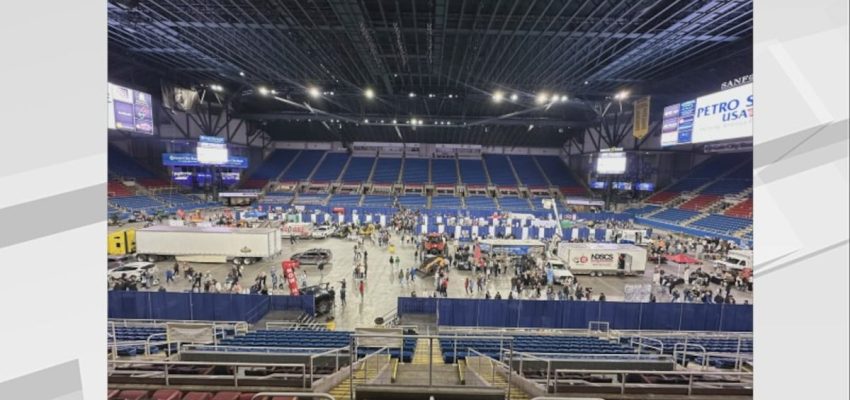
Recently, over 3,800 students had the invaluable opportunity to explore a diverse range of sectors at an expo, delving into vital fields such as healthcare, technology, and skilled trades. While the specific location, the FARGODOME, might be regionally focused, the significance of such an initiative resonates universally. It underscores a crucial, proactive approach to career development: giving students tangible insights into the professions that are not only essential for societal function but are also poised for significant growth. As an AI specialist and tech enthusiast, I find these moments particularly compelling, offering a glimpse into how the next generation will interact with, and indeed shape, a world increasingly influenced by artificial intelligence.
High-Demand Careers: Catalyzing Student Futures Through Exploration
The concept of a career expo, bringing thousands of eager young minds together with representatives from various industries, serves a vital purpose. It moves beyond theoretical discussions in classrooms, offering hands-on experiences, direct conversations with professionals, and a clearer understanding of what different jobs truly entail. For many students, this direct exposure can be the spark that ignites a passion or clarifies a previously vague aspiration. Imagine a high school student, perhaps undecided about their future, suddenly seeing a robotic surgical arm in action, or witnessing a live demonstration of augmented reality in construction, or even understanding the intricate network security protocols that protect our digital lives. These are the moments that transform abstract concepts into concrete possibilities.
The focus on high-demand careers is not accidental; it’s a strategic response to current and projected economic needs. Industries like healthcare, technology, and skilled trades consistently face talent shortages, even as demand for their services escalates. For instance, the U.S. Bureau of Labor Statistics projects a 6% growth in healthcare occupations from 2022 to 2032, translating to about 2.4 million new jobs. Similarly, information technology careers are expected to grow by 12% over the same period, adding nearly half a million new positions. Even skilled trades, often overlooked, are experiencing a renaissance; the National Association of Home Builders reported that 72% of its members are experiencing a shortage of skilled labor, highlighting an urgent need for electricians, plumbers, HVAC technicians, and carpenters. By highlighting these specific sectors, expos help guide students towards pathways where their skills will be most valued and opportunities for stable, well-paying employment are abundant.
Early career exploration also addresses a critical challenge: the disconnect between academic preparation and real-world employment. Too often, students pursue degrees or vocational training without a clear understanding of the day-to-day realities or long-term prospects of a chosen field. An expo provides that essential bridge, allowing them to ask probing questions about required education, typical work environments, salary expectations, and potential career progression. This experiential learning can significantly reduce the likelihood of costly career changes later on, fostering more informed and confident decision-making right from the start. It’s about equipping them not just with knowledge, but with context and clarity.
Redefining Healthcare, Tech, and Trades in the Age of AI
What makes these specific sectors – healthcare, technology, and trades – particularly compelling for future-oriented students is their dynamic interaction with emerging technologies, especially artificial intelligence. AI is not just creating new jobs; it’s fundamentally reshaping existing ones, making cross-disciplinary understanding crucial.
Healthcare: Precision, Personalization, and AI-Driven Care
Healthcare is undergoing a profound transformation. Beyond the traditional roles of doctors and nurses, the sector now includes biomedical engineers, health informatics specialists, telemedicine coordinators, and medical AI developers. AI is revolutionizing diagnostics, enabling earlier and more accurate disease detection through advanced image analysis and predictive analytics. For example, AI algorithms can identify subtle patterns in medical scans that might be missed by the human eye, leading to earlier interventions for conditions like cancer or diabetic retinopathy. Personalized medicine, tailored to an individual’s genetic makeup and lifestyle, is becoming a reality, largely powered by AI’s ability to process vast amounts of genomic data. Robotic surgery, while still requiring human oversight, enhances precision and reduces recovery times. These advancements mean that future healthcare professionals will need not only strong clinical skills but also a keen understanding of data analytics, bioinformatics, and the ethical implications of AI in patient care. The future of healthcare demands individuals who can seamlessly integrate technology into compassionate, patient-centered service.
Technology: The Infinite Frontier of Innovation
The technology sector is arguably the most visibly impacted by AI. From software development to cybersecurity, data science to cloud computing, AI is both a tool and a subject of study. Roles in machine learning engineering, AI ethics, natural language processing, and computer vision are experiencing explosive growth. Students exploring tech careers today are entering a field where the ability to develop, deploy, and manage AI systems will be paramount. Beyond coding, critical thinking, problem-solving, and creativity become essential to design AI solutions that are not just functional but also responsible and beneficial to society. Cybersecurity professionals, for instance, are increasingly using AI to detect and respond to threats faster than human analysts ever could, but they also face sophisticated AI-powered attacks. Data scientists leverage AI to extract insights from massive datasets, influencing everything from business strategy to scientific discovery. The technology landscape is a constantly evolving ecosystem, where lifelong learning is not just an advantage, but a necessity for thriving in these high-demand careers.
Skilled Trades: Smart Infrastructure and Augmented Craftsmanship
Often perceived as traditional, the skilled trades are far from immune to technological disruption. In fact, AI and automation are enhancing these essential vocations, making them more efficient, safer, and technologically sophisticated. Smart homes and buildings require electricians who understand IoT devices and network integration. HVAC technicians are now diagnosing issues in complex smart climate control systems using sensor data and predictive maintenance algorithms. Welders are using augmented reality to visualize their work and improve precision, while robotic systems assist with repetitive or hazardous tasks, allowing skilled craftspeople to focus on more complex, intricate work. Construction sites are leveraging drones for surveying and AI for project management and safety monitoring. These integrations mean that future tradespeople will need a blend of traditional craftsmanship and digital literacy, capable of working with smart tools and interpreting data. These are increasingly becoming intellectually stimulating and technologically advanced high-demand careers, crucial for building and maintaining the infrastructure of tomorrow.
Cultivating Future-Ready Skills: Beyond the Technical
While specific technical skills are undoubtedly important for success in these high-demand careers, the enduring truth is that the future workforce will also need a robust set of ‘human’ skills that AI struggles to replicate. Creativity, critical thinking, complex problem-solving, emotional intelligence, and effective communication are becoming increasingly valuable. These are the skills that enable innovation, foster collaboration, and navigate ethical dilemmas – aspects where human intuition and judgment remain irreplaceable.
Furthermore, adaptability and a growth mindset are paramount. The pace of technological change means that what is cutting-edge today might be obsolete tomorrow. Students must be prepared for continuous learning, reskilling, and upskilling throughout their careers. Embracing a philosophy of lifelong education is no longer just a recommendation; it’s a fundamental requirement for navigating a dynamic job market. Exposing students to various fields early on, as demonstrated by the FARGODOME expo, helps them develop a broader perspective and the agility needed to pivot when necessary.
The intertwining of technology and human expertise means that interdisciplinary skills are also highly prized. A nurse who understands basic coding, an electrician who can troubleshoot network issues, or a software developer with an appreciation for human psychology will be exceptionally well-positioned. Encouraging students to explore subjects outside their primary focus can open doors to innovative hybrid roles that will define the next generation of professional opportunities. These are the versatile professionals who will not only fill but also define the critical roles of the future.
The journey from student to professional in today’s world is complex, but it is also filled with unprecedented opportunities. Events that bring thousands of students face-to-face with the reality and potential of high-demand careers are not just expos; they are pivotal educational experiences. They are investments in human capital, fostering informed decisions and inspiring the next generation to pursue paths that are both personally rewarding and societally essential. By proactively engaging with industries like healthcare, technology, and skilled trades, and understanding how AI will shape them, students are better equipped to confidently step into roles that will drive progress and innovation for decades to come.
As we look to the future, the onus is on educators, industry leaders, and policymakers to collaborate on creating more such pathways for exploration and learning. The goal is not merely to fill job vacancies but to cultivate a workforce that is resilient, adaptable, and innovative – a workforce ready to harness the power of AI to solve the complex challenges of tomorrow. Empowering students with the knowledge and inspiration to pursue these critical roles is perhaps the most strategic investment we can make in our collective future, ensuring that the human element remains central to an increasingly technological world.










