
The landscape of global employment is undergoing a seismic shift, driven primarily by the relentless march of artificial intelligence. What seemed like science fiction just a few decades ago is now an integral part of our daily lives and, more importantly, the bedrock of tomorrow’s economy. From automating routine tasks to generating new industries and job categories entirely, AI is not just changing *what* we do, but *how* we work and *what skills* are paramount for success. In this rapidly evolving environment, the concept of ‘career readiness’ has taken on an entirely new dimension.
Gone are the days when a static degree guaranteed a linear professional path. Today, the most valuable assets are adaptability, continuous learning, and an intuitive understanding of technological trends. It’s no longer enough to simply acquire knowledge; one must master the art of applying it, augmenting it with AI, and anticipating the next wave of innovation. This urgent need for a new breed of professionals, equipped not just with traditional qualifications but with a forward-looking, tech-savvy mindset, is precisely why initiatives like The Washington Center’s Career Launch Bootcamp are more critical than ever, especially when hosted directly on university campuses like the University of North Carolina at Greensboro (UNCG). Such programs are vital conduits, connecting academic foundations with the dynamic demands of an AI-transformed workforce, thereby providing students with a robust platform for their ultimate career journey.
Future Career Launch: Navigating the AI-Transformed Job Market
To truly understand the significance of comprehensive career preparation in the current era, we must first grasp the profound impact AI has already had, and will continue to have, on the global job market. Artificial intelligence, encompassing machine learning, natural language processing, computer vision, and robotics, is not merely a tool; it’s a transformative force that is redefining every sector. Consider the financial industry, where AI algorithms now perform complex fraud detection, algorithmic trading, and personalized financial advice, traditionally roles requiring extensive human analysis. In healthcare, AI assists in diagnostics, drug discovery, and even robotic surgery, enhancing precision and efficiency. Manufacturing leverages AI for predictive maintenance and optimized supply chains, while the creative industries see AI generating art, music, and written content, pushing the boundaries of human-machine collaboration.
This isn’t to say that human jobs are simply being replaced en masse. Rather, many roles are being augmented, requiring professionals to work alongside AI, leveraging its capabilities to amplify their own. The emphasis is shifting from repetitive, rule-based tasks – which AI excels at – to uniquely human skills such as critical thinking, complex problem-solving, creativity, emotional intelligence, and interdisciplinary collaboration. A successful Future Career Launch in this landscape demands more than just technical proficiency; it requires the ability to conceptualize, innovate, and adapt. For instance, a marketing professional in the AI era might not just write copy, but use AI tools to analyze consumer behavior, personalize campaigns at scale, and forecast market trends, necessitating a blend of creative strategy and data literacy. Therefore, understanding the nuances of AI’s capabilities and limitations becomes as crucial as mastering traditional domain knowledge.
Moreover, AI is creating entirely new job categories that didn’t exist a decade ago: AI ethics specialists, prompt engineers, data annotators, AI trainers, and machine learning operations (MLOps) engineers, to name a few. The World Economic Forum’s ‘Future of Jobs Report 2023’ estimates that while AI will displace some roles, it is also expected to create millions of new ones, leading to a net positive impact on job creation. However, this positive outlook hinges on the workforce’s ability to reskill and upskill at an unprecedented pace. This necessitates a proactive approach to career development, one that integrates the understanding of emerging technologies with timeless professional competencies. It is about preparing individuals not just for a job, but for a dynamic career trajectory in a world increasingly shaped by intelligent systems.
The Bootcamp Advantage: Bridging the Skill Gap in an AI Age
In light of these transformative changes, traditional academic pathways, while foundational, often need supplementary experiences to fully equip students for the realities of the modern workforce. This is where programs like The Washington Center’s Career Launch Bootcamp, which UNCG so foresightfully hosted as its first campus-based iteration, prove invaluable. These intensive, short-duration programs are designed to provide practical, hands-on skills and real-world exposure that complement theoretical knowledge, directly addressing the evolving skill gaps created by AI.
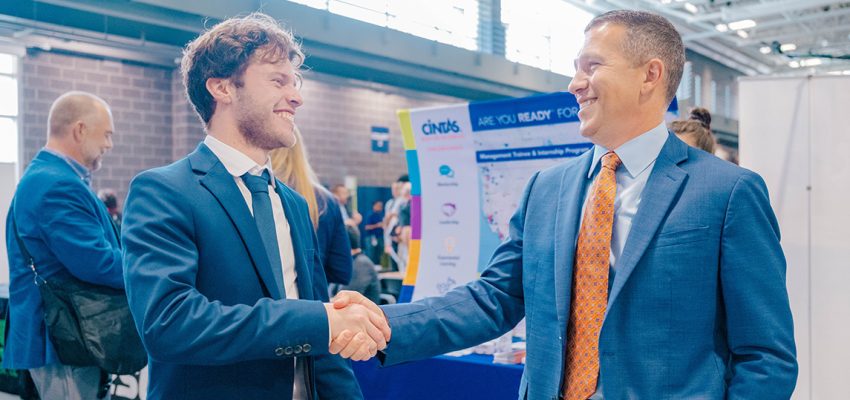
Think about what these bootcamps typically offer: workshops on resume building, interview techniques, networking strategies, and career exploration. Now, contextualize them within an AI-driven world. A resume in 2024 needs to be optimized not just for human recruiters, but for Applicant Tracking Systems (ATS) that often use AI to filter candidates based on keywords and relevance. Interview skills extend beyond verbal communication to demonstrating comfort with technology and an understanding of how AI might intersect with the role. Networking, while still fundamentally human, now often begins and is sustained through digital platforms and professional AI-powered communities. The bootcamp’s focus on “network-building opportunities with regional employers” is particularly potent; in a world increasingly reliant on algorithms, the human connection and the ability to forge strategic relationships remain paramount for career progression and opportunity discovery. These connections provide insights into industry trends, mentorship, and often, direct pathways to employment that AI-driven job boards might miss.
Furthermore, bootcamps excel at cultivating crucial ‘soft skills’ that AI cannot replicate and, in fact, makes more valuable. Adaptability, resilience, ethical reasoning, and critical problem-solving – skills that underpin successful human-AI collaboration – are often honed through interactive workshops, mock scenarios, and direct feedback provided in a bootcamp setting. They offer a safe space to experiment, fail fast, and learn. By connecting students directly with regional employers, bootcamps also provide invaluable insights into the specific skills and mindsets sought by local industries, allowing students to tailor their readiness efforts. This direct interface is a crucial component for any effective Future Career Launch program, ensuring that the skills learned are immediately applicable and relevant to the actual job market demands, rather than abstract concepts.
Beyond the Basics: Cultivating an AI-Ready Mindset
Achieving a successful Future Career Launch in the age of AI extends beyond acquiring specific technical skills; it fundamentally requires cultivating an ‘AI-ready mindset.’ This means more than just knowing how to use an AI tool; it means understanding its underlying principles, its capabilities, its limitations, and critically, its ethical implications. For instance, an AI-ready professional in journalism won’t just use an AI writer, but will understand how to fact-check AI-generated content, ensure bias isn’t propagated, and use AI to enhance investigative reporting, not replace it. This calls for a nuanced form of AI literacy, which involves both practical know-how and a deep sense of responsibility.
Continuous learning, often termed ‘lifelong learning,’ is no longer a professional virtue but an absolute necessity. AI models are constantly evolving, and so must the skills of the workforce. Universities like UNCG, by embracing and hosting such forward-thinking initiatives, play a pivotal role in fostering this culture of perpetual growth. They provide the academic rigor alongside practical exposure, preparing students not just for their first job, but for a career that will likely involve several pivots and extensive upskilling. Students should proactively engage with online courses (MOOCs), participate in hackathons, contribute to open-source AI projects, and regularly consume AI-focused content from reputable sources. Building a personal portfolio that demonstrates hands-on experience with AI tools and concepts is becoming just as important as academic transcripts.
Moreover, the AI-ready mindset embraces the concept of ‘human-AI collaboration.’ This isn’t about humans competing with machines, but about collaborating with them to achieve superior outcomes. It means understanding which tasks are best suited for AI and which require human judgment, creativity, or emotional intelligence. For example, in customer service, AI chatbots can handle routine queries efficiently, freeing human agents to focus on complex, empathetic problem-solving. Cultivating this collaborative mindset ensures that professionals can leverage AI as a powerful co-pilot, enhancing their productivity, decision-making, and innovative capacity, rather than viewing it as a threat. This symbiotic relationship will be a hallmark of successful careers in the decades to come.
In an era where the only constant is change, preparing for a successful career means embracing continuous adaptation and proactive learning. The intersection of robust academic foundations and practical, industry-aligned programs like The Washington Center’s Career Launch Bootcamp, exemplifies the strategic approach necessary for navigating the complexities of an AI-driven job market. These initiatives are not just about securing a first job; they are about laying the groundwork for resilient, adaptable, and impactful professional lives.
As Artificial Intelligence continues to redefine the boundaries of what’s possible, those who are best prepared will be those who embrace its potential, understand its challenges, and possess the uniquely human skills that complement technological advancements. A truly successful Future Career Launch in this exciting new world is about much more than a list of qualifications; it’s about cultivating a mindset of innovation, ethical responsibility, and relentless self-improvement, positioning oneself at the forefront of the technological revolution.