
In a world rapidly reshaped by artificial intelligence, automation, and unprecedented technological advancements, the landscape of work is undergoing a profound transformation. Traditional career paths are evolving, new roles are emerging, and the demand for specialized skills is skyrocketing. It’s a future that, while exciting, also presents a critical challenge: how do we ensure our talent pool is not only prepared but also thrives amidst this change? The answer, increasingly, lies in robust and responsive skill development programs that forge direct pipelines to the industries of tomorrow.
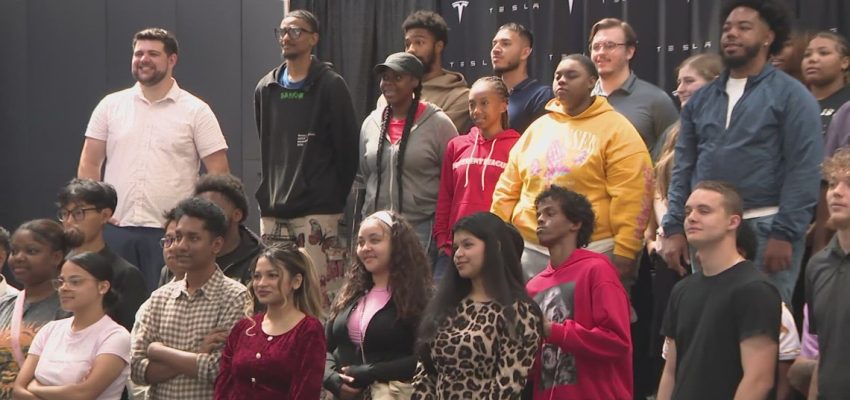
Western New York recently offered a compelling testament to this forward-thinking approach, celebrating a significant milestone that underscores the power of strategic partnerships. Fifty local residents, having completed rigorous vocational education at the Northland Workforce Training Center, are now embarking on promising careers at Tesla’s cutting-edge facility in Buffalo. This isn’t just a news story; it’s a living blueprint for how communities can proactively adapt to the demands of the 21st-century economy, demonstrating a powerful synergy between local talent development and global innovation giants. As André Lacerda, an AI specialist, writer, and tech enthusiast, I find such initiatives not merely encouraging, but absolutely essential for building a resilient and prosperous future.
Workforce Training: Paving the Way for the Future of Industry
The story of these 50 graduates from the Northland Workforce Training Center (NWTC) is more than just an employment statistic; it’s a narrative of renewed opportunity, community revitalization, and strategic foresight. NWTC, a state-of-the-art facility located in Buffalo’s historic Northland Beltline, was established with a clear mission: to create a pipeline of skilled advanced manufacturing and energy workers for the Buffalo Niagara region. Its model is designed to be highly responsive to industry needs, collaborating directly with local businesses to ensure that the curriculum precisely matches the competencies employers seek. This direct feedback loop is crucial, allowing NWTC to offer programs that aren’t just academically sound but are intensely practical and job-focused.
Graduates from NWTC typically undergo intensive, hands-on training programs that can last anywhere from a few months to over a year, focusing on high-demand trades such as advanced manufacturing, machining, welding, electrical systems, and mechatronics. The curriculum emphasizes not just technical proficiency but also problem-solving, critical thinking, and safety – skills that are universally valued across all industrial sectors. For the 50 individuals now joining Tesla, this **workforce training** means they are entering one of the world’s most innovative companies with a solid foundation, ready to contribute from day one. This accelerated path to gainful employment in a high-tech sector is a game-changer for individuals who might not pursue traditional four-year degrees but are eager to enter the skilled trades.
The broader implications of such specialized **workforce training** extend far beyond the individual. In an era where automation and AI are often perceived as job displacement threats, programs like NWTC demonstrate how humans can remain indispensable. They prepare individuals to work alongside intelligent machines, to manage complex automated systems, to perform predictive maintenance on robotic equipment, and to interpret data generated by AI-powered sensors. These are not merely ‘manual labor’ roles; they are advanced technical positions that require a blend of traditional craftsmanship and digital literacy. By equipping individuals with these hybrid skills, such initiatives directly address the anticipated future needs of an increasingly automated industrial landscape, fostering a symbiotic relationship between human talent and technological advancement.
Furthermore, this model of targeted **workforce training** helps bridge the pervasive ‘skills gap’ that many industries face. According to a 2021 study by Deloitte and The Manufacturing Institute, the manufacturing skills gap in the U.S. could result in 2.1 million unfilled jobs by 2030, potentially costing the U.S. economy $1 trillion. Programs like NWTC are vital in mitigating this, providing a steady supply of qualified professionals. They showcase how an investment in vocational and technical education pays dividends not only for the graduates and the companies but for the entire regional economy, strengthening its industrial base and attracting further high-tech investments.
Tesla’s Gigafactory Buffalo: A Hub of Innovation and Opportunity
Tesla’s presence in Buffalo, specifically Gigafactory 2, is a cornerstone of the city’s economic resurgence and a testament to its evolving identity as a hub for advanced manufacturing and clean energy. While often overshadowed by the larger vehicle assembly plants, Gigafactory 2, located at the RiverBend Tech Hub, plays a crucial role in Tesla’s broader mission. This facility primarily focuses on the production of Solar Roof tiles and energy storage products like Powerwall and Powerpack, in addition to being a significant hub for Supercharger component manufacturing. It is a highly automated and technically sophisticated environment, requiring a specialized and adaptable workforce.
The decision by Tesla to tap into the local talent pool, particularly through a program like Northland, speaks volumes about the quality of the professional development offered there. For a company at the forefront of technological innovation, a reliable supply of skilled technicians, operators, and maintenance personnel is paramount. These roles are critical for ensuring the smooth operation of assembly lines, maintaining complex machinery, conducting quality control, and troubleshooting issues in real-time. The graduates from NWTC are likely filling positions such as manufacturing technicians, operations specialists, and process technicians – roles that are vital for sustaining high-volume, high-quality production.
The symbiotic relationship here is clear: Tesla gains access to a pre-screened, highly trained labor force that is familiar with modern manufacturing principles, while Western New Yorkers gain access to high-paying, future-proof jobs with a global leader. This isn’t merely about filling jobs; it’s about fostering a mutually beneficial ecosystem where industrial growth is supported by a robust local talent pipeline. The skills learned at NWTC – precision machining, industrial electricity, robotics, automated systems, and advanced welding – are directly transferable and incredibly valuable within Tesla’s operations. These are the foundational human skills that complement and enable the efficient deployment of AI and automation in a factory setting. For example, understanding how a robotic arm’s movements are programmed or how a sensor array feeds data into a predictive maintenance algorithm requires a human operator with specialized technical instruction.
The economic ripple effect of this partnership extends beyond direct employment. Tesla’s investment in Buffalo and its reliance on local talent can attract ancillary businesses, service providers, and even more tech companies, further diversifying the region’s economy and creating a self-reinforcing cycle of growth. It solidifies Western New York’s reputation as an attractive location for high-tech manufacturing, demonstrating that the region possesses both the infrastructure and the human capital necessary to support cutting-edge industries. This transformation from a traditional industrial base to a modern clean energy and advanced manufacturing hub is a powerful narrative, underpinned by strategic investments in human capital through targeted **workforce training**.
Bridging the Skills Gap: The Imperative for a Future-Ready Economy
One of the most pressing challenges facing economies worldwide is the growing skills gap – the disconnect between the skills workers possess and the skills employers need. This gap is exacerbated by the rapid pace of technological advancement, particularly the proliferation of AI, machine learning, and advanced robotics. Traditional educational pathways, while invaluable, often struggle to keep pace with these evolving demands, leading to a shortage of qualified professionals in critical fields.
This is precisely where innovative programs focused on **workforce training** become indispensable. They offer agile, responsive, and often accelerated pathways to skill acquisition that are directly aligned with industry requirements. Unlike more theoretical academic programs, these initiatives are designed with immediate employability in mind. They emphasize hands-on experience, practical problem-solving, and the mastery of specific tools and technologies currently used in the industry. For instance, while a university degree might provide a strong theoretical foundation in AI, a specialized training program could teach a technician how to program and maintain a specific type of industrial robot that leverages AI for vision systems or predictive maintenance.
The success story of Northland and Tesla serves as a powerful model for bridging this gap. It highlights the efficacy of close collaboration between educational institutions, governmental bodies, and private sector leaders. When industry leaders communicate their specific talent needs, and educators design programs to meet those needs precisely, the result is a highly efficient and effective talent pipeline. This collaborative approach ensures that the investment in vocational education yields immediate and tangible returns for both individuals and businesses.
In the context of an AI-driven economy, the demand for human skills is shifting, not necessarily diminishing. While AI automates repetitive or data-intensive tasks, it simultaneously creates new roles that require uniquely human attributes: creativity, critical thinking, complex problem-solving, emotional intelligence, and adaptability. More critically, AI systems need to be built, managed, monitored, and optimized by humans. This necessitates a workforce adept at interacting with intelligent systems, understanding their outputs, and even training them. The kind of technical skills imparted by programs like Northland – understanding complex machinery, electrical systems, and operational processes – are foundational for interacting with and maintaining the AI-powered infrastructure of modern factories. These are the skills that enable humans to be the ‘operators’ and ‘optimizers’ of AI, not just its bystanders.
Beyond technical proficiency, these programs also foster a culture of continuous learning and adaptability. In a world where technologies can become obsolete in a matter of years, the ability to reskill and upskill throughout one’s career is paramount. The initial **workforce training** provides a strong base, but the experience gained on the job, combined with employer-provided training and individual initiative, ensures that these professionals remain relevant and valuable in the long term. This focus on lifelong learning is perhaps the most crucial element in building a future-ready economy that can withstand and leverage the next waves of technological disruption.
This successful collaboration in Western New York sends a clear message: the future of work isn’t just about advanced technology; it’s fundamentally about empowering people with the skills to master and deploy that technology. It’s about creating pathways for individuals from all backgrounds to access high-growth careers, ensuring that the benefits of technological progress are widely shared. As we move further into an era defined by AI, investments in targeted, industry-aligned **workforce training** programs will not just be beneficial; they will be the cornerstone of economic resilience and growth.
In conclusion, the graduation of 50 skilled professionals from the Northland Workforce Training Center, directly transitioning into careers at Tesla’s Gigafactory Buffalo, is a beacon of hope and a practical blueprint for economic development in the age of artificial intelligence. It underscores the profound impact that well-designed **workforce training** initiatives can have on individuals, industries, and entire regions. By proactively addressing the evolving demands of the job market and fostering strong partnerships between education and industry, communities can ensure their citizens are not just prepared for the future of work, but are actively shaping it.
This success story reaffirms that human ingenuity, coupled with strategic skill development, remains the most powerful engine of progress. As technology continues its relentless march forward, our ability to adapt, learn, and innovate will be our greatest asset. Investing in robust **workforce training** is not merely an economic imperative; it is an investment in human potential, ensuring that as AI scales new heights, so too do the opportunities for a skilled, adaptable, and thriving global workforce.