
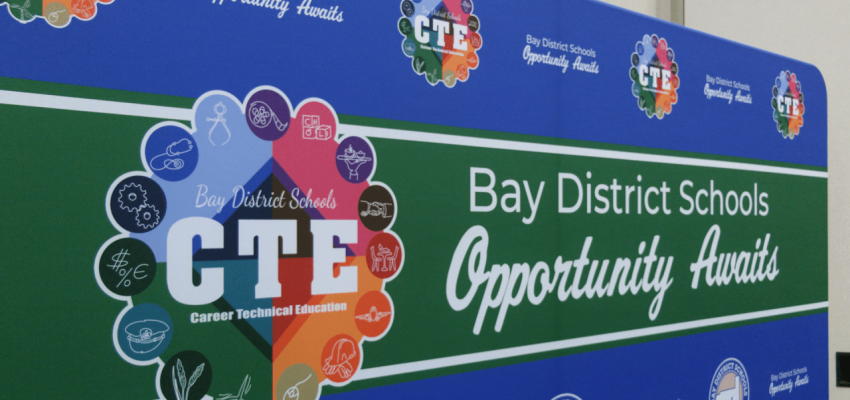

In an era defined by rapid technological advancement and an ever-shifting economic landscape, the pathway from education to a fulfilling career has never been more dynamic. Traditional academic routes remain vital, but an increasingly significant emphasis is being placed on practical skills, real-world experience, and direct industry relevance. This growing need underscores the critical importance of initiatives like the recent Career and Technical Education (CTE) Expo in Bay County, Florida. Far from being mere showcases, these events serve as vibrant crucibles where potential meets opportunity, offering students a tangible glimpse into the diverse and rewarding professional worlds awaiting them.
The Bay County CTE Expo, a bustling hub of activity where students from across Bay District schools converged, exemplifies this crucial connection. Imagine hundreds of eager young minds, moving between interactive stations, engaging with professionals, and getting a first-hand look at potential career paths spanning everything from the intricacies of healthcare and the artistry of culinary arts to the essential functions of HVAC systems and the complex logic of information technology. It’s an immersive experience that transcends textbooks, providing context and inspiration that lectures alone cannot deliver. As an AI specialist and tech enthusiast, I’m particularly fascinated by how these programs are evolving to prepare students not just for today’s jobs, but for the careers of a technologically transformed tomorrow. These expos are more than just job fairs; they are pivotal moments in a student’s journey, helping them to visualize their future and understand the practical steps required to achieve it.
### Career and Technical Education: Bridging the Skill Gap
The concept of Career and Technical Education (CTE) is deeply rooted in the idea that a robust economy and a thriving society depend on a skilled workforce. Historically known as vocational training, modern CTE programs have evolved significantly, moving beyond traditional trades to encompass a broad spectrum of high-demand fields that integrate academic knowledge with hands-on technical skills. The goal is clear: to prepare students for successful careers by providing them with the specific competencies and certifications required by industries. The skill gap – the disparity between the skills employers need and the skills available in the workforce – is a persistent challenge across many sectors. CTE expos are a direct response to this, serving as powerful conduits that connect the talent pipeline directly to industry needs.
Take, for instance, the fields highlighted at the Bay County event. Healthcare, a perennially critical sector, offers a multitude of roles beyond doctors and nurses, including medical assistants, phlebotomists, surgical technologists, and administrative specialists. These positions require precise training and often lead to stable, well-paying jobs with opportunities for advancement. Similarly, culinary arts programs don’t just teach cooking; they instill principles of nutrition, food safety, hospitality management, and entrepreneurship, preparing students for careers as chefs, restaurateurs, catering managers, and food service directors. According to the National Restaurant Association, the restaurant industry alone employs over 15 million people in the U.S., highlighting the vast opportunities within this field.
Then there’s HVAC (Heating, Ventilation, and Air Conditioning) – a trade that is indispensable in virtually every building, residential or commercial. With increasing demands for energy efficiency and smart home technologies, HVAC technicians require sophisticated knowledge of mechanics, electronics, and environmental science. The Bureau of Labor Statistics projects a steady growth in this field, underscoring its long-term viability. Information Technology (IT) encompasses an even broader array of specializations, from cybersecurity and network administration to software development and data analysis. As every sector becomes more digitalized, the demand for IT professionals continues to skyrocket. These are not merely entry-level jobs; they are foundations for dynamic careers that can lead to leadership roles and significant innovation.
Beyond these examples, CTE programs worldwide cover diverse areas such as advanced manufacturing, construction technologies, logistics and transportation, public safety, marketing, graphic design, and automotive repair. Each pathway is designed with industry input to ensure that the curriculum is relevant and prepares students for immediate employment or further specialized education. The exposure gained at events like the Bay County expo is invaluable, offering a tangible connection to what can sometimes feel like abstract career choices. Students get to interact with equipment, see demonstrations, and, most importantly, speak directly with professionals who are passionate about their work. This firsthand interaction often sparks interest and clarifies career aspirations in ways traditional classroom learning cannot.
### Beyond the Classroom: The Experiential Learning Advantage
One of the most profound benefits of Career and Technical Education lies in its emphasis on experiential learning. Unlike traditional academic models that primarily focus on theoretical knowledge, CTE places a significant premium on hands-on application, problem-solving in real-world contexts, and the development of practical skills. This methodology is particularly effective because it caters to diverse learning styles, allowing students to grasp complex concepts by doing, building, and creating.
An expo setting beautifully encapsulates this philosophy. Imagine a student at the Bay County event who might have only vaguely considered a career in construction. At a CTE booth, they might operate a virtual welding simulator, test the strength of different materials, or learn about sustainable building practices from an industry expert. This direct engagement transforms a distant concept into a tangible, exciting possibility. These programs often integrate apprenticeships, internships, and work-based learning opportunities directly into the curriculum, providing students with invaluable on-the-job experience before they even graduate. This early exposure not only builds a student’s resume but also fosters a professional network, giving them a significant advantage in the job market.
Furthermore, CTE serves as an empowering alternative or complement to a four-year university degree. While higher education remains a critical path for many, it is not the only path to a successful and rewarding career. CTE can lead directly to certifications and licenses that are highly valued by employers, enabling students to enter the workforce sooner and with less student debt. Many CTE programs also offer dual enrollment opportunities, allowing students to earn college credits while still in high school, further streamlining their educational journey. This blend of academic rigor and practical application ensures that graduates are not only knowledgeable but also highly competent and immediately employable.
The impact extends beyond individual students to the broader community. A robust CTE ecosystem strengthens local economies by supplying a steady stream of skilled workers to critical industries. This, in turn, attracts new businesses and fosters innovation, creating a virtuous cycle of economic growth. By cultivating a local talent pool, communities can reduce reliance on external recruitment and ensure that local businesses have the human capital they need to thrive. Events such as the Bay County CTE Expo play a pivotal role in this ecosystem, acting as a crucial interface where educational institutions, local businesses, and aspiring young professionals can connect and collaborate. They demonstrate the community’s commitment to developing its future workforce, showcasing the wealth of talent and opportunity available locally.
### Future-Proofing Careers: Adapting to a Tech-Driven World
As an AI specialist, I often reflect on how rapidly technology is reshaping every facet of our lives, including the world of work. The traditional boundaries between trades and technology are blurring, creating new roles and demanding a more adaptable skill set. This is where modern Career and Technical Education truly shines – in its capacity to evolve and incorporate cutting-edge technologies into its curriculum, thereby future-proofing students’ careers.
Consider the evolution within the fields mentioned. In healthcare, students are learning about telehealth systems, electronic health records, and even basic data analytics for patient care. Culinary arts programs are exploring sustainable food systems, smart kitchen technology, and online food delivery logistics. HVAC technicians are now trained in smart building systems, IoT-enabled sensors, and predictive maintenance algorithms. And in IT, the curriculum is a constant race to keep up with advancements in artificial intelligence, machine learning, cloud computing, and advanced cybersecurity protocols. These are not merely add-ons; they are becoming fundamental components of effective training.
The real advantage of CTE in a tech-driven world lies not just in teaching students *how* to use new technologies, but in fostering the underlying problem-solving skills, critical thinking, and adaptability necessary to thrive alongside them. While AI and automation will undoubtedly transform many tasks, the uniquely human skills of creativity, complex problem-solving, collaboration, and emotional intelligence will become even more valuable. CTE programs, with their emphasis on hands-on application and teamwork, inherently cultivate these soft skills alongside technical proficiency.
For instance, an advanced manufacturing student learning robotics isn’t just programming a machine; they’re understanding the workflow, troubleshooting mechanical issues, and collaborating with a team to optimize production. A student in a media arts program isn’t just using graphic design software; they’re developing a creative vision, understanding client needs, and adapting their approach based on feedback. These are precisely the versatile professionals who will be best equipped to navigate the AI-augmented workplaces of the future, working symbiotically with intelligent systems to achieve unprecedented levels of productivity and innovation. CTE programs are, therefore, instrumental in preparing a generation that can not only embrace technological change but also drive it.
The Career and Technical Education model offers a powerful antidote to uncertainty in the job market. By focusing on practical, in-demand skills and fostering adaptability, it equips students with the resilience and expertise to pursue meaningful careers in a world that is constantly evolving. The success of expos like Bay County’s is a testament to the ongoing relevance and increasing importance of this educational pathway.
In conclusion, the Bay County CTE Expo serves as a microcosm of a larger, global movement towards education that is deeply integrated with industry needs. It highlights the immense value of providing students with direct exposure to career opportunities, fostering practical skills, and building a foundation for lifelong learning. These programs are not just about training for specific jobs; they are about empowering individuals to build resilient, rewarding careers and to contribute meaningfully to their communities and economies.
As we look to the future, the imperative for robust Career and Technical Education will only grow. Investing in these pathways means investing in our collective future – cultivating a workforce that is skilled, adaptable, and ready to meet the challenges and opportunities of a technologically advanced world. It is a testament to the foresight and dedication of educators and industry partners who recognize that the best way to prepare students for tomorrow is to give them the tools, experiences, and inspiration today.










