
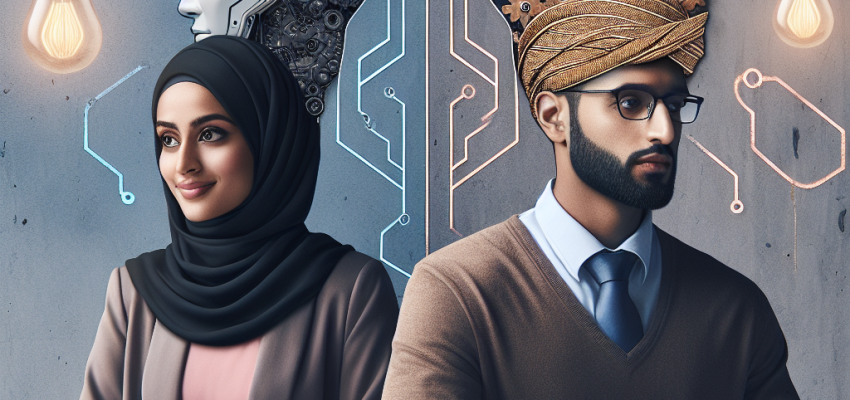

The professional world stands at a precipice, gazing into a future reshaped by the exponential advancement of artificial intelligence. Once confined to the realm of science fiction, AI is now an undeniable force, systematically permeating every industry, from healthcare to entertainment, finance to manufacturing. This technological revolution sparks a fundamental question in the minds of professionals and aspiring workers alike: As AI becomes increasingly sophisticated, capable of performing tasks once thought exclusively human, what does this mean for our careers? Will our skills become obsolete, or will this new era usher in unparalleled opportunities for growth and innovation? The answer, as with many complex shifts, is not binary. Instead, it is a nuanced landscape where certain roles face significant transformation or displacement, while others are fortified, enhanced, or even newly created, all due to the relentless march of intelligent automation. Understanding this evolving dynamic is not merely academic; it is crucial for navigating the professional landscape of tomorrow, for adapting our skill sets, and for ensuring our professional resilience in an AI-powered world.
AI job impact
The **AI job impact** is multifaceted, extending far beyond simple automation. It involves the augmentation of human capabilities, the creation of entirely new job categories, and, inevitably, the re-evaluation of existing roles. To truly comprehend this shift, it is essential to move beyond the alarmist headlines and delve into the specific characteristics of jobs that make them more or less susceptible to AI integration. Broadly, roles that involve repetitive tasks, data processing, and predictable decision-making are those most ripe for automation, while positions demanding complex problem-solving, emotional intelligence, creativity, and nuanced human interaction tend to be more resilient. The key lies in understanding AI not just as a replacement, but as a powerful tool that changes the nature of work itself.
Careers at Risk of Significant Transformation or Displacement
Predictability is a primary indicator of a job’s susceptibility to AI. Any role that can be broken down into a series of clear rules, data inputs, and desired outputs is a prime candidate for machine learning algorithms. AI excels at processing vast amounts of information, identifying patterns, and executing tasks with speed and accuracy far beyond human capacity.
- Routine Data Entry and Administrative Support: Tasks like data input, scheduling, record keeping, and basic form processing are highly susceptible. AI-powered tools can automate these functions, freeing human employees for more complex tasks or eliminating the need for their roles entirely. Think of the traditional administrative assistant role evolving into a more strategic coordinator, leveraging AI tools rather than performing the rote tasks themselves.
- Manufacturing and Assembly Line Workers: While automation has been a factor in manufacturing for decades, AI-powered robotics are increasingly agile and capable of performing more intricate and adaptive tasks. This goes beyond simple repetitive motion to include quality control via computer vision and predictive maintenance, further reducing the need for human intervention in certain areas.
- Customer Service Representatives (Tier 1): Many common customer service queries can now be handled by AI chatbots and virtual assistants. These systems can answer frequently asked questions, troubleshoot basic problems, and guide customers through processes efficiently. While complex or emotionally charged customer interactions will likely remain human-centric, the initial layers of customer support are rapidly being automated.
- Truck Drivers and Logistics Coordinators: The development of autonomous vehicles poses a significant threat to long-haul truck drivers. Similarly, AI can optimize logistics, route planning, and inventory management, potentially streamlining roles traditionally performed by human coordinators. The transition will be gradual, influenced by regulatory and social factors, but the technological capability is rapidly advancing.
- Basic Accounting and Bookkeeping: AI can automate invoice processing, reconciliation, payroll, and generate financial reports. While higher-level financial analysis and strategic advisory roles will remain human, the more routine aspects of bookkeeping are highly amenable to automation.
- Journalism and Content Generation (Basic Reporting): AI is already capable of generating simple news reports, sports summaries, and financial analyses based on structured data. For content that does not require deep analysis, original thought, or nuanced storytelling, AI can produce drafts quickly, potentially reducing the need for human journalists in certain reporting capacities.
- Legal Support Roles (Paralegals, Document Reviewers): AI can rapidly review vast amounts of legal documents, identify relevant clauses, and conduct preliminary research with remarkable speed and accuracy. This significantly streamlines tasks that previously consumed considerable human time, transforming or reducing demand for traditional document review roles.
- Telemarketing and Telecommunication Sales: Automated dialers, AI-powered scripts, and even synthetic voices can conduct outbound calls for sales or surveys, handling a large volume of interactions without human fatigue or emotional variability.
It is crucial to understand that at risk does not always mean outright elimination. Often, it means a profound transformation of the role, requiring existing professionals to upskill or reskill to work alongside AI, leveraging its capabilities rather than competing against them. The emphasis shifts from performing the repetitive task to managing the AI, interpreting its outputs, and handling the exceptions it cannot manage.
Careers That Are Resilient, Augmented, or Enhanced by AI
While some roles face significant pressure, many others are poised to thrive, often becoming more productive, strategic, and fulfilling through AI collaboration. These are typically roles that demand uniquely human attributes or operate in environments too complex or unpredictable for current AI capabilities.
- Healthcare Professionals (Doctors, Nurses, Therapists): While AI can assist in diagnosis, drug discovery, and medical imaging analysis, the core of healthcare involves empathy, nuanced patient communication, complex ethical decision-making, and hands-on care. AI will augment doctors, providing better tools and insights, but it will not replace the human touch essential for healing and compassion.
- Educators and Trainers: AI can personalize learning experiences, grade assignments, and provide data on student performance. However, teaching requires inspiration, mentorship, adapting to individual learning styles, managing classroom dynamics, and fostering critical thinking – all areas where human educators remain indispensable. AI will likely free teachers from administrative burdens, allowing them to focus more on impactful instruction.
- Creative Professionals (Artists, Musicians, Writers, Designers): While AI can generate art, music, and text, true creativity involves original thought, emotional depth, cultural understanding, and the ability to challenge conventions. AI will serve as a powerful tool for these professionals, accelerating their creative process and enabling new forms of expression, but the ultimate vision and unique human perspective will remain paramount.
- Scientists and Researchers: AI can accelerate data analysis, simulate complex systems, and even propose hypotheses. This allows scientists to explore more avenues, conduct larger-scale experiments, and discover insights faster. The intellectual curiosity, experimental design, and interpretative judgment of human scientists are irreplaceable.
- Skilled Trades (Plumbers, Electricians, Carpenters): These jobs involve highly variable physical environments, complex problem-solving on the spot, and fine motor skills in unpredictable settings. While robots might assist with certain aspects, the adaptability, judgment, and dexterity required for most skilled trades make them very difficult to automate completely.
- Leadership and Management Roles: Leading teams, setting strategic vision, fostering culture, and navigating complex organizational dynamics require emotional intelligence, negotiation skills, ethical judgment, and the ability to inspire – qualities AI cannot replicate. AI will provide managers with better data and insights, making them more effective leaders.
- Sales and Business Development: While AI can analyze customer data and automate parts of the sales pipeline, building rapport, understanding complex client needs, negotiation, and closing deals often hinge on human persuasion, empathy, and strategic thinking. AI can optimize lead generation and customer relationship management, enhancing the human salesperson’s effectiveness.
- AI Developers, Engineers, and Ethicists: Perhaps the most obvious category, the very creation, maintenance, improvement, and ethical oversight of AI systems require highly skilled human professionals. This includes data scientists, machine learning engineers, AI ethicists, prompt engineers, and cybersecurity specialists focusing on AI systems. These are emerging fields with high demand.
- Human Resources Professionals: While AI can automate parts of HR, such as initial resume screening or benefits administration, the core functions of HR – fostering employee engagement, resolving conflicts, talent development, and maintaining a positive company culture – rely heavily on emotional intelligence and interpersonal skills.
These roles are not immune to change, but rather than being displaced, they are likely to be significantly augmented. Professionals in these fields will find AI acting as a powerful co-pilot, handling routine tasks and providing advanced insights, allowing them to focus on higher-level strategic thinking, creativity, and human-centric interactions.
Strategies for Career Resilience in an AI-Driven World
The future of work is not about fearing AI, but about strategically adapting to its presence. Professionals who proactively embrace lifelong learning and cultivate uniquely human skills will be best positioned to thrive. The **AI job impact** makes these strategies not just advisable but essential for career longevity.
-
Embrace Lifelong Learning and Reskilling: The most critical strategy is continuous education.
- Upskilling: Learning new skills within your current field that leverage AI tools. This might involve understanding how to use AI-powered analytics platforms, design AI prompts effectively, or manage AI-driven workflows.
- Reskilling: Acquiring entirely new skill sets to transition into emerging roles or entirely different industries that are less susceptible to automation or are directly involved in AI development and management. Online courses, certifications, and advanced degrees will become even more vital. Consider platforms offering micro-credentials in data science, machine learning basics, or AI ethics.
-
Focus on Uniquely Human Skills: Develop and emphasize abilities that AI currently struggles to replicate.
- Emotional Intelligence (EQ): Empathy, communication, negotiation, collaboration, and conflict resolution are paramount in human-centric roles.
- Creativity and Innovation: The ability to generate novel ideas, think outside the box, and create original content or solutions.
- Critical Thinking and Complex Problem-Solving: Analyzing ambiguous situations, making nuanced judgments, and devising strategies for ill-defined problems.
- Adaptability and Flexibility: The capacity to learn new processes, adjust to changing technologies, and navigate uncertainty.
- Become an AI Co-Worker: Learn to work *with* AI, not against it. Understand its capabilities and limitations. Professionals who can effectively manage, interpret, and leverage AI outputs will be highly valued. This involves developing a new form of digital literacy, one that includes AI fluency. For instance, a graphic designer who masters AI image generation tools will likely be more efficient and innovative than one who does not.
- Build a Strong Professional Network: Connections can provide insights into emerging trends, new job opportunities, and mentorship. Networking also fosters collaboration, which is a distinctly human endeavor that AI cannot replicate. Participating in industry forums, professional associations, and online communities can be highly beneficial.
- Cultivate a Growth Mindset: View change and new technologies as opportunities for growth rather than threats. A proactive and positive attitude towards learning and adaptation will be a significant asset.
- Explore Niche and Interdisciplinary Fields: As AI automates generalized tasks, specialized roles requiring deep expertise in niche areas or at the intersection of multiple disciplines will gain prominence. For example, a specialist in ethical AI development or a creative technologist blending art with advanced AI tools.
The World Economic Forum’s Future of Jobs Report consistently highlights that skills like critical thinking, analysis, creativity, and self-management are becoming increasingly important as automation takes over routine tasks. Investing in these human capabilities is a strategic imperative for navigating the evolving job market. For further detailed insights into global job market trends influenced by technology, exploring reports from reputable organizations like the McKinsey Global Institute can provide valuable context and data-driven projections on the **AI job impact** across various sectors.
The Broader Societal Implications and the Future of Work
Beyond individual careers, the rise of AI presents broader societal considerations. Governments, educational institutions, and businesses must collaborate to address the potential for job displacement, ensuring adequate support systems and opportunities for reskilling are in place. This includes rethinking educational curricula to prioritize AI literacy and human-centric skills from an early age, establishing robust social safety nets, and exploring new models of work and compensation.
The **AI job impact** is not just about specific roles; it is about a fundamental shift in the nature of human labor. It moves us from an era where humans competed with machines on speed and precision to one where our value lies in areas machines cannot replicate: empathy, creativity, ethical judgment, and complex, unstructured problem-solving. This transition, while disruptive, also offers an exciting prospect: the opportunity to offload mundane and repetitive tasks to AI, freeing human potential for more fulfilling, innovative, and impactful work. The challenge lies in managing this transition equitably and effectively.
The jobs of tomorrow may look vastly different from those of today, with hybrid roles emerging that blend human expertise with AI assistance. Imagine a doctor who spends less time on administrative tasks and more time on complex diagnoses and patient interaction, empowered by AI-driven insights. Or a lawyer who focuses on strategic legal arguments and client advocacy, with AI handling much of the tedious research. This collaborative future requires a proactive approach from both individuals and institutions.
The transition will not be instantaneous; it will unfold over years, providing opportunities for adaptation. However, complacency is a risk. Those who wait for the changes to fully manifest before preparing will find themselves at a disadvantage. Instead, viewing AI as an accelerating force of change, and a catalyst for personal and professional growth, is the most advantageous mindset. The future of work is not one where humans are obsolete, but one where human potential, augmented by powerful AI tools, reaches new heights.
In conclusion, the rise of AI is undeniably transforming the professional landscape, sparking both concern and excitement about the future of careers. While certain roles characterized by repetitive, data-driven, and predictable tasks face significant risk of automation or radical transformation, a vast array of other professions are poised for augmentation, enhancement, or even creation. Roles demanding high emotional intelligence, nuanced problem-solving, profound creativity, physical dexterity in unpredictable environments, and direct human-to-human interaction are proving to be remarkably resilient. The prevailing narrative should not be one of human versus machine, but rather one of human alongside machine, leveraging AI as a powerful tool to elevate our capabilities and redefine productivity.
The ultimate **AI job impact** on an individual career will largely depend on their proactive stance. The key to thriving in this evolving ecosystem lies in an unwavering commitment to lifelong learning, a strategic focus on cultivating uniquely human skills that AI cannot replicate, and a willingness to embrace AI as a collaborative partner rather than a competitive threat. As we navigate this new era, the emphasis shifts from simply performing tasks to managing AI, interpreting its outputs, and applying our distinct human judgment and creativity. The future of work is not a dystopian vision of widespread unemployment, but a dynamic, challenging, yet potentially liberating landscape where human ingenuity, augmented by artificial intelligence, can reach unprecedented levels of achievement and fulfillment. The time to prepare is now.










