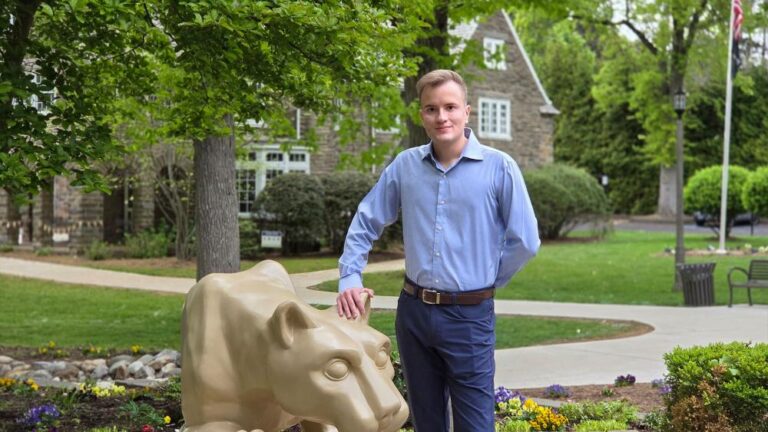
Welcome, fellow enthusiasts of innovation and progress, to an exploration of one of the most transformative forces of our time: Artificial Intelligence. As an AI specialist and a passionate observer of technological evolution, I’ve witnessed firsthand how this field has moved from the realm of science fiction into the core of our daily lives, reshaping industries, challenging our perceptions, and opening up unprecedented opportunities. We stand at a pivotal moment where the capabilities of intelligent systems are expanding at an exponential rate, prompting us to not only understand their mechanics but also to critically assess their broader societal implications. This article aims to pull back the curtain on the diverse facets of AI, revealing its profound impact across various sectors and highlighting the dynamic career paths it fosters.
From the algorithms powering your personalized recommendations to the sophisticated models driving medical diagnoses, AI is no longer a futuristic concept but a present-day reality. Its influence is pervasive, often subtle, yet undeniably impactful. Understanding this rapidly evolving landscape requires a nuanced perspective, one that appreciates both the immense potential for good and the complex ethical considerations that accompany such powerful technology. Join me as we navigate the intricate tapestry woven by AI, examining its current applications, its future trajectory, and the human ingenuity that continues to push its boundaries.
Artificial Intelligence: Beyond the Algorithms
At its core, Artificial Intelligence refers to the simulation of human intelligence processes by machines, especially computer systems. These processes include learning (the acquisition of information and rules for using the information), reasoning (using rules to reach approximate or definite conclusions), and self-correction. What began as a theoretical pursuit in the mid-20th century has blossomed into a practical discipline, thanks to advancements in computational power, access to vast datasets, and sophisticated algorithms. Today, AI encompasses a broad spectrum of technologies and methodologies, from machine learning and deep learning to natural language processing and computer vision.
The global AI market is a testament to its explosive growth, with projections estimating it could reach trillions of dollars within the next decade. This growth is fueled by an ever-increasing demand for automation, data analysis, and intelligent decision-making across virtually every industry. We’re talking about more than just smart software; we’re talking about systems that can perceive, reason, learn, and act with a level of autonomy that was once unimaginable. Think of the subtle yet powerful presence of AI in your daily life: the face recognition unlocking your smartphone, the spam filter protecting your inbox, or the predictive text anticipating your next word. These are all small, yet significant, manifestations of AI at work, operating seamlessly in the background to enhance convenience and efficiency.
But the true power of AI lies in its potential to solve complex, real-world problems. Consider the challenge of climate change. AI models are being deployed to predict weather patterns with greater accuracy, optimize energy grids for renewable sources, and even design more efficient materials for carbon capture. In healthcare, AI is not just a tool for automation but a catalyst for discovery, accelerating the pace of research and personalizing treatment plans. The field is constantly evolving, with researchers pushing the boundaries towards more general forms of intelligence that can perform any intellectual task that a human being can. While true Artificial General Intelligence (AGI) remains a distant goal, the progress in narrow AI applications continues to redefine what is possible, inspiring awe and driving innovation forward at an unprecedented pace.
Navigating the New Frontiers: Diverse Applications of AI
The reach of Artificial Intelligence extends far beyond the tech giants and research labs, embedding itself into the fabric of countless industries and creating new paradigms for efficiency and innovation. The diversity of its applications is truly remarkable, demonstrating AI’s adaptability and transformative potential across various sectors.
In **healthcare**, AI is revolutionizing everything from diagnostics to drug discovery. Machine learning algorithms can analyze vast amounts of medical images – X-rays, MRIs, CT scans – with astonishing speed and accuracy, often detecting diseases like cancer or retinopathy earlier than human experts. Companies like DeepMind have demonstrated AI’s ability to predict protein structures with unparalleled precision, a breakthrough that could accelerate the development of new medicines. Furthermore, personalized medicine, tailored to an individual’s genetic makeup and lifestyle, is becoming a tangible reality thanks to AI’s capacity to process and interpret complex biological data. This ensures treatments are more effective and have fewer side effects, signaling a new era in patient care.
**Finance** is another sector profoundly impacted. AI-powered systems are crucial for fraud detection, capable of identifying anomalous transactions in real-time, protecting both institutions and consumers. Algorithmic trading, driven by sophisticated AI models, analyzes market trends and executes trades at speeds impossible for humans, optimizing investment strategies. Moreover, personalized financial advice, risk assessment, and even customer service through AI chatbots are becoming standard, making financial services more accessible and efficient for everyone.
The **creative industries** are experiencing their own renaissance with generative AI. Tools like DALL-E, Midjourney, and Stable Diffusion can create stunning images from text prompts, pushing the boundaries of artistic expression. AI is composing music, writing compelling narratives, and even designing architectural structures. While these applications raise important questions about originality and authorship, they also empower artists and creators with new tools to bring their visions to life, fostering unprecedented levels of innovation and experimentation within creative fields.
Beyond these, AI is playing a critical role in addressing global challenges. In **environmental conservation**, AI models track deforestation, monitor wildlife populations, and predict extreme weather events, providing invaluable data for preventative action. Smart cities leverage AI to optimize traffic flow, manage waste efficiently, and reduce energy consumption, making urban living more sustainable. In **agriculture**, precision farming techniques use AI to monitor crop health, predict yields, and optimize irrigation, leading to more efficient resource use and increased food security.
These examples merely scratch the surface of AI’s expansive utility. Its ability to process and derive insights from data at scale makes it an indispensable tool for progress, opening doors to solutions that were previously out of reach. The ongoing development of AI promises even more groundbreaking applications, further solidifying its role as a fundamental driver of human advancement.
Cultivating Tomorrow’s Innovators: Career Paths in the Age of AI
As the influence of Artificial Intelligence continues to permeate every industry, it naturally creates a vibrant ecosystem of new roles and demands for specialized talent. The landscape of careers in AI is as diverse as its applications, offering a wide array of opportunities for individuals with varying skill sets and interests. It’s no longer just about coding; it’s about understanding data, ethics, user experience, and strategic implementation. The demand for AI professionals is skyrocketing, making it one of the most exciting and rewarding fields to enter today.
At the forefront are **Data Scientists** and **Machine Learning Engineers**. Data scientists are the architects of insight, tasked with collecting, processing, and analyzing vast datasets to extract valuable information and build predictive models. Machine learning engineers then take these models and deploy them into production systems, ensuring they are robust, scalable, and efficient. These roles require strong analytical skills, proficiency in programming languages like Python and R, and a deep understanding of statistical modeling and machine learning algorithms.
However, the growth of AI has also led to the emergence of highly specialized roles. **AI Ethicists**, for instance, are becoming increasingly crucial. As AI systems become more autonomous and influential, ensuring they are developed and used responsibly, fairly, and transparently is paramount. Ethicists work to identify and mitigate biases, develop ethical guidelines, and advocate for policies that prioritize human values in AI design. This interdisciplinary role often combines expertise in philosophy, law, social sciences, and technology.
Then there are the **Prompt Engineers**, a relatively new and rapidly evolving role driven by the advent of powerful generative AI models. These professionals specialize in crafting, refining, and optimizing prompts to get the best possible output from large language models (LLMs) and text-to-image generators. It’s a blend of creativity, linguistic understanding, and technical insight, bridging the gap between human intent and machine execution.
**AI Product Managers** play a pivotal role in translating complex AI research and technical capabilities into tangible products that solve real-world problems. They guide the development lifecycle, ensuring that AI solutions meet market needs, user expectations, and business objectives. This role demands a strong understanding of both technology and business strategy, often acting as a liaison between engineering teams, stakeholders, and customers.
For those passionate about pushing the boundaries of knowledge, **AI Researchers** continue to be vital. They explore new algorithms, develop novel AI architectures, and contribute to the theoretical foundations of the field, often working in academic institutions or corporate research labs. Their work lays the groundwork for future breakthroughs and applications.
The common thread across these diverse roles is a commitment to continuous learning and an interdisciplinary approach. The field of Artificial Intelligence is dynamic, requiring professionals to constantly update their skills and adapt to new technologies. Whether you’re a data enthusiast, a coding wizard, an ethical advocate, or a strategic thinker, there’s a place for you to contribute to shaping the future of AI. The opportunities are boundless, and the impact you can make is profound.
In conclusion, the journey through the diverse landscape of Artificial Intelligence reveals a field brimming with innovation, challenges, and immense potential. From its fundamental algorithms to its revolutionary applications in healthcare, finance, creativity, and environmental solutions, AI is not merely a tool but a fundamental force reshaping our world. It demands our attention, our understanding, and our responsible engagement. As we’ve explored, its multifaceted nature means it touches nearly every aspect of modern existence, promising a future that is both more efficient and more intelligent.
The rapid evolution of AI also underscores the critical importance of human insight, ethical consideration, and interdisciplinary collaboration. The varied career paths emerging within this domain—from data scientists and machine learning engineers to AI ethicists and prompt engineers—highlight the need for diverse talents to guide its development responsibly. The future of Artificial Intelligence is not pre-determined; it is being written by the innovators, thinkers, and problem-solvers of today. As we move forward, fostering a collaborative environment that prioritizes ethical design, inclusivity, and continuous learning will be paramount to harnessing AI’s full potential for the benefit of all humanity. Let us embrace this exciting era with curiosity, responsibility, and a shared vision for a future empowered by intelligent technology.