
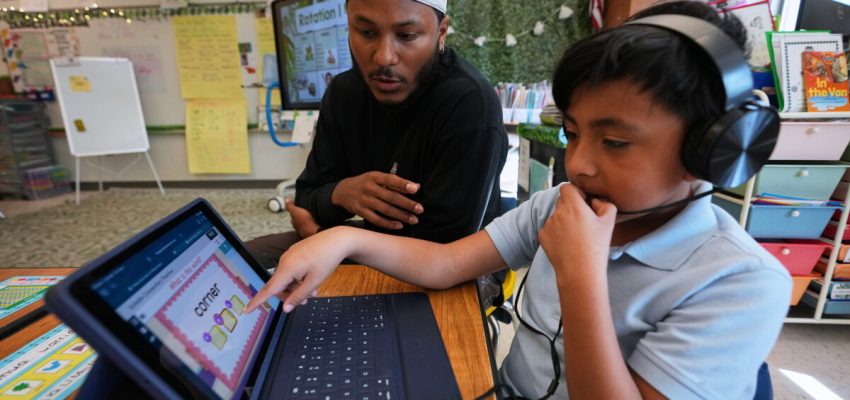

In an era increasingly defined by rapid technological advancement and a growing demand for diverse skill sets, society often overlooks fundamental shifts needed in foundational sectors. Among these, the field of early childhood education stands out as one where traditional norms persist, creating a profound and often unacknowledged gender imbalance. While we champion diversity and inclusion across industries, the profound underrepresentation of men in early childhood education remains a persistent challenge, with far-reaching implications for children, families, and the educators themselves. This isn’t merely a statistical anomaly; it’s a societal blind spot that warrants urgent attention and a re-evaluation of our collective priorities regarding early learning environments.
The early years are formative, shaping cognitive, social, and emotional development at a critical juncture. Yet, a stark gender disparity dominates this essential sector. Across the globe, women comprise the vast majority—often over 95%—of early childhood educators. This creates environments that, while undeniably nurturing, may inadvertently lack the full spectrum of perspectives and role models crucial for comprehensive child development. This article delves into the complex reasons behind this imbalance, exploring the societal pressures, historical precedents, and systemic barriers that deter men from pursuing careers as early educators. Drawing insights from advocates like Calvin Moore Jr., an honest and often uncomfortable conversation about this professional segregation becomes imperative, not just for gender equity, but for the holistic well-being of the next generation.
### Men in Early Childhood Education: Unpacking the Unspoken Barriers
The scarcity of men in early childhood education is not an accidental oversight; it is the product of deeply entrenched societal perceptions and structural challenges. Historically, caregiving roles, particularly those involving young children, have been feminized. From the very inception of formal schooling, and especially in the preschool and kindergarten years, the image of the nurturing female teacher became iconic. This cultural conditioning starts early, influencing career aspirations and educational pathways. Boys are often subtly, or overtly, discouraged from considering professions associated with ‘caring’ or ‘nurturing’—traits culturally assigned to women. This often leads to a self-fulfilling prophecy where fewer male role models exist, further reinforcing the perception that it is a ‘woman’s job’.
Beyond these deeply ingrained stereotypes, economic factors play a significant role. Early childhood education is notoriously underpaid compared to other professions requiring similar levels of education and responsibility. According to recent data from organizations like the U.S. Bureau of Labor Statistics, preschool teachers earn significantly less than their counterparts in elementary or secondary education, let alone professions traditionally dominated by men, such as engineering or IT. This economic disincentive is particularly potent for men, who often face societal pressure to be primary financial providers. A career offering limited financial stability, coupled with low social prestige, becomes a difficult sell, particularly when stacked against fields perceived as more ‘masculine’ and lucrative. Calvin Moore Jr., an outspoken advocate for increasing male representation in this field, has often highlighted the need for better pay and professional recognition as fundamental steps to attract and retain more men. He points out that until the profession is adequately valued and compensated, it will struggle to draw a diverse talent pool.
Another significant barrier is the pervasive and often unfounded suspicion that can confront men who express an interest in working with young children. While the vast majority of male educators are dedicated professionals, societal anxieties surrounding child safety, exacerbated by media portrayals of child abuse, can cast an unwarranted shadow of doubt. Male educators frequently report feeling scrutinized, having to prove their intentions, or even facing direct suspicion from parents or colleagues. This ‘guilty until proven innocent’ dynamic is not only demoralizing but also creates an unwelcoming and often hostile professional environment. It’s a cruel paradox: society laments the absence of male role models, yet often creates an environment of distrust for those who step forward.
### Challenging Stereotypes and Cultivating Inclusivity
Addressing the shortage of men in early childhood education requires a multi-faceted approach that challenges stereotypes from an early age. Educational institutions and media have a crucial role to play in normalizing the image of men as loving, capable caregivers and educators. Career guidance ought to explicitly present early childhood education as a viable and respected path for all genders, showcasing positive male role models in the field. Beyond mere representation, there is a need for robust support networks for male educators. Being one of a handful of men in a predominantly female environment can be isolating. Creating opportunities for male educators to connect, share experiences, and receive mentorship can help combat feelings of isolation and foster a sense of belonging.
Furthermore, professional development and ongoing training must actively work to dismantle gender biases, both explicit and implicit. This includes encouraging men to see the profound impact they can have, not just as ‘male role models’ but as skilled pedagogues who bring diverse teaching styles and perspectives. For children, the presence of male educators can broaden their understanding of gender roles, promote healthier gender identity development, and expose them to a wider range of communicative and interactive styles. Studies have shown that children in gender-diverse classrooms exhibit greater flexibility in their thinking about gender and may benefit from exposure to varied relational dynamics, promoting richer social-emotional learning outcomes. It’s about recognizing that diversity, in all its forms, enriches the learning environment, making it more reflective of the complex world children will grow up in.
Policy reforms are also essential to professionalize the sector, making it more attractive to all potential educators, including men. This means advocating for increased funding for early childhood programs, leading to better wages, improved benefits, and clear career progression pathways. When the profession offers competitive salaries and opportunities for advancement, it inherently broadens its appeal. Additionally, policies should actively promote diversity initiatives, perhaps through targeted recruitment campaigns or mentorship programs designed to attract and support male applicants. These efforts are not about lowering standards but about leveling the playing field and dismantling systemic barriers that have historically prevented a significant portion of the population from entering a vital profession.
### The Profound Benefits of Gender Diversity in Early Learning
The conversation about men in early childhood education extends far beyond simply increasing numbers; it’s about enriching the developmental experiences of children. The presence of male educators offers children diverse perspectives and role models, crucial for navigating an increasingly complex world. For boys, having male teachers can provide positive masculine role models who demonstrate nurturing, empathy, and intellectual engagement—qualities often stereotypically associated with women. This can challenge narrow definitions of masculinity, encouraging boys to express a fuller range of emotions and interests.
For girls, male educators can demonstrate respectful and collaborative interactions, broadening their understanding of adult male figures beyond family members and reinforcing that men can be caring and supportive authority figures. This exposure is vital for breaking down ingrained gender stereotypes and fostering a more egalitarian view of society from an early age. Beyond gender-specific impacts, diverse teaching teams, including men, can bring a wider array of teaching styles, interests, and life experiences to the classroom. This pedagogical richness can cater to different learning styles and offer varied activities, from active, outdoor play to quieter, analytical tasks, thereby creating a more stimulating and inclusive learning environment for all children. Calvin Moore Jr. often emphasizes that a balanced workforce mirrors society more accurately, preparing children for the diverse world they will encounter as they grow.
Ultimately, integrating more men into early childhood education is a vital step towards creating a more equitable, inclusive, and effective educational system. It challenges outdated norms, addresses economic disparities, and, most importantly, provides children with the broadest possible foundation for their future. By breaking down barriers and actively promoting gender diversity in the early years sector, we don’t just fix a demographic imbalance; we invest in richer, more robust learning experiences that will benefit generations to come. It’s an investment in holistic child development, challenging antiquated societal constructs that limit potential.
In conclusion, the journey to achieving gender parity in early childhood education is complex, requiring a concerted effort from policymakers, educational institutions, families, and society at large. We must move beyond the unspoken reasons and confront the ingrained biases, economic disincentives, and societal apprehensions that deter men from pursuing this profoundly important profession. By doing so, we not only create more equitable career opportunities but, more critically, enrich the developmental landscape for our youngest learners.
Embracing and actively supporting the presence of men in early childhood education is not merely a matter of social justice; it is a strategic imperative for fostering well-rounded, resilient, and adaptable individuals ready to thrive in a diverse world. As an AI specialist passionate about optimizing systems and unleashing potential, I see clear parallels: just as diverse data sets lead to more robust AI models, diverse human experiences in education lead to richer, more adaptable human development. The time is now to champion this vital shift, ensuring that every child benefits from the full spectrum of human experience in their formative years.










