
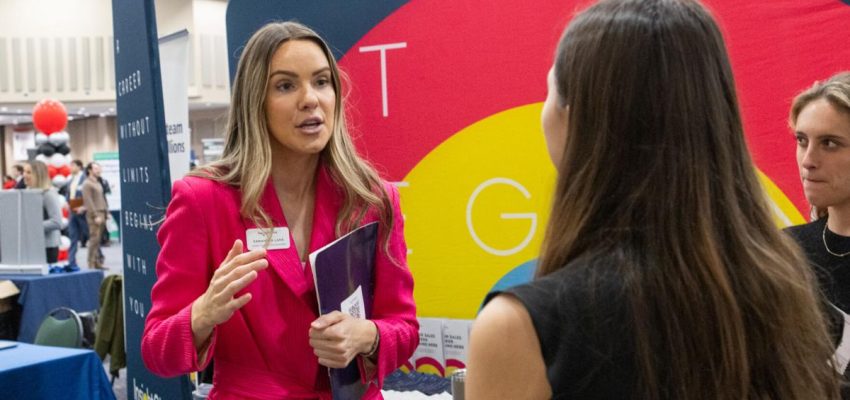

The bustling halls of a university career fair represent more than just a gathering of students and recruiters; they are a vibrant microcosm of the evolving professional world. When the University of Georgia, for instance, hosted its Spring 2026 Career and Internship Fair at the Classic Center in Athens, Georgia, it wasn’t just an opportunity for students to find their next role; it was a window into the future of employment. As attendees mingled, exchanged résumés, and discussed potential paths, an unseen force was already at play, fundamentally reshaping the very nature of these interactions and the careers they promised: Artificial Intelligence.
As an AI specialist, writer, and tech enthusiast, I’ve spent years observing and participating in the rapid advancements of artificial intelligence. What was once the realm of science fiction is now an integral part of our daily lives and, critically, our professional futures. The job market, once predictable in its evolution, is now undergoing a seismic shift, driven by intelligent automation, machine learning, and data-driven insights. This transformation means that preparing for a career today involves more than just mastering a specific discipline; it demands an understanding of how AI will intersect with, augment, and sometimes redefine, nearly every professional field. For students currently navigating their academic journey and seeking internships or entry-level positions, grasping the implications of this technological revolution is not just an advantage—it’s a necessity.
AI-driven careers: The New Frontier for Graduates
The notion that artificial intelligence primarily affects technical roles is a common misconception. While it’s true that the demand for machine learning engineers, data scientists, and AI researchers is skyrocketing, the impact of AI extends far beyond these specialized positions. We are entering an era where virtually every industry, from healthcare and finance to marketing, manufacturing, and even the arts, is being redefined by intelligent systems. This creates a vast new frontier for graduates across all disciplines, leading to the emergence of truly AI-driven careers.
Consider the healthcare sector. AI is revolutionizing diagnostics, drug discovery, and personalized treatment plans. This isn’t just about software engineers; it’s about medical professionals who can interpret AI-generated insights, ethicists who can ensure responsible AI deployment in sensitive areas, and project managers who can oversee the integration of AI tools into clinical workflows. Similarly, in finance, AI algorithms power algorithmic trading, fraud detection, and personalized financial advice, opening doors for analysts, risk managers, and customer service professionals who understand how to leverage these sophisticated tools.
The marketing and advertising world has also been profoundly transformed. AI-powered tools now analyze consumer behavior with unprecedented accuracy, enabling hyper-personalized campaigns and predictive analytics. This means a new generation of marketing specialists must be adept at working with AI platforms to segment audiences, optimize content, and measure campaign effectiveness. Even creative fields are not immune; AI can assist with content generation, design iteration, and personalized user experiences, requiring artists and designers to collaborate with AI as a creative partner.
According to reports from PwC, AI is projected to contribute up to $15.7 trillion to the global economy by 2030, with a significant portion of this growth stemming from increased productivity and the creation of entirely new products and services. This economic shift inherently translates into new job opportunities. Roles like ‘Prompt Engineer,’ a professional skilled in crafting effective prompts for generative AI models, barely existed a few years ago but are now in high demand. Other emerging roles include ‘AI Ethicist,’ ‘AI Product Manager,’ and ‘AI Solutions Architect,’ all requiring a blend of technical understanding and domain-specific knowledge.
The key takeaway for students and recent graduates is that AI isn’t just creating specialized tech jobs; it’s transforming virtually every existing role and creating entirely new interdisciplinary positions. Whether you’re studying liberal arts, business, engineering, or health sciences, understanding AI’s potential and limitations, and how to effectively collaborate with it, will be critical for a successful career path in this rapidly evolving landscape. The challenge and the opportunity lie in adapting and proactively seeking out these novel intersections where human ingenuity meets artificial intelligence.
Beyond Technical Skills: What Employers Seek in the Age of AI
While a foundational understanding of data science, programming languages like Python, or concepts in machine learning is undoubtedly valuable, employers in the age of AI are increasingly looking beyond purely technical proficiencies. The ability to work alongside intelligent systems, to interpret their outputs, and to apply human judgment where algorithms fall short, has become paramount. This shift places a renewed emphasis on a specific set of human-centric skills that AI, at least for now, cannot replicate.
One of the most critical skills is **critical thinking and complex problem-solving**. As AI takes over repetitive, data-intensive tasks, humans are freed up to tackle more ambiguous, novel, and strategic challenges. Employers need individuals who can analyze AI-generated insights, identify potential biases, question assumptions, and formulate innovative solutions that extend beyond algorithmic recommendations. Similarly, **adaptability and continuous learning** are no longer optional extras; they are fundamental requirements. The pace of AI development dictates that tools and techniques will constantly evolve, demanding professionals who are eager to acquire new knowledge, unlearn outdated methods, and embrace lifelong education.
**Creativity and innovation** are also rising in prominence. While AI can generate novel content or designs, true innovation often stems from human imagination, intuition, and the ability to connect disparate ideas in unique ways. Companies seek individuals who can leverage AI as a creative assistant, pushing boundaries and developing groundbreaking solutions that resonate with human needs and desires. Furthermore, **emotional intelligence and collaboration** are essential for effective human-AI teamwork and for navigating the complexities of modern workplaces. As teams become more diverse, encompassing both human and AI ‘contributors,’ the ability to communicate clearly, empathize with colleagues, and foster a collaborative environment becomes invaluable.
Perhaps one of the most pressing demands is for **ethical reasoning and judgment**. As AI systems become more autonomous and influential, the ethical implications of their design and deployment are under intense scrutiny. Employers across all sectors are seeking professionals who not only understand the technical capabilities of AI but also possess a strong ethical compass. This includes the ability to identify potential biases in algorithms, ensure fairness and transparency, and advocate for responsible AI development and usage. Courses in ethics, philosophy, and interdisciplinary studies are becoming increasingly relevant, preparing students to tackle these complex societal challenges.
For students, this means actively cultivating these ‘soft skills’ alongside their technical expertise. Participating in team projects, engaging in debate, seeking out leadership roles, and immersing oneself in diverse cultural and academic experiences can significantly bolster these essential capabilities. Internships, often seen as mere stepping stones, become crucial proving grounds for demonstrating these combined abilities in a real-world, AI-influenced context, directly contributing to the development of well-rounded professionals ready for **AI-driven careers**.
Strategic Preparation: Navigating Career Fairs and Networking in an AI Era
In an environment shaped by AI, the traditional career fair, like the one at UGA, also undergoes a subtle but significant transformation. While face-to-face interaction remains invaluable, the preparation, approach, and follow-up for these events must evolve. Students need to be strategic, leveraging digital tools and demonstrating an understanding of the AI landscape even before they shake a recruiter’s hand.
**Pre-Fair Research:** Before attending any career event, thorough research is paramount. In the AI era, this means going beyond understanding a company’s products or services. Investigate their AI strategy: Are they developing proprietary AI? How are they using machine learning in their operations? What ethical guidelines do they follow regarding AI? Companies are often proud of their innovative tech initiatives, and asking informed questions about their AI adoption can demonstrate a forward-thinking mindset and genuine interest. Resources like company blogs, tech reports, and even AI-focused industry publications can provide valuable insights.
**Optimizing Your Digital Footprint:** Long before a résumé is exchanged, many recruiters are already scanning candidates’ digital footprints. Your LinkedIn profile, personal website, or online portfolio should reflect your readiness for **AI-driven careers**. Highlight projects where you’ve used data analysis, machine learning concepts, or even engaged with generative AI tools creatively. Showcasing your adaptability and eagerness to learn new technologies speaks volumes. Consider taking online courses or certifications in AI fundamentals, prompt engineering, or data ethics, and list them prominently. These digital credentials often act as a crucial first filter in AI-powered applicant tracking systems (ATS) that many large companies use.
**Engaging with Recruiters:** When conversing at a fair, don’t just ask about job descriptions. Inquire about how AI is impacting their specific roles, what challenges they face in integrating new technologies, or what skills they believe will be most valuable in five years. This demonstrates a deeper level of engagement and an understanding of the broader industry trends. Moreover, be prepared to discuss not just your technical prowess but also your problem-solving approach, your ethical considerations, and your capacity for creative thinking – the very human skills that complement AI.
**Networking Beyond the Booth:** Career fairs are just one facet of networking. In today’s interconnected world, online communities, professional forums, and virtual events focused on AI and specific industry applications offer continuous opportunities to connect with mentors, peers, and potential employers. Engaging in meaningful discussions, contributing to open-source projects, or even attending webinars hosted by AI leaders can significantly expand your professional network and expose you to cutting-edge developments. Universities themselves, through their career services departments, are increasingly offering workshops and resources specifically tailored to help students prepare for this AI-dominated job market, including mock interviews that incorporate AI-related scenarios and resume reviews optimized for ATS.
Ethical AI: A Cornerstone of Future Professionalism
As AI rapidly integrates into every aspect of our lives, the discussion around its ethical implications has moved from academic discourse to a critical professional imperative. Building and deploying AI responsibly is no longer a niche concern for a few specialists; it is a fundamental aspect of good practice across all industries. This has created an urgent demand for professionals who understand not just how AI works, but also its societal impact, potential biases, and the frameworks necessary to ensure its fair and transparent application.
Consider the potential for algorithmic bias in hiring tools, credit scoring systems, or even healthcare diagnostics. Without careful consideration and oversight, AI systems can perpetuate or even amplify existing societal inequalities. This is why companies are actively seeking individuals who possess a strong grasp of AI ethics, privacy regulations (like GDPR and CCPA), and principles of fairness and accountability. Roles such as AI ethicist, privacy engineer, and compliance officer with an AI specialization are gaining prominence. Even in traditionally non-technical roles, understanding the ethical dimensions of AI is becoming vital. For instance, a marketing professional leveraging AI for targeted advertising must be aware of data privacy concerns and potential manipulative practices. A journalist using AI tools for content generation must understand how to verify AI-generated information and maintain editorial integrity.
Universities and professional development programs are responding to this need by incorporating AI ethics into their curricula. Interdisciplinary programs that combine computer science with philosophy, law, sociology, or public policy are becoming increasingly valuable. These programs equip future professionals with the critical thinking skills to analyze complex ethical dilemmas, the technical knowledge to understand AI’s mechanisms, and the communication abilities to advocate for responsible AI practices within organizations and society at large. Developing an ethical mindset in relation to technology is not just about avoiding harm; it’s about actively shaping a future where AI serves humanity’s best interests, fostering trust and ensuring equitable progress. For those seeking to make a truly meaningful impact, navigating the ethical landscape of AI offers a profoundly rewarding career path within the realm of AI-driven careers.
The landscape of career and internship opportunities is undeniably undergoing a profound transformation, spearheaded by the relentless advance of artificial intelligence. Events like the UGA Career and Internship Fair are no longer just about connecting students with existing jobs; they are crucial stages where the next generation of professionals begins to grasp and shape their roles in an AI-powered world. Success in this evolving environment hinges not merely on technical acumen, but on a rich blend of adaptability, critical thinking, creativity, and a steadfast commitment to ethical practice. Embracing continuous learning and developing a nuanced understanding of AI’s capabilities and limitations will be the hallmarks of thriving professionals.
As we look to the future, the promise of AI-driven careers is immense, offering unprecedented opportunities for innovation and impact. However, this future also demands a proactive and thoughtful approach from students, educators, and employers alike. By fostering curiosity, encouraging interdisciplinary collaboration, and prioritizing human-centric skills alongside technological literacy, we can ensure that the journey into this new professional frontier is not only successful but also deeply fulfilling and ethically sound. The job market of tomorrow will be dynamic, challenging, and profoundly rewarding for those prepared to navigate its intelligent currents.










