
In the vibrant tapestry of Winter Olympic coverage, few duos have captured the public imagination quite like Tara Lipinski and Johnny Weir. Their infectious enthusiasm, keen insights, and signature fashion have become synonymous with the excitement of figure skating. Yet, before they were offering their expert commentary from the broadcast booth, delighting millions with their chemistry and wit, both Lipinski and Weir forged their own remarkable legacies on the ice. Their journeys represent two distinct yet equally captivating paths to athletic greatness, underscoring the demanding blend of artistry, athleticism, and mental fortitude required to excel at the pinnacle of figure skating.
As an AI specialist, writer, and tech enthusiast, I find the intersection of human endeavor and peak performance endlessly fascinating. The discipline, innovation, and sheer human spirit displayed by athletes like Tara Lipinski and Johnny Weir offer profound insights, much like the advancements in artificial intelligence reshape our understanding of what’s possible. Their stories are not just about medals; they are about dedication, overcoming challenges, and leaving an indelible mark on a sport beloved by millions. Let’s delve into the rich history of their competitive years, examining the pivotal moments and unique styles that defined their Olympic figure skating careers before they became the familiar voices of the Games.
Olympic Figure Skating Careers: A Legacy Forged on Ice
To truly appreciate the depth of Tara Lipinski and Johnny Weir’s contributions to figure skating, one must look back at their competitive primes. They emerged from different eras and brought contrasting styles to the ice, yet both undeniably left an indelible mark on the sport, captivating audiences and inspiring future generations of skaters. Their paths to the Olympics were paved with rigorous training, personal sacrifice, and an unyielding quest for perfection, each performance a testament to years of dedication.
Tara Lipinski’s name is etched into the annals of Olympic history as a prodigy. Born in 1982, she began skating at a remarkably young age, quickly demonstrating an exceptional talent and an uncanny ability to land challenging jumps. Her rise through the ranks was meteoric. By 1997, at just 14 years old, she became the youngest ever World Champion in figure skating, a feat that immediately placed her firmly in the spotlight as a favorite for the upcoming Nagano 1998 Winter Olympics. The pressure on such a young athlete was immense, especially with the fierce rivalry brewing with fellow American skater Michelle Kwan, a battle often dubbed “The Battle of the Belles.”
At Nagano, Lipinski delivered two nearly flawless performances that defied her age. Her short program was technically precise and artistically mature, setting the stage for a memorable free skate. It was in the long program, however, where she truly cemented her legend. Performing to “Scenes from an Album” by Carl Davis, Lipinski executed a program brimming with seven triple jumps, including her signature triple loop-triple loop combination, a technical marvel that no other female skater at that time consistently landed. Her spins were fast, her footwork intricate, and her overall presentation radiated a joyous confidence. The judges awarded her higher technical marks, securing her the gold medal. At 15 years and 255 days old, Tara Lipinski became the youngest individual gold medalist in Winter Olympics history, a record that stands to this day. Her achievement was not just a personal triumph but a testament to the evolving demands of the sport, pushing the boundaries of what was considered technically possible for female skaters. Despite her youth, she exuded a maturity and focus that belied her years, setting a new standard for athletic excellence in women’s figure skating. Her decision to turn professional shortly after the Olympics, foregoing further amateur competition, was controversial but underscored her desire to explore other avenues of performance.
Johnny Weir’s journey to Olympic prominence, while equally impactful, took a distinctly different trajectory. Born in 1984, Weir actually started skating relatively late, at the age of 12, initially drawn to the ice after watching a figure skating competition on television. Unlike many of his peers who began in early childhood, his rapid ascent was a testament to his innate talent, relentless work ethic, and a highly unconventional approach to the sport. From the outset, Weir carved out a niche for himself with his unique blend of artistry, flamboyant costumes, and an undeniable stage presence. He was a skater who understood that figure skating was as much performance art as it was a display of athletic prowess.
Weir’s competitive career saw him become a three-time U.S. national champion (2004, 2006, 2008), establishing himself as one of America’s premier male skaters. He made his Olympic debut at the Turin 2006 Winter Olympics. Here, his captivating performances, particularly his free skate to “Otonal” by Raúl Di Blasio, captivated audiences worldwide. He finished in fifth place, a respectable showing that, for many, didn’t fully capture the artistic impact he had made. His performances were characterized by elegant lines, expressive choreography, and a daring fashion sense that challenged traditional masculinity in sports. Weir returned for the Vancouver 2010 Winter Olympics, again delivering memorable programs, including a short program to “A la turka” by The Pussycat Dolls and a free skate to “Apakabar” and “Poker Face” by Lady Gaga, demonstrating his eclectic musical tastes and willingness to push boundaries. He finished sixth in Vancouver, again just outside the medal contention, yet his influence transcended mere podium finishes. Weir’s bold personality and unapologetic self-expression broadened the sport’s appeal, attracting new fans who were drawn to his distinctive style and theatrical flair. He became a cultural icon, demonstrating that authenticity and individuality could thrive even in a highly structured competitive environment. His Olympic figure skating careers proved that winning gold wasn’t the only measure of impact; cultural resonance and artistic innovation were equally significant.
From Ice to Iconography: The Evolution of Figure Skating Personalities
Figure skating has always occupied a unique space in the sports world, blending the rigorous demands of athletics with the expressive beauty of art. Unlike many other sports, personality plays an incredibly significant role, often elevating skaters from mere competitors to beloved cultural icons. Tara Lipinski and Johnny Weir perfectly embody this phenomenon, becoming figures larger than life even before their broadcasting careers blossomed. Their journeys illustrate how a skater’s individuality, combined with their on-ice talent, can create a lasting legacy that extends far beyond their medal count.
Tara Lipinski, despite her young age during her Olympic victory, projected an image of charming tenacity and unwavering focus. Her rivalry with Michelle Kwan was heavily amplified by the media, turning a sporting contest into a compelling narrative that captured public attention. Lipinski’s appeal lay in her technical brilliance combined with a palpable joy for skating, making her relatable to a wide audience. She represented the quintessential American dream – a young, determined athlete achieving the ultimate goal through hard work and precision. Her post-Olympic life, though transitioning away from competitive skating, kept her in the public eye, laying the groundwork for her eventual return to the sport in a different capacity.
Johnny Weir, on the other hand, redefined what it meant to be a male figure skater. His unapologetic embrace of elaborate costumes, his theatrical flair, and his articulate, often witty, commentary on everything from his sport to his personal life, made him a media darling. He challenged gender norms and brought a refreshing sense of individuality to a sport often perceived as traditional. Weir’s ability to connect with an audience, to tell a story through movement and costume, transcended the technical scores. He wasn’t just performing jumps and spins; he was performing an identity, inspiring countless others to embrace their true selves. His charisma and unique aesthetic vision turned his Olympic figure skating careers into a masterclass in personal branding, long before that term became ubiquitous.
Both Lipinski and Weir understood, perhaps instinctively, the power of narrative in sports. They knew how to captivate an audience, not just with their athletic feats but with their distinct personas. Their ability to transcend the ice and become household names is a testament to the magnetic appeal of figure skating when infused with genuine personality and passion. This evolution from competitor to cultural icon is a challenging one, requiring not only extraordinary talent but also an innate understanding of how to connect with people on a deeper, more emotional level, making their transitions to broadcasting a natural progression.
The Commentary Box: A New Chapter in Their Sporting Legacy
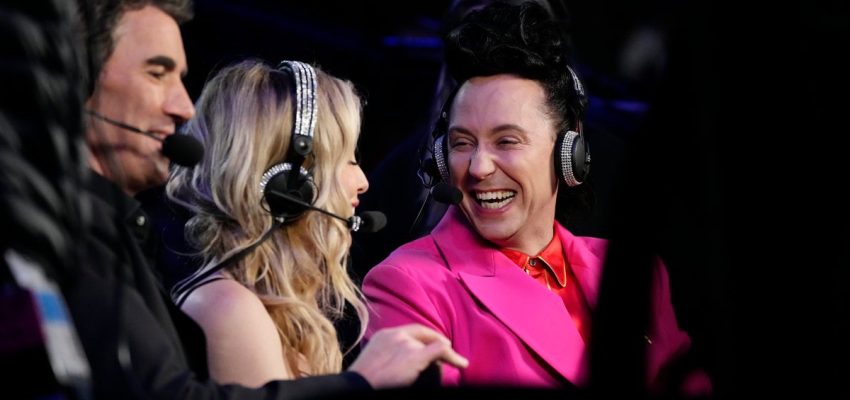
The transition from elite athlete to sports broadcaster is a common trajectory, but few have done it with the panache and immediate success of Tara Lipinski and Johnny Weir. Their partnership in the commentary booth for NBC at the Winter Olympics has become legendary, creating a new chapter in their already storied careers. What makes their dynamic so compelling is not merely their profound understanding of figure skating, gleaned from years of competitive experience, but their unique personalities and undeniable chemistry.
Their journey into broadcasting began around the Sochi 2014 Winter Olympics, and they quickly became fan favorites. Their commentary is a masterful blend of technical insight and witty banter. Lipinski, with her encyclopedic knowledge of jumps and spins, often provides the precise analytical breakdown of a skater’s performance, drawing on her own experiences as an Olympic gold medalist. Her ability to articulate the nuances of a quad toe loop or a difficult spin combination, often predicting outcomes or explaining missed elements, enriches the viewer’s understanding of the sport’s technical demands. Weir, meanwhile, brings his unparalleled eye for artistry, costume, and overall presentation. He can dissect the emotional arc of a program, appreciate the daringness of a costume choice, and offer critiques that are both incisive and highly entertaining. Their combined perspectives offer a comprehensive view of figure skating, covering both the athletic and artistic facets with equal measure.
Beyond their individual strengths, it’s their on-screen chemistry that truly elevates their commentary. Their playful jabs, shared laughs, and genuine admiration for each other’s insights create an engaging and often hilarious viewing experience. They don’t shy away from expressing strong opinions, occasionally leading to viral moments that spark conversation long after the broadcasts conclude. This authenticity resonates deeply with audiences, who feel as though they are listening to two passionate experts who truly love the sport and each other’s company. Their distinctive fashion, often coordinated and always eye-catching, further amplifies their unique brand, making them as much a part of the Olympic spectacle as the athletes themselves.
Their work in the commentary box isn’t just entertainment; it’s a continuation of their legacy. They are not merely reporting on the sport; they are actively shaping its perception, bringing their personal experiences of Olympic figure skating careers to illuminate the challenges and triumphs faced by a new generation of skaters. By sharing their expertise and personalities, they keep figure skating relevant and exciting for a broad audience, ensuring its enduring popularity. Their seamless transition from competitive icons to beloved broadcasters serves as a powerful testament to their adaptability, charisma, and lasting impact on the world of sports. They have redefined what it means to stay connected to a sport you love, proving that there are many ways to contribute to its narrative and future.
The stories of Tara Lipinski and Johnny Weir are rich tapestries woven with threads of extraordinary talent, relentless dedication, and compelling personality. From Lipinski’s historic gold medal at an astonishingly young age, which set a new benchmark for technical prowess in women’s figure skating, to Weir’s groundbreaking artistic expression and fearless individuality that expanded the sport’s cultural reach, their respective Olympic figure skating careers were nothing short of remarkable. They each carved out unique paths, influencing the sport in distinct yet equally profound ways, proving that greatness can manifest in diverse forms—be it through record-breaking athleticism or boundary-pushing artistry.
Today, as they grace our screens from the commentary booth, their combined insights and infectious energy continue to elevate the sport they love. Their partnership has not only made figure skating accessible and exciting for a new generation of viewers but has also cemented their status as enduring figures in sports entertainment. Tara Lipinski and Johnny Weir remind us that true passion, whether expressed through breathtaking triple loops or astute analyses, leaves an unerasable mark. Their journey from competitive ice to celebrated commentators is a testament to the power of reinvention and the enduring legacy of those who dare to dream big and leave their hearts on the ice, and now, on the airwaves.