
In an era defined by rapid technological advancement, the way we learn, train, and prepare for the future workforce is undergoing a profound transformation. Gone are the days when textbooks and static presentations were the sole arbiters of knowledge. Today, we stand on the precipice of a new educational paradigm, one where immersive technologies are not just tools but gateways to unparalleled understanding and experience. As an AI specialist and tech enthusiast, I’ve long championed the potential of these innovations, and few applications excite me more than their role in career exploration. The story of Utah high school students engaging with Navy careers through mixed reality isn’t just a fascinating anecdote; it’s a powerful harbinger of what’s to come, showcasing how digital immersion can bridge the gap between abstract concepts and tangible vocational pathways.
The conventional methods of career guidance—brochures, guest speakers, perhaps a brief field trip—often fall short in conveying the true essence of a profession. How does one truly grasp the intricate dance of a naval crew, the precision required in operating complex machinery, or the collaborative spirit vital to mission success, without being there? This is precisely where cutting-edge extended reality (XR) technologies, particularly mixed reality, step in. By blending the physical and digital worlds, mixed reality offers an interactive, multi-sensory experience that transcends mere observation, allowing individuals to ‘step into’ a role and truly feel its demands and rewards. This isn’t just about seeing; it’s about doing, learning, and deciding with unprecedented clarity.
Mixed Reality in Education: A New Frontier for Learning and Development
At its core, **Mixed Reality in Education** represents a revolutionary approach to learning, moving beyond traditional boundaries to create dynamic, interactive environments. Unlike virtual reality (VR), which fully immerses users in a simulated digital world, or augmented reality (AR), which overlays digital information onto the real world, mixed reality (MR) seamlessly integrates virtual objects into physical spaces, allowing for real-time interaction between the two. Imagine a student in a classroom, wearing an MR headset, seeing a digital overlay of a ship’s engine appear on their desk, and then being able to ‘reach out’ and manipulate its components with their hands, guided by a virtual instructor. This is the power of MR.
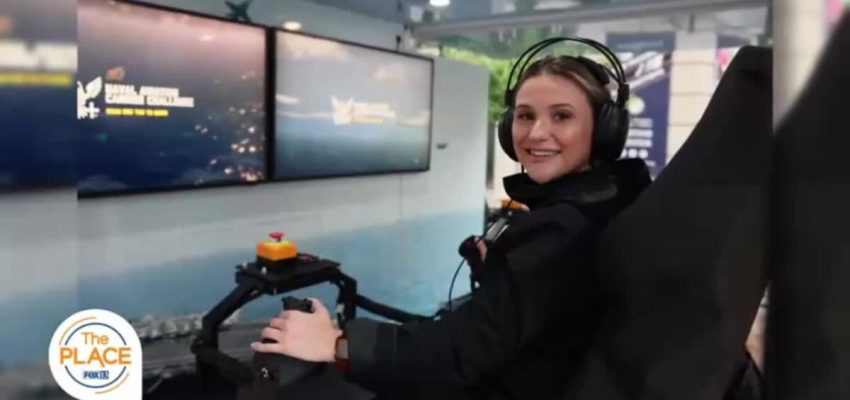
The case of the Navy’s ‘Strike Group’ program for high school students exemplifies this potential. The program isn’t just showing students pictures of battleships; it’s putting them ‘on board.’ Through this leading-edge mixed reality platform, users gain a fully immersive, hands-on look into the technology and teamwork that are central to every role in the Navy. This goes far beyond a simple video game; it’s an intelligent simulation designed to replicate real-world scenarios, challenges, and collaborative dynamics. Students can experience everything from piloting a submarine to performing maintenance on a fighter jet, all within a safe, controlled, yet incredibly realistic digital environment. This kind of experiential learning is particularly effective for complex, high-stakes professions like those in the military, where hands-on training is paramount but often difficult or costly to provide in early stages.
The benefits of incorporating **Mixed Reality in Education** are manifold. For students, it significantly boosts engagement and retention. Studies consistently show that active, experiential learning leads to deeper understanding and better recall than passive learning methods. When students are active participants in their learning, manipulating virtual objects, solving simulated problems, and collaborating in digital spaces, their cognitive processing is enhanced. Furthermore, it allows for a level of personalization that traditional education struggles to match. Learning modules can adapt to individual paces and preferences, offering tailored challenges and feedback, much like an intelligent tutor embedded within the simulation. This adaptive capability is where AI truly shines, powering the MR experience to be not just interactive, but intelligently responsive.
The Science of Immersion: Why Mixed Reality Works
The effectiveness of mixed reality for career exploration lies in its unique ability to create a profound sense of presence and agency. When users feel genuinely present within a simulated environment, their brains respond as if the experience were real. This is not just a psychological phenomenon; it has a neurological basis. The brain processes immersive sensory input (visuals, spatial audio, haptic feedback) as genuine experiences, leading to stronger memory formation and the development of practical skills. This ‘learning by doing’ is a cornerstone of effective education, and mixed reality elevates it to an unprecedented level.
Consider the intricacies of a naval career. It encompasses a vast array of roles, from engineering and logistics to communications and combat operations, each demanding specific skill sets and a profound understanding of complex systems. Traditional education might offer theoretical explanations of propulsion systems or navigation principles. However, with an MR experience like the Strike Group, students can virtually walk through an engine room, identify components, simulate repairs, or navigate a virtual vessel through challenging seas. This kind of interaction fosters spatial reasoning, problem-solving skills, and critical thinking in ways that no static diagram or video ever could. It’s an invaluable tool for vocational guidance, allowing students to test-drive careers before making significant educational or life commitments. This pre-exposure can significantly reduce attrition rates in highly specialized fields, as individuals enter roles with a clearer understanding of what to expect.
Moreover, the collaborative aspect of these MR simulations is crucial. Many modern workplaces, especially in organizations like the Navy, thrive on teamwork and effective communication. Mixed reality environments can be designed to facilitate multi-user experiences, where students work together to complete tasks, just as they would in a real-world scenario. This not only hones their technical skills but also develops essential soft skills such as leadership, communication, and conflict resolution, which are increasingly valued in the global workforce. The ability to practice these skills in a risk-free, yet highly realistic setting, is a tremendous advantage offered by **Mixed Reality in Education** and professional training.
From Simulations to Skill Building: Practical Applications and Future Prospects
While the Navy’s initiative provides a compelling example, the applications of **Mixed Reality in Education** extend far beyond military recruitment. Imagine medical students practicing complex surgical procedures on holographic organs that accurately mimic real human anatomy, allowing for infinite repetitions without risk to patients. Or engineering students virtually assembling and testing intricate machinery, identifying flaws in design before costly physical prototypes are ever built. Skilled trades, too, stand to benefit immensely, with apprentices able to learn plumbing, electrical work, or welding in a simulated environment, reducing material waste and ensuring safety. The aviation industry, already a pioneer in simulation, is increasingly leveraging MR for pilot training and aircraft maintenance.
The market for immersive learning technologies is experiencing exponential growth, projected to reach billions in the coming years. This growth is fueled by advancements in hardware (lighter, more powerful headsets), software development tools, and the increasing recognition by educational institutions and industries of the tangible return on investment. As the technology matures, we can expect MR experiences to become even more realistic, incorporating advanced haptics for touch feedback, more sophisticated AI for adaptive scenarios, and increasingly robust content libraries. The potential for truly personalized learning paths, where AI tailors the MR experience based on a student’s performance, learning style, and career aspirations, is immense.
However, the widespread adoption of **Mixed Reality in Education** is not without its challenges. The initial cost of hardware and the development of high-quality, educationally sound content can be significant hurdles. There’s also the need for robust infrastructure, including high-speed internet and processing power, to support these demanding applications. Furthermore, educators and trainers require specialized training to effectively integrate MR into their curricula. Ethical considerations, such as data privacy, screen time, and the potential for a digital divide, also need careful consideration as these technologies become more pervasive. Nevertheless, as costs decrease and accessibility improves, the transformative power of mixed reality will become undeniable.
The journey of Utah high school students exploring Navy careers through mixed reality is more than a novel approach to recruitment; it’s a testament to the evolving landscape of education and career development. It demonstrates how immersive technologies can democratize access to experiences that were once exclusive or impossible, providing a crucial bridge between theoretical knowledge and practical application. As André Lacerda, I believe the intersection of AI and mixed reality will continue to unlock unprecedented opportunities for learning, training, and empowering the next generation to confidently navigate their future careers.
We are entering an era where learning isn’t confined to classrooms or even physical locations. It’s an experience that can be crafted, customized, and lived. The integration of advanced AI with **Mixed Reality in Education** promises a future where every student has the opportunity to explore, experiment, and develop skills in a dynamic, engaging, and profoundly effective manner. The horizon of human potential is expanding, and mixed reality is undoubtedly one of the most exciting vessels carrying us towards it.