
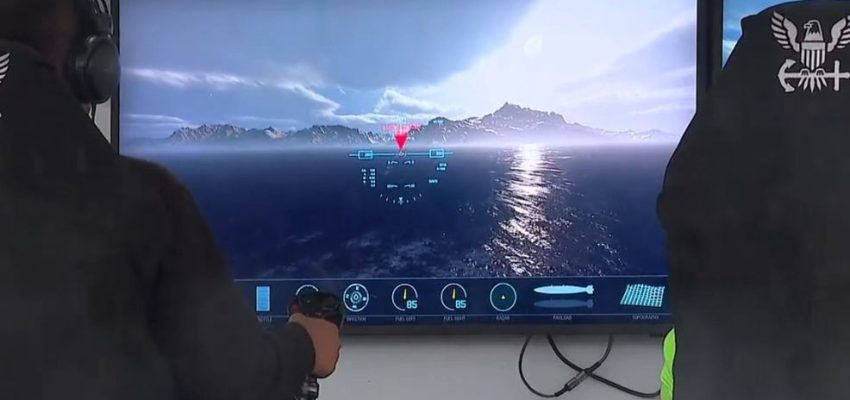

In an increasingly complex world, the journey of career discovery for young individuals can often feel like navigating a vast, uncharted ocean. Traditional methods of career guidance—brochures, guest speakers, and brief internships—while valuable, often struggle to provide a truly comprehensive and engaging insight into the myriad of professional possibilities. But what if students could not just read about a career, but truly experience it, stepping into a day in the life of a professional before making life-altering decisions? As an AI specialist, writer, and tech enthusiast, I, André Lacerda, believe we are on the cusp of such a revolution, powered by immersive technologies. The answer, increasingly, lies in the transformative potential of virtual reality.
The recent initiative allowing students, like those in Sanford, Maine, to explore Navy careers through immersive VR experiences, is a powerful testament to this shift. It’s not just a novel way to recruit; it’s a profound re-imagining of how we prepare the next generation for the workforce. This isn’t merely about entertainment or fleeting novelty; it’s about leveraging cutting-edge technology to foster deeper understanding, informed decision-making, and a genuine connection to potential futures. As we delve into the capabilities of virtual reality, we uncover a world where boundaries dissolve, and career paths become tangible, interactive journeys rather than abstract concepts.
Virtual Reality: A Gateway to Unseen Worlds
For decades, career exploration has largely relied on passive observation or theoretical study. Students might attend a career fair, listen to a veteran recruiter, or watch a video. While these methods offer glimpses, they often lack the depth, context, and emotional resonance needed for truly effective decision-making. Imagine trying to understand the intricate operations of a submarine, the intense environment of an operating room, or the complex workflow of an architect by simply reading a pamphlet. It’s a significant leap of faith.
This is precisely where virtual reality steps in as a game-changer. Rather than just being told about a naval career, students can now strap on a VR headset and be instantly transported. They can walk the decks of a destroyer, navigate the narrow corridors of a submarine, or witness a simulated rescue mission from the perspective of a sailor. They can interact with digital twins of equipment, understand the chain of command through dynamic scenarios, and even get a sense of the camaraderie and discipline that defines military life. This isn’t passive learning; it’s active engagement, where every choice and observation contributes to a rich, memorable experience.
The power of immersive simulations extends far beyond the visual. High-fidelity VR environments can incorporate spatial audio, allowing students to hear the hum of machinery, the commands of an officer, or the subtle sounds of a busy flight deck. Haptic feedback, though still evolving, can add a tactile dimension, letting them ‘feel’ the vibrations of an engine or the resistance of a control panel. This multi-sensory engagement taps into different learning modalities, leading to greater comprehension and retention. Furthermore, it addresses critical practical limitations: students can explore high-risk environments without danger, visit remote locations without travel costs, and experience scenarios that might otherwise be logistically impossible to arrange for a group of high schoolers.
Beyond the Battlefield: Broadening Horizons with VR Career Exploration
While the military provides an excellent case study for VR’s application in career exploration due to its complex and often inaccessible environments, the technology’s potential extends across virtually every industry. Consider the field of healthcare: aspiring doctors could perform simulated surgeries, nurses could practice patient care scenarios, and medical technicians could learn to operate advanced diagnostic equipment, all within a safe, controlled virtual reality setting. This allows for repeated practice, failure without consequence, and the development of muscle memory and critical thinking skills long before engaging with real patients.
In architecture and engineering, VR allows students to design and walk through their creations in 3D, identifying flaws or improvements before any physical construction begins. Budding artists can sculpt in a virtual space, fashion designers can drape fabrics on digital models, and urban planners can visualize the impact of new developments on a city’s landscape. Even in highly abstract fields like data science or software development, VR can create immersive visualizations of complex datasets or programming environments, making intricate concepts more intuitive and interactive. For example, a student could literally ‘fly’ through a data cloud, identifying patterns that would be invisible on a 2D screen.
This experiential learning is not just about making learning fun; it’s about making it effective. Studies have consistently shown that immersive learning environments lead to higher engagement, better knowledge retention, and increased confidence in applying learned skills. By providing a truly contextualized understanding of a profession, virtual reality empowers students to make more informed choices, reducing the likelihood of costly career changes down the line and fostering a more motivated, prepared workforce.
The Symbiotic Relationship: VR, AI, and the Future of Learning
The true power of immersive career exploration blossoms when virtual reality is synergistically combined with artificial intelligence. As an AI specialist, I see this convergence as the next frontier in educational technology. AI can infuse VR experiences with unparalleled intelligence and adaptability, transforming static simulations into dynamic, personalized learning journeys.
Imagine an AI-powered virtual mentor guiding a student through a simulated engineering project. The AI could observe the student’s actions, provide real-time feedback, adapt the difficulty of tasks based on performance, and even suggest alternative approaches. If a student struggles with a particular concept, the AI could generate additional scenarios specifically designed to strengthen that area. This personalized tutoring, scalable to thousands of students simultaneously, moves beyond a one-size-fits-all approach to education, catering to individual learning styles and paces.
Furthermore, AI can power highly realistic and responsive non-player characters (NPCs) within VR environments. Students could practice interviewing skills with AI-driven HR managers, negotiate contracts with AI business partners, or provide virtual patient care to AI-simulated individuals exhibiting realistic symptoms and emotional responses. These intelligent agents make the simulations feel more authentic and unpredictable, mirroring the complexities of real-world human interaction.
Beyond the immediate experience, AI can analyze vast amounts of data collected from each VR session. This data could include decision-making patterns, problem-solving strategies, emotional responses to stress, and even eye-tracking information. By applying machine learning algorithms to this data, AI can provide granular insights into a student’s aptitudes, strengths, and areas for development. This information can then be used to offer highly precise career recommendations, highlight necessary skill development, or even predict potential success in specific roles, offering a level of personalized career guidance previously unimaginable. The convergence of virtual reality and AI is not just about exploring careers; it’s about intelligently shaping them.
The integration of virtual reality into mainstream education and career guidance is not without its challenges. The initial cost of hardware, the development of high-quality immersive content, and the need for robust IT infrastructure are significant hurdles for many educational institutions. Furthermore, educators require training to effectively integrate VR into their curricula and leverage its full potential. However, these challenges are steadily being addressed through technological advancements, decreasing hardware costs, and the proliferation of accessible content development platforms. Partnerships between educational bodies, government agencies (like the Navy in the Sanford example), and private tech companies are crucial to bridging these gaps and ensuring equitable access to these transformative tools.
The long-term benefits far outweigh the initial investment. By providing students with hands-on, contextualized experiences, virtual reality prepares them not just for specific jobs, but for a future workforce that demands adaptability, critical thinking, and digital literacy. It empowers them to explore, experiment, and envision their place in the world with unprecedented clarity. As an AI enthusiast, I believe the future of career exploration is one where every student has the opportunity to step inside their dreams, test their mettle, and embark on their chosen path with confidence and a clear vision.
The initiative to bring virtual reality to students for career exploration marks a pivotal moment in educational innovation. It’s a clear signal that the static, often abstract, methods of career guidance are giving way to dynamic, engaging, and profoundly insightful immersive experiences. By breaking down barriers of access and perception, VR technology is democratizing career exploration, making previously inaccessible professions tangible and relatable for all students, regardless of their background or geographical location.
As we continue to integrate advanced technologies like AI and virtual reality into our educational frameworks, we are not just teaching students about careers; we are empowering them to actively shape their futures. This commitment to leveraging technology for human potential is essential for fostering a generation that is not only well-informed but also deeply inspired and prepared for the challenges and opportunities of the 21st-century workforce. The future of work is immersive, and the journey begins now, within the captivating landscapes of virtual reality.










