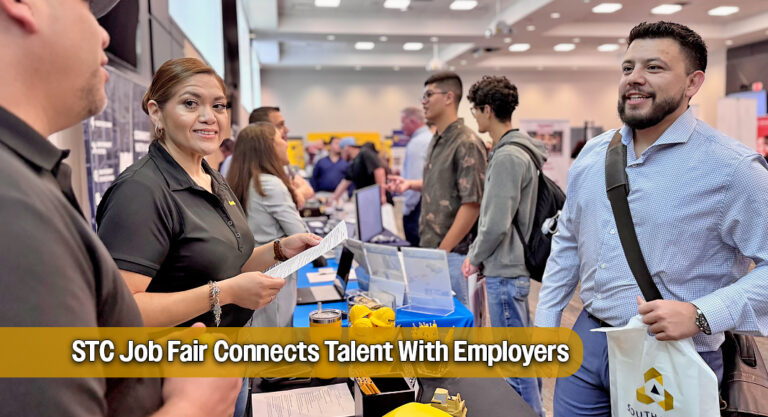
For many, the annual professional networking symposium or career fair has become a familiar ritual. You dress your best, polish your resume, and steel yourself for hours of small talk, often culminating in little more than a branded tote bag filled with glossy brochures and a handful of business cards that may or may not lead anywhere. It’s an experience that, for all its promise, frequently falls short of expectations, leaving both job seekers and recruiters feeling a profound sense of inefficiency and missed opportunities. As an AI specialist, writer, and tech enthusiast, I’ve often pondered this paradox: in an age of unparalleled technological advancement, why do we continue to rely on methods that feel increasingly outdated? The answer, I believe, lies in harnessing the transformative power of artificial intelligence to redefine how we connect, recruit, and grow our professional lives.
The traditional career fair, while historically valuable, is fundamentally constrained by its physical and logistical limitations. It’s a snapshot in time, a crowded marketplace where genuine, meaningful connections are often lost amidst the noise. Recruiters are overwhelmed by sheer volume, sifting through hundreds of generic applications, while candidates struggle to differentiate themselves beyond a brief elevator pitch. This isn’t merely an inconvenience; it’s an economic inefficiency, hindering talent acquisition and professional development across industries. But what if we could move beyond the superficiality, leveraging intelligent systems to foster deeper, more relevant interactions? What if the future of professional growth wasn’t about collecting branded pens, but about cultivating genuinely valuable connections?
AI-powered career networking: A Paradigm Shift for Professional Connections
The fundamental inefficiency of traditional career events stems from a mismatch problem: thousands of candidates and hundreds of companies attempting to find their perfect fit through a largely manual, often chaotic process. This is precisely where artificial intelligence shines. AI-powered career networking is not just an incremental improvement; it represents a paradigm shift in how talent meets opportunity. Instead of relying on chance encounters or the limited scope of human memory and processing, AI algorithms can analyze vast datasets to create highly precise and relevant matches.
Imagine a system that goes beyond keywords on a resume. AI can parse skills, experience, project portfolios, and even infer soft skills from linguistic patterns and engagement history. It can then cross-reference this rich profile with an equally detailed understanding of company culture, specific job requirements, team dynamics, and long-term strategic goals. For instance, a candidate with strong problem-solving skills and a passion for sustainable technology, whose resume might traditionally get overlooked by a simple keyword search, could be flagged as an ideal fit for an innovative green tech startup looking for precisely that combination of attributes. This level of granular matching drastically reduces the ‘needle in a haystack’ problem for recruiters and significantly increases the likelihood of a meaningful connection for candidates.
Leading platforms are already integrating elements of this approach. LinkedIn’s recommendation engine, for example, uses machine learning to suggest relevant job openings and professional connections, while specialized AI tools are emerging to help companies identify passive candidates who possess specific, hard-to-find skills. These systems move beyond mere data aggregation; they interpret, infer, and predict, creating connections that might otherwise remain undiscovered. The result is a more democratic and efficient marketplace, where merit and genuine fit are prioritized over who managed to grab a recruiter’s attention first.
This intelligent matchmaking isn’t just about initial introductions. AI can also facilitate the early stages of vetting. Chatbots, often powered by natural language processing (NLP), can handle initial Q&A, answer common candidate queries, and even conduct preliminary screening interviews, freeing up human recruiters to focus on more complex and nuanced interactions. These AI assistants can operate 24/7, providing immediate responses and ensuring no candidate feels left in the dark, a common complaint in the current lengthy recruitment cycles. By automating the mundane, AI empowers humans to engage in the meaningful – building relationships and assessing true potential.
Virtual Worlds and Intelligent Assistants: The AI-Enhanced Event Experience
The COVID-19 pandemic accelerated a trend that was already gaining momentum: the shift towards virtual events. While initial iterations often felt like simple video calls, the integration of AI is transforming virtual career fairs and networking symposiums into sophisticated, immersive experiences. Virtual reality (VR) and augmented reality (AR) are beginning to play a role, creating digital environments where attendees can navigate interactive booths, attend virtual presentations, and engage in one-on-one video chats, mimicking the physical experience but with enhanced capabilities.
Consider an **AI-powered career networking** platform that offers personalized virtual environments. As an attendee logs in, their dashboard might highlight booths from companies specifically matched to their profile, suggest relevant workshops, or even offer dynamic networking rooms based on shared interests or skill sets. AI-driven scheduling tools can manage meeting requests between candidates and recruiters, ensuring optimal time utilization and minimizing no-shows. Furthermore, AI can provide real-time analytics to event organizers, showing which booths are most popular, which sessions are driving engagement, and even predicting potential hiring outcomes, offering unprecedented insights into event ROI.
For candidates, AI can go beyond mere event navigation. Intelligent career coaches, embedded within these platforms, can offer personalized advice on resume optimization, interview preparation, and even simulate mock interviews using sentiment analysis and voice recognition to provide constructive feedback. This democratizes access to high-quality career guidance, which was once only available to those who could afford professional coaches. The ability to practice and refine one’s pitch in a low-stakes, AI-driven environment can significantly boost confidence and performance during actual interactions.
Beyond individual events, AI contributes to a continuous, always-on networking environment. Platforms can track your professional development, suggest learning pathways based on industry trends, and even alert you to emerging roles that align with your evolving skill set. This proactive approach ensures that professional growth isn’t a reactive response to job openings, but an ongoing, strategically guided journey. The future isn’t about attending a fair once a year; it’s about being continuously connected to a dynamic ecosystem of opportunities and insights.
Ethical Considerations and The Human Touch in the Age of AI
As with any powerful technology, the deployment of AI in professional networking comes with its own set of ethical considerations. Bias in algorithms is a significant concern. If the data used to train AI models reflects historical biases in hiring, the AI could perpetuate or even amplify those inequalities. Therefore, the development and deployment of **AI-powered career networking** systems must prioritize fairness, transparency, and regular auditing to ensure equitable outcomes for all candidates, regardless of background.
Data privacy is another crucial aspect. The collection and analysis of extensive personal and professional data necessitate robust security measures and clear consent mechanisms. Individuals must retain control over their information and understand how it is being used to facilitate connections. Companies deploying these technologies have a responsibility to adhere to strict ethical guidelines and regulatory frameworks.
Crucially, AI is a tool designed to augment human capabilities, not replace them. While AI can handle the initial matching and administrative tasks, the ultimate decision-making, the nuanced assessment of cultural fit, and the building of trust remain profoundly human endeavors. The goal of AI-powered career networking is to free up recruiters and hiring managers from repetitive, time-consuming tasks, allowing them to engage in deeper, more qualitative conversations with truly qualified candidates. It’s about empowering humans to make better, more informed decisions, rather than ceding control entirely to machines. The future of professional connections will likely be a hybrid model, where the precision of AI meets the irreplaceable empathy and judgment of human interaction.
In conclusion, the era of the branded tote bag as the primary takeaway from a career fair is drawing to a close. The frustrations of inefficient, generic networking events are giving way to a new paradigm driven by artificial intelligence. By leveraging AI for intelligent matching, virtual event enhancement, and continuous professional development, we can move beyond the superficiality that often characterizes traditional interactions. The future of professional networking is one where precision, personalization, and efficiency converge to create truly meaningful connections.
As an AI specialist and tech enthusiast, I am incredibly optimistic about this evolution. We are moving towards a more equitable and effective professional landscape, where talent is discovered more efficiently, and opportunities are presented with unprecedented relevance. This isn’t just about making recruitment easier; it’s about fostering a more dynamic, inclusive, and human-centric world of work, where every professional has the tools to forge their path and every organization can find the right people to drive innovation. The journey from scattered brochures to perfectly tailored opportunities is well underway, and AI is leading the charge.