
In an era defined by rapid technological advancement, few sectors are undergoing a transformation as profound and impactful as agriculture. Far from the pastoral imagery of yesteryear, today’s farms are becoming high-tech hubs, laboratories of innovation, and battlegrounds for global sustainability. This seismic shift demands a new generation of talent—individuals who are not only passionate about food systems but also adept at leveraging cutting-edge technologies like artificial intelligence, data analytics, and robotics. It is precisely this intersection where events like Cal Poly’s annual Ag Showcase become indispensable, serving as a critical nexus connecting aspiring professionals with the burgeoning world of modern agriculture.
For decades, Cal Poly San Luis Obispo has stood as a beacon of agricultural education, renowned for its ‘Learn by Doing’ philosophy. This ethos has never been more relevant than now, as the industry grapples with the complex challenges of feeding a projected 9.7 billion people by 2050 amidst climate change, resource scarcity, and evolving consumer demands. The Ag Showcase is not merely a job fair; it’s a dynamic marketplace of ideas, an opportunity for students to glimpse the future, and a crucial pipeline for employers seeking the brightest minds to tackle these grand challenges. As an AI specialist and tech enthusiast, I find the convergence of agriculture and technology particularly fascinating, revealing a landscape rich with opportunities for those prepared to innovate.
Agricultural Innovation Careers: Paving the Way Forward
The very fabric of agriculture is being rewoven by technology, creating a diverse array of
Consider the global imperative: ensuring food security while minimizing environmental impact. This requires sophisticated solutions. Precision agriculture, for instance, utilizes IoT sensors, drones, and satellite imagery to monitor soil health, irrigation needs, and pest infestations with unprecedented accuracy. This data-driven approach allows farmers to apply water, fertilizers, and pesticides only where and when needed, drastically reducing waste and environmental footprint. Such methods demand professionals skilled in remote sensing, geographic information systems (GIS), and big data analytics—skills that are increasingly at the core of new agricultural curricula.
Furthermore, the drive for sustainability has given rise to a demand for experts in alternative farming methods, such as vertical farming and controlled environment agriculture (CEA). These urban farming solutions leverage hydroponics or aeroponics in multi-layered indoor facilities, significantly reducing land and water use while enabling year-round production regardless of external climate. This opens doors for horticulturalists with a tech bent, environmental engineers, and specialists in climate control and LED lighting systems. The sheer breadth of these emerging roles underscores why events like the Ag Showcase are vital for students to understand the diverse pathways available within the agricultural sector.
Beyond the Tractor: The Evolving Landscape of Agri-Tech
The transformation in agriculture is fundamentally driven by technological breakthroughs, turning what was once a labor-intensive industry into a high-tech field ripe with opportunity. At the heart of this evolution is the pervasive influence of artificial intelligence and machine learning.
AI algorithms are now deployed to predict crop yields based on historical data, weather patterns, and soil conditions, allowing for optimized planting schedules and resource allocation. Machine vision systems, often integrated with robotic platforms, can accurately identify diseased plants, monitor livestock health, and even perform delicate harvesting tasks with greater precision and speed than human labor. For example, robotic strawberry pickers are becoming a reality, addressing labor shortages and improving efficiency. In dairy farming, automated milking systems powered by AI monitor individual cow health and production, leading to healthier animals and higher yields.
The integration of robotics is another game-changer. Beyond harvesting, robots are being developed for tasks like weeding, planting, and even pruning, reducing the need for herbicides and making farming more sustainable. These systems require specialists in robotics engineering, software development, and human-robot interaction—roles that would have been unimaginable in agriculture just a few decades ago.
Biotechnology and genetic engineering also play a critical role, not just in developing disease-resistant and higher-yielding crops, but also in creating produce with enhanced nutritional profiles. Technologies like CRISPR gene editing offer unprecedented precision in modifying plant genomes, leading to crops that can withstand drought, resist pests, and even extend shelf life. This area requires experts in bioinformatics, molecular biology, and agricultural ethics—demonstrating the interdisciplinary nature of modern
Even the supply chain is benefiting from advanced tech. Blockchain technology, for instance, is being explored to enhance traceability from farm to fork, ensuring food safety and authenticating ethical sourcing. Logistics AI optimizes transportation routes, minimizing fuel consumption and spoilage. These developments create openings for specialists in supply chain management, data security, and distributed ledger technologies.
Cultivating Tomorrow’s Leaders: The Cal Poly Advantage
Amidst this technological revolution, universities like Cal Poly play an indispensable role in preparing the next generation of leaders. Cal Poly’s esteemed College of Agriculture, Food and Environmental Sciences (CAFES) is particularly well-positioned, boasting a legacy of practical, hands-on education that aligns perfectly with the demands of modern agri-tech. The ‘Learn by Doing’ philosophy means students aren’t just learning theories; they’re applying them in real-world settings, from working with advanced farm machinery to conducting cutting-edge research in campus laboratories.
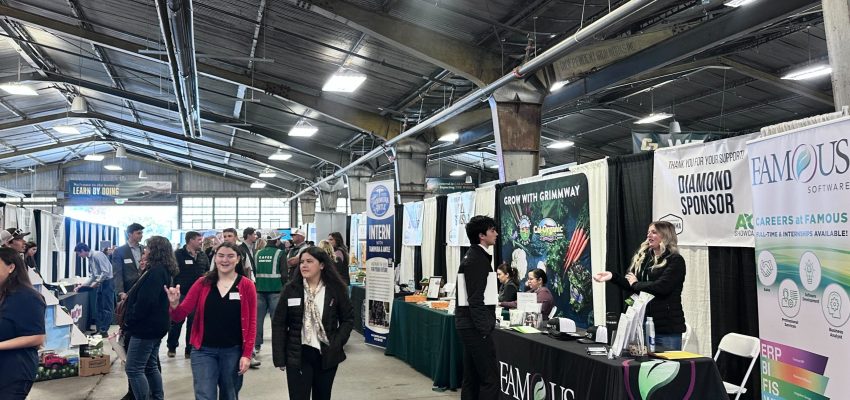
The annual Ag Showcase serves as a pinnacle of this philosophy, providing a direct conduit between students and the employers who are actively shaping the future of agriculture. It’s an immersive experience where students can network with recruiters from diverse companies—ranging from established agricultural giants like John Deere and Driscoll’s to innovative startups specializing in drone analytics or vertical farming. These interactions are invaluable, offering insights into industry trends, required skill sets, and potential career trajectories.
For students, the Showcase is an opportunity to secure internships that provide vital on-the-job experience, often leading to full-time positions upon graduation. These internships are critical stepping stones, allowing students to apply classroom knowledge, develop professional networks, and identify their niche within the broad field of
The Ag Showcase also fosters a two-way dialogue. Students gain a clearer understanding of industry needs, helping them tailor their studies and skill development. Employers, in turn, gain valuable feedback from students on what truly excites the next generation, influencing their recruitment strategies and even future innovation pathways. This symbiotic relationship ensures that Cal Poly’s curriculum remains relevant and responsive to the rapidly evolving demands of the agricultural sector, reinforcing its reputation as a leader in preparing professionals for impactful careers.
The sheer scale and impact of the event are noteworthy. While specific numbers vary year to year, the Showcase consistently draws hundreds of students and a robust roster of employers, facilitating countless connections that shape professional futures. It reflects a proactive approach to bridging the gap between academic preparation and industry needs, ensuring that the agricultural sector has a steady supply of innovative minds ready to tackle its most pressing challenges.
The Symbiotic Relationship: AI, Data, and Sustainable Agriculture
As we look to the future, it’s clear that the advancements in agriculture, particularly those driven by AI and data, are not just about efficiency and yield. They are fundamentally about sustainability. The ethical deployment of technology is paramount to solving some of humanity’s most pressing issues, from climate change to food waste.
AI-driven systems can optimize water usage by predicting precise irrigation needs, thereby conserving one of our most precious resources. By enabling precision application of fertilizers and pesticides, AI helps reduce chemical runoff and soil degradation. Predictive analytics can forecast disease outbreaks, allowing for targeted interventions that minimize the need for broad-spectrum chemical treatments. Furthermore, the ability to monitor and manage carbon sequestration in soils or track the carbon footprint of food production offers new avenues for agriculture to contribute positively to climate mitigation efforts. These are critical aspects of modern
The integration of technology, therefore, isn’t just about ‘doing more with less’ but about ‘doing better with smarter systems.’ It’s about creating resilient food systems that can adapt to environmental pressures, enhance biodiversity, and ensure equitable access to nutritious food. Professionals entering these fields will not only be tech-savvy but also ethically grounded, understanding the broader societal and environmental implications of their work. The Ag Showcase provides a platform to explore these complex and rewarding dimensions, connecting students with organizations committed to both innovation and responsible stewardship.
The transformation of agriculture from a traditional practice to a high-tech, data-driven science is one of the most exciting narratives of our time. Events like Cal Poly’s Ag Showcase are not just annual fixtures; they are vital engines driving this transformation, serving as dynamic bridges between ambitious students and the pioneering companies at the forefront of agricultural innovation. By fostering connections that lead to internships and careers, the Showcase empowers a new generation to tackle the grand challenges of food security and sustainability with intelligence, creativity, and technological prowess.
As André Lacerda, I firmly believe that the future of our planet hinges significantly on the advancements made in agriculture, and that AI will play a central role in shaping that future. The opportunities emerging in