
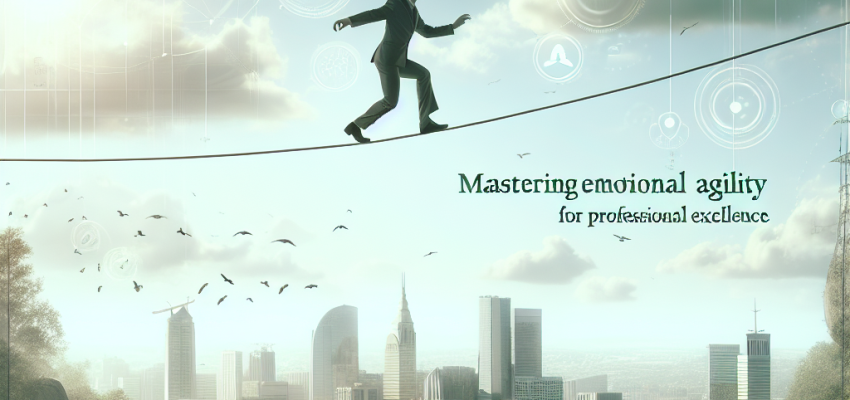

In the relentless pursuit of professional excellence, individuals often focus intently on technical prowess, strategic acumen, and measurable outputs. While these attributes are undeniably critical, an emerging understanding highlights a subtler, yet profoundly impactful, characteristic that consistently distinguishes the truly high-performing professional: the capacity for emotional agility. It is not merely about managing emotions, nor about being perpetually positive, but rather an intricate dance with one’s inner experiences that liberates individuals to adapt, innovate, and thrive amidst the complexities of the modern workplace.
Imagine a scenario: a project derails unexpectedly, a crucial client meeting goes awry, or a long-held career aspiration faces an unforeseen roadblock. In such moments, the conventional wisdom might suggest suppressing frustration, ignoring disappointment, or pushing through with sheer willpower. However, high performers demonstrate a different approach. They do not bypass their emotions; instead, they engage with them, understand their signals, and then consciously choose their response, aligning their actions with their deepest values. This powerful, flexible approach to navigating one’s inner world is the essence of emotional agility, and its mastery is proving to be an indispensable asset for those aiming for sustained success and fulfillment in their careers. This article will delve into what this critical trait entails, why it matters more than ever, and how professionals can cultivate it to unlock their full potential.
emotional agility
Emotional agility, a concept popularized by psychologist Susan David, is far more sophisticated than simple emotional intelligence, though the two are certainly related. While emotional intelligence focuses on understanding and managing one’s own emotions and recognizing the emotions of others, emotional agility takes this a step further. It is the ability to be flexible with your thoughts and feelings, to notice them, understand their origins, and then choose how to respond to them in a way that aligns with your values and intentions, rather than being driven by autopilot reactions. It is about approaching your inner experiences—whether they are positive or negative—with curiosity, compassion, and courage, rather than judgment or avoidance.
Consider the alternative: emotional rigidity. This is a state where individuals become stuck in particular patterns of thinking, feeling, or behaving. When confronted with stress, disappointment, or criticism, emotionally rigid professionals might react impulsively, withdraw, or fall back on old, unhelpful habits. They might suppress difficult emotions, leading to burnout, resentment, or a disconnect from their authentic selves. They might ruminate endlessly on negative thoughts, becoming paralyzed by anxiety or fear. This rigidity severely limits adaptability, innovation, and effective problem-solving, all of which are paramount in today’s rapidly evolving professional landscape.
Conversely, emotional agility equips professionals to navigate the inevitable ups and downs of their careers with greater resilience and effectiveness. It involves developing a healthy relationship with one’s internal world, recognizing that thoughts and feelings are not facts, nor are they directives. Instead, they are data points, signals providing information about our environment, our values, and our needs. By creating a space between an emotional stimulus and a behavioral response, emotionally agile individuals gain the freedom to choose actions that genuinely serve their long-term goals and personal integrity. This fundamental shift from automatic reaction to deliberate response is what empowers high-performing professionals to move forward even when facing significant internal or external challenges. It is about embracing discomfort as a part of growth, recognizing that all emotions, even the challenging ones, carry valuable messages that can inform and guide us towards more effective and meaningful engagement with our professional lives.
The Four Pillars of Emotional Agility
To truly understand and cultivate emotional agility, it is helpful to break it down into its core components. These four pillars provide a framework for practicing and integrating this vital skill into daily professional life, transforming how individuals interact with their inner experiences and, consequently, how they perform in their roles.
Showing Up
The first pillar of emotional agility is Showing Up. This means acknowledging your thoughts, feelings, and emotions—even the uncomfortable ones—with curiosity and without judgment. In a professional context, this might involve recognizing the surge of anxiety before a major presentation, the frustration when a colleague misses a deadline, or the pang of self-doubt after a perceived failure. Instead of ignoring these feelings, trying to push them away, or criticizing oneself for having them, showing up involves simply noticing them. It is about giving yourself permission to feel what you feel, observing your internal landscape as if from a slight distance. This creates a critical pause, an awareness that allows you to separate yourself from your emotions. You are not your anger, your fear, or your doubt; you are the observer of these experiences. For high-performing professionals, this translates into an ability to accurately assess their emotional state without letting it hijack their cognitive functions or dictate their immediate reactions. They can say to themselves, for instance, I am noticing a strong feeling of apprehension about this negotiation, rather than I am apprehensive, so I can’t do this effectively. This distinction is crucial for maintaining clarity and control.
Stepping Out
Once you have shown up and acknowledged your inner experiences, the second pillar, Stepping Out, comes into play. This involves detaching from your thoughts and feelings, recognizing that they are not necessarily facts or commands. It is about creating a cognitive distance. Think of your thoughts and feelings as data on a screen, not the screen itself. You can observe them without getting entangled in them. This pillar encourages professionals to challenge their narrative, especially self-limiting beliefs. For example, if a thought arises like, I’m not good enough for this promotion, stepping out means recognizing it as just a thought, not an immutable truth. You can ask: Is this thought serving me? Is there another way to look at this situation?
In the workplace, stepping out empowers professionals to gain perspective during high-pressure situations. When a project faces a setback, the immediate emotional response might be panic or blame. Stepping out allows a high performer to notice that panic, but then to analytically assess the situation, identify root causes, and strategize solutions, rather than being consumed by the emotional reaction. It means understanding that while emotions are valid, they do not always offer the most constructive path forward. This separation is fundamental for objective problem-solving and making decisions based on facts and values, rather than fleeting emotional states. It allows for a more nuanced understanding of situations, preventing impulsive reactions that could undermine long-term professional goals.
Walking Your Why
The third pillar, Walking Your Why, is arguably the most powerful and transformative aspect of emotional agility. It involves connecting with your core values and using them as a compass to guide your actions, particularly when facing difficult emotions or challenging circumstances. After showing up to your feelings and stepping out from their immediate grip, the next step is to ask: What truly matters to me in this situation? What kind of professional do I want to be? Your values—such as integrity, innovation, collaboration, continuous learning, or making an impact—provide the north star.
For a high-performing professional, this means that even when they feel frustrated by a slow process or disappointed by a failed initiative, they can choose to act in alignment with their values. If collaboration is a core value, they might choose to engage with a difficult team member constructively, even when their immediate feeling is annoyance. If continuous learning is a value, they might embrace feedback, even when it feels like criticism. Walking your why ensures that your actions are driven by your deepest convictions and long-term purpose, rather than by short-term emotional impulses. This pillar provides motivation and direction, especially when the path is unclear or fraught with emotional obstacles. It reinforces the idea that true success is not just about achievements, but about living consistently with who you aspire to be. This alignment brings a profound sense of authenticity and resilience to a professional’s career journey.
Moving On
The final pillar of emotional agility is Moving On. This involves taking small, deliberate steps that are aligned with your values, even if it feels uncomfortable. It is about putting your insights from the previous pillars into action. This is where the agility comes into full play: the capacity to pivot, adapt, and progress. It means not getting stuck in analysis paralysis or waiting for emotions to perfectly align before taking action. Instead, it is about recognizing that emotions are transient and that progress often requires acting in the presence of discomfort.
In a professional setting, moving on might involve initiating a difficult conversation with a client, despite feeling anxious; tackling a complex problem, even when feeling overwhelmed; or pitching an innovative idea, even when fearing rejection. It is about choosing courage over comfort, and growth over stagnation. High-performing professionals understand that perfect conditions rarely exist and that consistent, values-driven action, even in small increments, is what builds momentum and leads to significant outcomes. This pillar emphasizes that emotional agility is not just about introspection; it is fundamentally about action and continuous learning. Each step, whether it leads to success or new challenges, provides valuable feedback, reinforcing the cycle of showing up, stepping out, and walking your why, leading to greater wisdom and effectiveness in the long run.
Why Emotional Agility is Critical for High-Performing Professionals
In an era defined by constant change, unprecedented complexity, and global interconnectedness, the demands on professionals are evolving beyond purely technical competencies. The ability to navigate intricate relationships, adapt to unforeseen challenges, and foster innovation requires a sophisticated approach to one’s inner world. This is precisely where emotional agility emerges as a non-negotiable trait for high-performing professionals.
Enhanced Resilience and Adaptability
The modern professional landscape is fraught with setbacks, rejections, and shifts. From market fluctuations to technological disruptions, careers are rarely linear. High-performing professionals are not those who avoid failure, but those who recover from it quickly and learn effectively. Emotional agility directly underpins this resilience. When faced with a project failure or a career disappointment, an emotionally agile individual can acknowledge the inevitable feelings of frustration or sadness without being consumed by them. They can step back, analyze the situation objectively, connect with their professional values (e.g., persistence, learning from mistakes), and then strategically move forward. This prevents stagnation, burnout, and the kind of emotional paralysis that can derail promising careers. Their capacity to adapt is heightened because they are not rigidly tied to specific outcomes or emotional states, allowing them to pivot strategies and embrace new possibilities.
Superior Decision-Making and Problem-Solving
Emotions, when unmanaged, can cloud judgment and lead to irrational decisions. Fear can lead to inaction, anger to impulsive reactions, and overconfidence to reckless choices. High-performing professionals, armed with emotional agility, can recognize these emotional biases as they arise. By showing up to their feelings and stepping out from their immediate influence, they create the mental space necessary for objective analysis. This allows them to weigh options more thoughtfully, consider diverse perspectives, and make choices that are aligned with strategic objectives rather than emotional impulses. In complex problem-solving scenarios, this ability to stay calm under pressure and think clearly, even amidst internal turmoil, is invaluable for identifying innovative solutions and preventing costly errors.
Effective Leadership and Team Collaboration
Leadership is inherently about guiding and influencing others, a task that requires profound emotional intelligence but also emotional agility. Leaders who are emotionally agile can navigate difficult conversations, manage conflict constructively, and inspire their teams, not by suppressing their own vulnerability, but by processing it effectively. They can show empathy to team members who are struggling, while still maintaining professional boundaries and driving performance. When a leader can acknowledge their own anxieties about a looming challenge, yet still consistently walk their why by prioritizing transparency and team support, they build trust and psychological safety within their team. This fosters an environment where team members feel safe to take risks, share ideas, and contribute fully, knowing their leader is capable of handling the emotional complexities that arise in collaborative work. According to a report by the Society for Human Resource Management (SHRM), effective leadership, which increasingly includes emotional competencies, is crucial for organizational success and employee engagement.
Enhanced Innovation and Creativity
Innovation often springs from challenging the status quo, embracing uncertainty, and venturing into the unknown. These processes are inherently uncomfortable and can evoke feelings of doubt, fear of failure, or resistance to change. Professionals lacking emotional agility might retreat from such discomfort, sticking to established methods and stifling creative impulses. However, those with high emotional agility can acknowledge these fears but still choose to explore new ideas, knowing that discomfort is often a precursor to breakthrough. By stepping out from limiting beliefs and walking their why (e.g., a value of innovation), they are more willing to experiment, learn from missteps, and persist through the iterative process that defines true creativity. This capacity allows high-performing individuals and their teams to continuously adapt and develop cutting-edge solutions, pushing the boundaries of what is possible.
Improved Stress Management and Well-being
The unrelenting pace of the modern professional world can lead to significant stress and burnout. Professionals with strong emotional agility are better equipped to manage these pressures. They do not ignore stress; they show up to it, acknowledging the physical and emotional sensations. They then step out, understanding that stress signals are not necessarily catastrophic, and can be viewed as indicators that attention is needed. By walking their why, they might choose to prioritize self-care or set healthier boundaries, aligning their actions with their values of well-being and sustainability. This proactive and flexible approach to stress management allows them to maintain their mental and physical health, ensuring sustained high performance over the long term, rather than succumbing to exhaustion. Research highlighted by institutions such as the American Psychological Association continually emphasizes the profound impact of stress on professional performance and overall health, underscoring the importance of internal resources like emotional agility in mitigating its negative effects.
Cultivating Emotional Agility: Practical Strategies for Professionals
While some individuals may exhibit a natural inclination towards emotional agility, it is fundamentally a skill set that can be learned, practiced, and refined over time. For professionals seeking to elevate their performance and well-being, incorporating deliberate strategies into their daily routines can foster profound growth.
1. Develop Self-Awareness through Mindfulness
The foundation of emotional agility is self-awareness—the ability to recognize and understand your own emotions, thoughts, and behaviors. Mindfulness practices are powerful tools for cultivating this.
- Daily Check-ins: Take short, intentional pauses throughout your workday. Notice your breathing, identify any physical sensations, and label the emotions present without judgment. Is it stress, excitement, frustration? Just observe.
- Mindful Breathing: When you feel an intense emotion arising, take a few deep, slow breaths. This simple act can create a crucial space between the feeling and your automatic reaction, allowing you to choose your response.
- Body Scans: Before or after work, lie down and systematically bring your attention to different parts of your body, noticing any tension or relaxation. This helps you become more attuned to how emotions manifest physically.
2. Practice Cognitive Defusion
This technique directly supports the Stepping Out pillar. It involves distancing yourself from your thoughts, so they lose their power to control your behavior.
- Add a prefix: Instead of I am a failure, try thinking, I am having the thought that I am a failure. This small linguistic shift creates separation.
- Visualize thoughts as objects: Imagine your thoughts as leaves floating down a stream, clouds passing in the sky, or words on a screen. Watch them come and go without engaging with them.
- Sing your thoughts: When a persistent negative thought arises, try singing it to the tune of a nursery rhyme. This can quickly strip the thought of its emotional weight and seriousness.
3. Identify and Clarify Your Core Values
To truly Walk Your Why, you must first know what your Why is. Take time to reflect on what truly matters to you in your professional life and beyond.
- List your values: Brainstorm 5-7 core values that guide your life and career (e.g., integrity, innovation, collaboration, growth, compassion, impact).
- Values in action: Reflect on past experiences where you felt truly fulfilled or proud. What values were you embodying in those moments? Conversely, consider times of regret or frustration. What values felt violated?
- Review regularly: Keep your values visible and refer to them when making decisions or facing challenges. Ask yourself: Does this action align with my values?
4. Embrace Discomfort and Take Small Steps
The Moving On pillar requires taking action even when it is uncomfortable.
- Identify your discomfort zone: Pinpoint areas where you tend to avoid action due to fear or discomfort (e.g., public speaking, difficult conversations, asking for help).
- Set micro-actions: Break down intimidating tasks into tiny, manageable steps. If public speaking is daunting, start by asking a question in a large meeting, then volunteer to present a small update, gradually building up.
- Process setbacks: When things don’t go as planned, resist the urge to self-criticize. Instead, use the emotional agility framework: show up to the disappointment, step out from self-blame, reflect on what values you still want to uphold, and then move on with a revised plan.
5. Seek and Embrace Feedback
Feedback, especially constructive criticism, can be emotionally challenging to receive. However, it is an invaluable tool for growth and an opportunity to practice emotional agility.
- Listen actively: When receiving feedback, focus on understanding the message rather than immediately defending yourself. Notice any defensive emotions that arise, but choose to listen fully.
- Ask clarifying questions: Instead of reacting, ask questions to gain clarity (e.g., Can you give me a specific example of what you mean?).
- Reflect and choose: After receiving feedback, take time to process it. Decide which aspects resonate with your values and goals, and which you might respectfully disagree with. Then, decide on actionable steps.
6. Cultivate Self-Compassion
Emotional agility is not about being stoic or emotionless; it is about being kind and understanding towards yourself, especially when you are struggling.
- Treat yourself like a friend: When you make a mistake or feel overwhelmed, consider how you would talk to a close friend in the same situation. Extend that same kindness to yourself.
- Acknowledge common humanity: Remind yourself that everyone experiences difficult emotions and setbacks. You are not alone in your struggles.
- Mindful self-kindness: Place a hand over your heart or on your cheek and offer yourself words of comfort or understanding during moments of distress.
Overcoming Obstacles to Emotional Agility
Developing emotional agility is a journey, not a destination, and along the way, professionals will inevitably encounter common obstacles. Recognizing these hurdles is the first step toward overcoming them and strengthening your practice.
The Social Pressure to Suppress Emotions
From childhood, many individuals are implicitly or explicitly taught that certain emotions—especially in a professional context—are undesirable. Expressions of sadness, anger, fear, or even exuberant joy might be deemed unprofessional. This societal conditioning leads to a strong tendency to suppress or mask emotions. The obstacle here is the ingrained belief that to be a competent professional, one must be perpetually calm, rational, and impervious to emotional fluctuation. However, suppressing emotions does not make them disappear; it merely drives them underground, where they can fester, lead to chronic stress, or erupt in unhelpful ways.
Overcoming this: Start by challenging this belief. Understand that acknowledging an emotion is not the same as being controlled by it. Practice showing up to your feelings in private first. Gradually, you can selectively and appropriately share your emotional experience with trusted colleagues or mentors, fostering authenticity without unprofessionalism. Recognize that true strength often lies in vulnerability and the ability to process inner experiences, not in their repression.
The Fear of Vulnerability
The practice of emotional agility, particularly the act of showing up to uncomfortable feelings and aligning actions with personal values, can feel inherently vulnerable. There is a fear that by acknowledging internal struggles or doubts, one might appear weak, indecisive, or imperfect to others. This fear can prevent professionals from engaging deeply with their emotions, leading to superficial engagement or avoidance.
Overcoming this: Reframe vulnerability. Instead of seeing it as a weakness, recognize it as a profound strength. It is the courage to be seen as human, to learn, and to grow. Start by practicing vulnerability with yourself. Be honest about your feelings in your journal or internal dialogue. As you build confidence in your ability to manage your emotions, you will find it less daunting to acknowledge them, even in challenging external situations. Remember that emotional agility is about mastering your inner world so you can present your most authentic and effective self outwardly, not about broadcasting every fleeting feeling.
Habitual Reactions and Autopilot Mode
Years of professional life can lead to ingrained patterns of thinking, feeling, and behaving. When faced with familiar stressors, it is easy to default to old, comfortable (albeit often unhelpful) reactions. This autopilot mode bypasses the conscious choice that is central to emotional agility. For example, a professional might habitually procrastinate when overwhelmed, or respond defensively to criticism, without even realizing they are doing it.
Overcoming this: The key is to introduce pauses and conscious checks. Use the mindfulness techniques mentioned earlier to interrupt these automatic patterns. When you feel a familiar emotional trigger, ask yourself: What am I feeling right now? What is the automatic reaction I’m about to engage in? Is this reaction serving my values? This moment of conscious interception is where agility begins. Over time, these deliberate pauses become new, more effective habits. Learning to recognize your triggers and consciously choose a different response is a core aspect of strengthening your emotional muscles.
Perfectionism and Self-Criticism
Many high-performing professionals grapple with perfectionism, which often comes hand-in-hand with harsh self-criticism. This can be a significant barrier to emotional agility because it discourages showing up to mistakes or perceived failures and makes it difficult to step out from self-blaming thoughts. The internal critic can relentlessly undermine efforts to learn from discomfort or to embrace imperfection as a part of growth.
Overcoming this: Actively cultivate self-compassion. Recognize that striving for excellence is healthy, but self-flagellation is counterproductive. Treat mistakes as learning opportunities rather than indictments of your worth. Practice challenging negative self-talk, not by ignoring it, but by offering a kinder, more balanced perspective. Remind yourself that emotional agility is about progress, not perfection. It is about consistently engaging with your inner world with a flexible and curious mindset, allowing you to learn and adapt, rather than being paralyzed by the fear of not being good enough.
Conclusion
In the dynamic and demanding landscape of modern professional life, technical skills and strategic acumen are merely the table stakes. True and sustained high performance is increasingly distinguished by a more profound capability: emotional agility. This isn’t about being perpetually cheerful or suppressing difficult emotions. Instead, it is a nuanced, powerful capacity to navigate one’s inner world with curiosity, courage, and compassion, allowing individuals to show up to their feelings, step out from unhelpful thoughts, walk their deepest values, and consistently move on with purpose and deliberate action. The cultivation of this trait enhances resilience, sharpens decision-making, strengthens leadership, fuels innovation, and ultimately safeguards professional well-being against the inevitable pressures of career progression.
As professionals continue to face unprecedented change, complexity, and demands, the ability to flexibly adapt to emotional experiences becomes not just a desirable soft skill, but a foundational competence for thriving. By consciously practicing mindfulness, cognitive defusion, values clarification, and embracing discomfort, individuals can systematically build their emotional agility. Overcoming common obstacles like the fear of vulnerability or ingrained autopilot reactions requires consistent effort and self-compassion, but the rewards—a more authentic, effective, and fulfilling professional journey—are immeasurable. Embracing emotional agility is an investment in your holistic growth, equipping you not just to survive, but to truly excel in the high-stakes arena of professional careers.










