
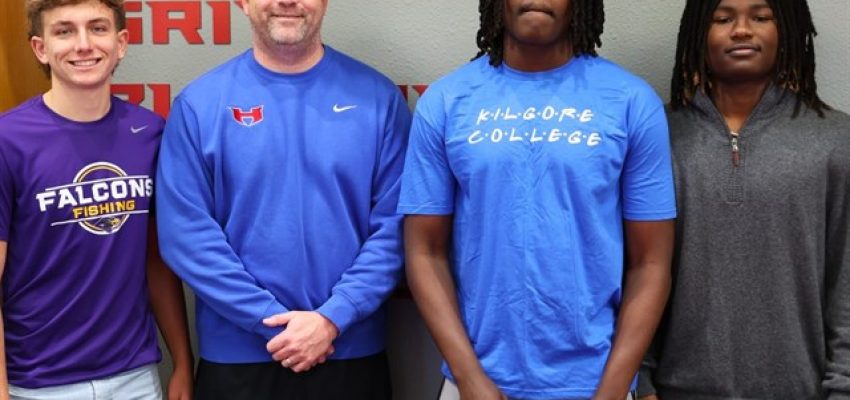

The signing day ceremony. It’s a timeless tableau in American high schools: proud parents, beaming coaches, and young student-athletes, pens poised, committing their future to a collegiate institution. It’s a moment of triumph, the culmination of years of sweat, sacrifice, and unwavering dedication, as exemplified by Griffin Antunes and his peers at Henderson High School, whose recent collegiate signings mark a significant milestone in their athletic journeys. While the essence of this achievement remains deeply human, the landscape surrounding it is rapidly evolving, quietly yet profoundly reshaped by a force that is revolutionizing nearly every sector of our lives: artificial intelligence.
As an AI specialist, writer, and tech enthusiast, I’ve watched with fascination as AI transcends its initial applications, permeating industries from healthcare to finance, and now, with increasing sophistication, the world of sports. The path from a high school field to a university scholarship is no longer solely paved by the keen eye of a scout or the anecdotal reputation of a player. Today, it’s increasingly influenced by algorithms, data analytics, and predictive modeling that offer unprecedented insights into athletic potential and performance. This isn’t about replacing human judgment; it’s about augmenting it, creating a more efficient, equitable, and data-rich environment for talent identification.
This article delves into how artificial intelligence is transforming the journey of student-athletes, from early talent discovery and performance optimization to the intricate process of collegiate recruitment. We’ll explore the technologies making this possible, the benefits they offer, and the critical considerations we must keep in mind as we embrace this exciting new era where technology meets tenacity. The signing day, while a testament to individual effort, is now also a quiet acknowledgment of the technological advancements helping to light the way.
AI in Sports Recruitment: Leveling Up Talent Discovery
Gone are the days when athletic scouting relied almost exclusively on a scout’s intuition, a handful of in-person viewings, and perhaps a highlight reel cobbled together manually. While human expertise remains invaluable, the sheer volume of data generated by modern sports — from game statistics and training metrics to biomechanical analyses — has created a fertile ground for artificial intelligence. Today, AI in Sports Recruitment is transforming how collegiate programs identify, evaluate, and pursue promising young talents.
One of the most significant shifts has been the move towards objective, data-driven evaluation. AI-powered platforms can ingest and process colossal datasets, far beyond human capacity. Consider a high school football player: an AI system can analyze every snap, tracking speed, acceleration, deceleration, agility, route running, tackle efficiency, and even subtle changes in gait or posture that might indicate fatigue or injury risk. This isn’t just about raw statistics; it’s about contextualizing performance within specific game situations, against varying levels of competition, and over extended periods.
Take, for instance, the advancements in computer vision. AI algorithms can now meticulously analyze game footage, automatically tagging specific plays, identifying individual athletes, and tracking their movements with remarkable precision. Platforms like Hudl Assist, while not purely AI in all its features, leverage machine learning to streamline video analysis, enabling coaches and recruiters to quickly access categorized clips of a player’s performance. More advanced systems go further, quantifying aspects previously subjective: the optimal angle of a shot in basketball, the efficiency of a swimmer’s stroke, or a pitcher’s biomechanical consistency. In the NFL, for example, ‘Next Gen Stats’ relies heavily on similar principles, offering insights into player performance that were unimaginable a decade ago, and these tools are rapidly trickling down to the collegiate and even high school levels.
This analytical power extends beyond peak performance. AI can identify ‘under-the-radar’ athletes who might excel in less visible positions or regions, or whose potential is masked by their team’s overall performance. By looking at underlying metrics rather than just win-loss records, AI can spot raw talent and project future growth with a level of accuracy unprecedented in traditional scouting. This democratizes the scouting process, opening doors for athletes who might not attend high-profile camps or play for traditionally dominant programs, ensuring that talent, wherever it resides, has a better chance of being discovered. This aspect is particularly vital for promoting equity in athletic pathways.
Moreover, AI’s predictive capabilities are becoming increasingly sophisticated. Machine learning models can analyze an athlete’s physical attributes, performance history, and even academic profile to forecast their potential for success at the collegiate level. This involves identifying correlations between various data points and future outcomes, helping recruiters make more informed decisions about scholarships and team fit. The goal is not just to find good players, but to find players who will thrive in a specific collegiate environment and contribute to a program’s long-term success. The strategic deployment of AI in Sports Recruitment thus promises to refine talent acquisition, moving beyond subjective assessments to a truly evidence-based approach.
The Data-Driven Athlete: Personalization and Performance Optimization
The benefits of AI in sports aren’t confined solely to the recruitment office; they profoundly impact the athletes themselves, even before they sign their letter of intent. For aspiring collegiate athletes like the Henderson High students, the journey involves relentless training, constant self-improvement, and a deep understanding of their own physiology and performance metrics. Here, AI acts as a personal coach, nutritionist, and physiotherapist rolled into one, providing data-driven insights that can elevate an athlete’s game to new heights.
Wearable technology, integrated with AI, is at the forefront of this revolution. Devices that track heart rate, sleep patterns, movement efficiency, and recovery metrics feed data into AI algorithms. These algorithms can then identify trends, pinpoint areas for improvement, and even predict potential injury risks before they manifest. For example, if an AI system detects subtle changes in an athlete’s running gait or a consistent dip in sleep quality combined with increased training load, it can alert coaches and trainers to intervene, preventing overuse injuries and optimizing recovery protocols. Companies like Whoop and Oura have made these insights accessible to everyday athletes, and their professional counterparts are even more sophisticated, offering granular data points for coaches and medical staff.
This personalized approach extends to training regimens. No two athletes are identical, and what works for one may not be optimal for another. AI can analyze an athlete’s unique physiological responses to different exercises, their strength and weaknesses, and their progress over time to generate highly customized training plans. This might involve adjusting workout intensity, modifying specific drills, or recommending targeted nutritional strategies. The goal is to maximize individual potential while minimizing the risk of burnout or injury, ensuring athletes are consistently performing at their best when it matters most – during competitions and, critically, during the college recruitment window.
Beyond physical prowess, AI also plays a role in enhancing an athlete’s mental game. While still an emerging field, AI-powered tools are beginning to assist with mental conditioning, analyzing biometric feedback during high-pressure situations, or providing personalized mindfulness exercises. Virtual reality (VR) and augmented reality (AR) also play a role, offering immersive training environments where athletes can practice decision-making under simulated game conditions without the physical toll. A basketball player can repeatedly practice free throws in a simulated packed arena, or a quarterback can review defensive coverages in a virtual playbook, honing their reflexes and strategic thinking. This blend of physical and mental optimization creates a holistic approach to athlete development.
Ultimately, by providing granular, actionable insights into every facet of an athlete’s development, AI empowers student-athletes to take a proactive role in their own improvement. It allows them to understand their bodies and performance patterns better, make informed decisions about their training, and approach their athletic careers with a scientific edge. For those aiming for collegiate sports, this data-driven edge can be the difference-maker, providing a clearer path to achieving their dreams and ensuring they arrive at college not just talented, but optimally prepared and resilient.
Beyond the Game: AI’s Ethical Implications and the Human Touch
While the integration of AI into sports recruitment and athlete development offers immense promise, it also brings forth a spectrum of ethical considerations and challenges that demand careful navigation. As we celebrate the transformative potential of technology, it’s crucial to acknowledge its limitations and ensure that the human element, which lies at the heart of sports, remains paramount. The narrative of success, like that of the Henderson High student-athletes, is ultimately about human endeavor, not just algorithmic efficiency.
One of the primary concerns revolves around data privacy and security. The vast amounts of personal and performance data collected from athletes, especially minors, raise questions about who owns this data, how it’s stored, and who has access to it. Safeguarding this sensitive information from breaches and misuse is paramount, requiring robust legal frameworks and ethical guidelines. Athletes and their families need assurance that their biometric data, academic records, and performance analytics are used responsibly and transparently. The growing discussion around data rights, particularly for children, makes this an even more pressing issue.
Another critical ethical dimension is the potential for algorithmic bias. If the data used to train AI models reflects existing biases in sports — for example, privileging certain body types, socio-economic backgrounds, or playing styles — the AI system could inadvertently perpetuate or even amplify these inequalities. This could lead to a less diverse talent pool, overlooking athletes from underrepresented communities or those who develop later in their careers. Ensuring fairness in AI means meticulously curating diverse training datasets and continuously auditing algorithms for unintended discriminatory outcomes. The goal of AI in Sports Recruitment should be to broaden opportunities, not narrow them, ensuring that a child’s zip code or family income doesn’t implicitly disadvantage them in the AI-driven scouting process.
Furthermore, while AI can provide unprecedented insights, it cannot fully replicate the nuanced judgment, mentorship, and emotional intelligence of human coaches and scouts. The intangibles of an athlete — their leadership qualities, resilience under pressure, ability to be a good teammate, and personal character — are incredibly difficult for algorithms to quantify. These ‘soft skills’ are often what truly define an athlete’s impact on a team and their long-term success. AI should serve as a powerful assistant, freeing up coaches to focus more on these qualitative aspects, on personal development, and on fostering a supportive team culture, rather than getting bogged down in endless data analysis. It should augment human capabilities, not replace the essential human connection inherent in sports.
The future of sports, particularly at the collegiate level, will undoubtedly be a collaborative synergy between human expertise and artificial intelligence. The stories of dedicated student-athletes achieving their dreams will continue to inspire, but behind the scenes, advanced technologies will play an ever-increasing role in making those dreams more attainable and the process more efficient. Striking the right balance — leveraging AI’s analytical power while upholding human values and ethical principles — will be key to unlocking the full, positive potential of this technological revolution in athletics.
The journey from a promising high school athlete to a collegiate signee is a testament to extraordinary talent, relentless discipline, and unwavering passion. For Griffin Antunes and his peers at Henderson High, their recent signings represent the peak of years of personal sacrifice and a moment of profound achievement. Yet, as we celebrate these individual triumphs, it’s clear that the pathways to these opportunities are increasingly being illuminated and optimized by advanced technologies. Artificial intelligence is no longer a futuristic concept for sports; it is a present-day reality, reshaping how talent is identified, how athletes train, and how collegiate programs build their rosters.
As an AI specialist, I find this convergence of human endeavor and technological innovation exhilarating. The vision for the future of student athletics is one where AI acts as an intelligent partner, providing unparalleled insights that empower athletes, guide coaches, and streamline recruitment processes, all while making the system more objective and accessible. However, it’s a future we must approach with thoughtfulness, ensuring that as we embrace the power of algorithms and data, we never lose sight of the human spirit, the ethical responsibilities, and the sheer joy that defines sports. The next generation of student-athletes will navigate an even more technologically sophisticated landscape, and by thoughtfully integrating AI, we can ensure their journeys are not just successful, but also fair, fulfilling, and truly transformative.










