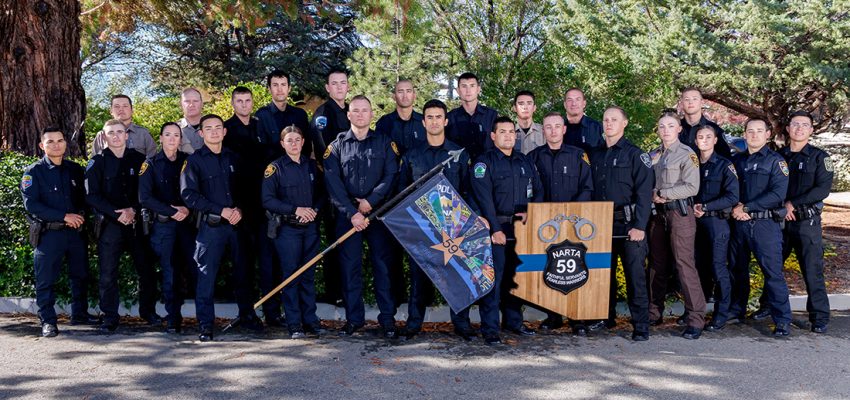

Graduation day is a powerful symbol. It marks the culmination of hard work, the acquisition of specialized knowledge, and the exciting, often daunting, threshold of a new beginning. For decades, we’ve watched graduates from various academies and institutions step forward, ready to apply their skills to serve society, much like the recent cohort of peace officers at Yavapai College’s Prescott campus, embarking on careers dedicated to service and education.
But what if we considered a ‘graduation’ on a far grander scale? What if the collective intelligence we’ve been nurturing, Artificial Intelligence itself, is now reaching its own momentous commencement? AI is no longer a nascent field confined to research labs; it is graduating into every facet of our lives and, crucially, into every industry. This metaphorical graduation signifies not just technological advancement, but a profound shift in the very fabric of work, education, and human potential. As an AI specialist and enthusiast, I find myself captivated by this transition, eager to explore the new careers being forged and the evolving skills paramount for navigating this brave new world.
AI Career Opportunities: Forging New Pathways in a Dynamic Landscape
The narrative surrounding AI and employment often oscillates between utopian visions of enhanced productivity and dystopian fears of mass job displacement. While it’s true that AI will automate certain repetitive tasks, its more significant and often overlooked impact is its capacity to create entirely new professional categories and augment existing ones. We are witnessing an unprecedented expansion of AI career opportunities, demanding a blend of technical prowess, ethical understanding, and human-centric design.
Consider the rise of roles that barely existed a decade ago. The Prompt Engineer, for instance, is a critical new position focused on crafting precise instructions to guide generative AI models towards desired outputs. This requires not just technical understanding of large language models but also a deep grasp of language, logic, and even psychology to coax the most effective responses. Similarly, AI Ethicists and Bias Detectives are emerging as vital guardians, ensuring that AI systems are developed and deployed responsibly, without perpetuating societal biases or causing unintended harm. As AI integrates more deeply into healthcare, finance, and legal systems, these roles become indispensable, serving as the conscience of our increasingly automated world.
Beyond these entirely new vocations, existing fields are being rewired, giving rise to specialized roles that blend traditional expertise with AI proficiency. A Data Scientist today might specialize in training neural networks for medical diagnostics, becoming an ‘AI Clinical Specialist.’ A UX/UI Designer now needs to consider human-AI interaction patterns, designing intuitive interfaces for intelligent agents and autonomous systems, evolving into an ‘AI Interaction Designer.’ Even in creative fields, AI is not just a tool but a collaborator. Artists and musicians are exploring roles as ‘AI Art Directors’ or ‘Algorithmic Composers,’ leveraging AI to push the boundaries of creative expression.
The demand for these new skills is reflected in market trends. According to a 2023 report by LinkedIn, AI-related job postings have seen significant growth across various sectors. The World Economic Forum’s Future of Jobs Report 2023, for example, highlighted Machine Learning Engineers, Data Analysts, and AI and Machine Learning Specialists as among the fastest-growing job roles globally. This isn’t just about coding; it’s about understanding the entire lifecycle of an AI project, from data acquisition and model training to deployment, monitoring, and continuous improvement. The scope of AI career opportunities is broadening, inviting individuals from diverse backgrounds to contribute their unique perspectives.
The Evolving Skillset: What it Means to ‘Graduate’ into the AI Era
Just as any graduating class prepares with a specific set of skills, individuals aiming to thrive in the AI era must cultivate a dynamic and evolving repertoire. The traditional emphasis on rote memorization and procedural tasks is giving way to a premium on skills that uniquely human. While technical competencies remain crucial, the true differentiator lies in our ability to adapt, innovate, and collaborate with intelligent systems.
On the technical front, a foundational understanding of programming languages like Python, familiarity with machine learning frameworks (e.g., TensorFlow, PyTorch), and cloud platforms (AWS, Azure, Google Cloud) is increasingly becoming the baseline. However, success in AI goes far beyond mere coding. It encompasses an understanding of statistical methods, algorithm design, and data governance. Professionals in this space need to be adept at cleaning, processing, and interpreting vast datasets, often identifying patterns and anomalies that inform AI model development. The ability to debug complex systems, troubleshoot model failures, and ensure the reliability and scalability of AI solutions is paramount.
Yet, perhaps even more critical are the ‘soft skills’ that AI cannot replicate. Critical thinking, problem-solving, and creativity are essential for identifying novel applications for AI and for developing solutions to complex, unstructured problems. Emotional intelligence and collaborative spirit become vital in multidisciplinary teams where AI specialists work alongside domain experts in healthcare, engineering, or education. Adaptability is no longer a buzzword; it’s a survival trait. The rapid pace of AI innovation means that lifelong learning is not an option but a necessity. Professionals must continuously upskill and reskill, treating every new AI breakthrough as another ‘course’ in their ongoing professional development.
Educational institutions are responding to this demand, with universities launching specialized AI degrees, bootcamps offering intensive practical training, and online platforms providing accessible learning pathways. These new ‘academies’ are the NARTAs of the AI age, preparing individuals not just for existing jobs but for the unforeseen roles of tomorrow. The emphasis is shifting from merely training machines to empowering humans to effectively design, manage, and ethically leverage these powerful tools. Understanding the ethical implications of AI, grappling with issues of fairness, accountability, and transparency, is becoming as important as understanding the algorithms themselves. This holistic approach to education ensures that graduates are not just technically proficient but also socially responsible, ready to contribute meaningfully to an AI-driven society.
Beyond Automation: AI as a Catalyst for Human Potential
The most compelling aspect of AI’s integration into the workforce is its potential to elevate human capabilities, transforming jobs from monotonous to meaningful. Instead of simply replacing human labor, AI acts as a sophisticated co-pilot, handling routine, data-intensive tasks and freeing up human professionals to focus on higher-order thinking, creativity, and interpersonal engagement. This symbiotic relationship promises to unlock unprecedented human potential across virtually every industry.
Consider the medical field. AI systems can analyze vast amounts of patient data, identify subtle patterns in scans, and even predict disease progression with remarkable accuracy. This doesn’t replace the doctor; it empowers them. Physicians, no longer bogged down by endless administrative tasks or sifting through mountains of research, can dedicate more time to complex diagnoses, personalized treatment plans, and, critically, empathetic patient interaction. AI augments clinical judgment, making healthcare more efficient, precise, and human-centered. The same principle applies to legal professionals, where AI can expedite e-discovery and contract analysis, allowing lawyers to focus on strategic advice and courtroom advocacy.
In creative industries, AI is not a competitor but a muse. Generative AI tools can assist designers in brainstorming concepts, provide musicians with novel melodic ideas, and help writers overcome creative blocks. The human creator remains the ultimate visionary, directing AI to explore new aesthetic frontiers, transforming their visions into tangible works with greater speed and scope. This partnership amplifies human ingenuity, pushing the boundaries of what’s possible. Furthermore, AI can take on mundane, repetitive tasks that historically led to burnout in many professions, from manufacturing to customer service. By automating these processes, AI can lead to more engaging, intellectually stimulating work environments, fostering innovation and job satisfaction.
The concept of ‘peace officers’ providing service and education finds an intriguing parallel in the AI domain. AI systems, when designed ethically and transparently, can act as digital ‘peacekeepers,’ ensuring fairness in algorithmic decision-making, detecting fraud, and enhancing cybersecurity. They can ‘educate’ us by processing complex information and presenting insights that were previously inaccessible, democratizing knowledge and accelerating research. This perspective underscores AI’s capacity not just to build better tools, but to build a better, more just, and more informed society. The ongoing development of robust regulatory frameworks and ethical guidelines is critical to ensuring AI systems truly serve humanity in this capacity.
The graduation of AI into the global workforce marks a pivotal moment in human history. It’s a testament to our ingenuity and a profound challenge to our adaptability. The emergence of new AI career opportunities demands that we rethink education, reskill our workforce, and embrace a future where human intelligence and artificial intelligence collaborate to solve the world’s most pressing problems.
As André Lacerda, I believe this is not a future to fear, but one to actively shape. We must foster an environment of continuous learning, ethical innovation, and cross-disciplinary collaboration. The journey has just begun, and the opportunities for those willing to learn, adapt, and contribute to this evolving landscape are boundless. Let us embrace this new era with optimism, curiosity, and a commitment to ensuring that AI serves as a powerful force for progress and human flourishing.