
The landscape of work is undergoing a seismic shift, driven by an unprecedented acceleration of technological innovation, most notably in the realm of Artificial Intelligence. For students today, the traditional linear career path is increasingly a relic of the past, replaced by a dynamic, interconnected web of opportunities and challenges. Preparing the next generation for a future where jobs are evolving faster than ever before requires more than just academic rigor; it demands foresight, adaptability, and real-world exposure.
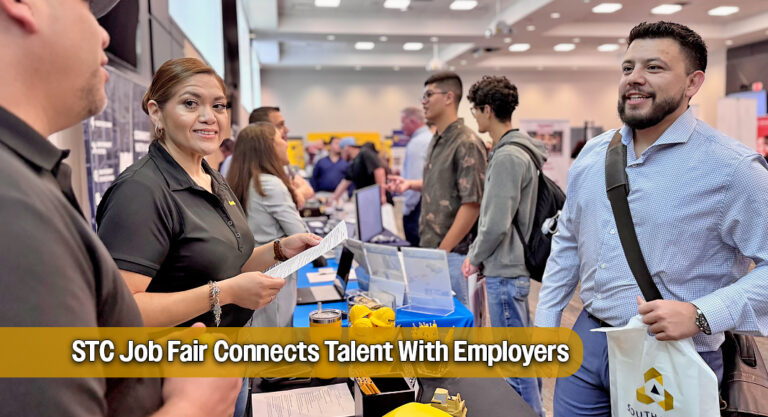
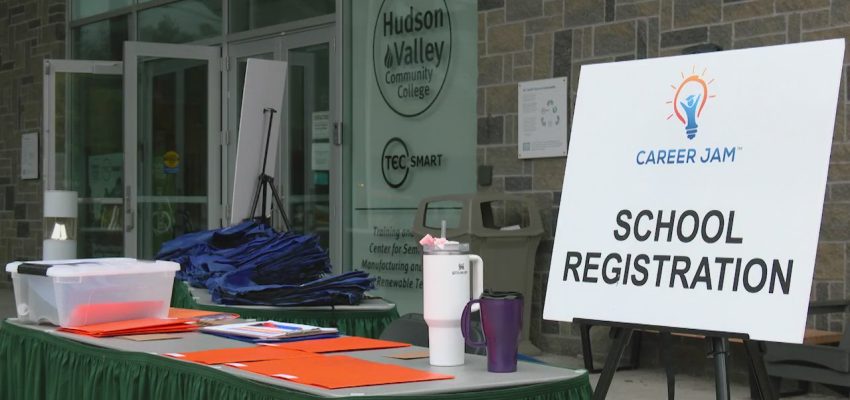
Events like Career Jam Explore, which recently brought together approximately 700 students from over a dozen Capital Region school districts, are crucial touchpoints in this journey, offering a glimpse into professional possibilities. But what does this evolving landscape truly mean, and how can we empower young minds to not just survive but thrive in an era defined by AI? As an AI specialist and tech enthusiast, I believe the answer lies in understanding the transformative power of AI, not as a threat, but as a catalyst for new forms of career development and exploration.
### AI in Career Exploration: Redefining Pathways for the Digital Age
Artificial intelligence is no longer a concept confined to science fiction; it is an integral force reshaping industries from healthcare to finance, manufacturing to creative arts. Its pervasive influence means that virtually every career path today, or in the near future, will intersect with AI in some capacity. For students embarking on their professional journeys, this presents both a daunting challenge and an incredible opportunity. The question is no longer *if* AI will impact their chosen field, but *how* it will redefine its core functions and required competencies.
This is precisely where the conversation around **AI in career exploration** becomes paramount. Traditional methods of career guidance, often based on static industry classifications, are becoming obsolete. Imagine a future where AI-powered platforms can offer hyper-personalized career roadmaps, analyzing a student’s aptitudes, interests, and learning styles against real-time job market data and predicting future skill demands. Such tools could recommend tailored educational paths, suggest relevant extracurricular activities, and even identify mentors in emerging fields that might not even exist in a fixed occupational dictionary.
Consider the data: a report by McKinsey & Company suggests that by 2030, automation and AI could impact over 800 million jobs globally, requiring significant reskilling. However, the same report also highlights the creation of entirely new job categories, often requiring a blend of technological proficiency and uniquely human attributes. This dual effect underscores the need for proactive, future-oriented career guidance. Initiatives like Career Jam Explore provide a vital, early exposure platform. By bringing together students with professionals from various sectors, these events demystify complex industries and highlight the practical application of academic learning. They allow students to engage directly with real-world scenarios, fostering curiosity and helping them visualize their place within the broader economic ecosystem.
Furthermore, AI itself can be a powerful ally in this exploration. Think of AI-driven simulations that allow students to ‘test drive’ different professions, experiencing a day in the life of a data scientist, a robotics engineer, or an AI ethicist without the commitment. These immersive experiences can provide invaluable insights that traditional classroom learning cannot replicate. They move beyond theoretical knowledge to practical understanding, helping students understand not just *what* a job entails, but *how* it feels to perform it. The goal is to move beyond mere information dissemination to genuine experience and informed decision-making. Students need to understand not just the technical aspects of AI, but also its ethical implications, its societal impact, and its potential for innovation across all domains. This foundational understanding is key to navigating the future.
### The Evolving Skillset: Beyond Technical Proficiency
While technical skills, particularly in areas like AI, data science, and cybersecurity, are undeniably crucial, the future of work demands a more nuanced and hybrid skillset. As AI systems become increasingly sophisticated in automating routine and even complex analytical tasks, the value of distinctly human capabilities escalates. These ‘soft skills’ — often mislabeled as less important — are, in fact, becoming the superpowers of the AI era.
Creativity, for instance, remains a domain where human ingenuity far surpasses current AI capabilities. From innovative problem-solving in product design to artistic expression, the ability to generate novel ideas and solutions is irreplaceable. Similarly, critical thinking and complex problem-solving are essential. While AI can analyze vast datasets and identify patterns, the human capacity for abstract reasoning, ethical deliberation, and contextual understanding is vital for interpreting these insights and making wise decisions. A student exploring a career in, say, urban planning, will need to leverage AI for traffic flow analysis and demographic projection, but it will be their critical thinking that designs sustainable communities and their empathy that addresses social equity.
Emotional intelligence and collaboration are equally vital. In an increasingly interconnected and automated world, the ability to work effectively in teams, communicate persuasively, and navigate diverse perspectives is paramount. AI tools can facilitate collaboration by streamlining communication and project management, but they cannot replace the human element of empathy, negotiation, and leadership. Adaptability and resilience also rank high on the list of future-proof skills. Given the rapid pace of technological change, individuals must be prepared to continuously learn, unlearn, and relearn throughout their careers. This involves cultivating a growth mindset and embracing change as an opportunity for development.
Events like Career Jam Explore serve a critical function in this regard. Beyond showcasing specific job roles, they indirectly emphasize the underlying skills required to excel in these professions. When students interact with engineers, healthcare professionals, or entrepreneurs, they observe firsthand the communication skills, problem-solving approaches, and interpersonal dynamics at play. This kind of observational learning is invaluable for developing a holistic understanding of professional success. Educational institutions, therefore, must pivot from rote memorization to fostering these essential meta-skills. Integrating project-based learning, interdisciplinary studies, and collaborative challenges can provide students with the practical experience needed to hone these competencies. The goal is not just to teach them *what* to think, but *how* to think critically, creatively, and empathetically, preparing them for an environment where **AI in career exploration** means understanding both the tools and the human qualities that leverage them best.
### Bridging the Gap: Education, Industry, and Future Readiness
The challenge of preparing students for an AI-driven future is not one that schools can tackle in isolation. It requires a concerted, collaborative effort between educational institutions, industry leaders, policymakers, and parents. This synergy is essential to bridge the growing gap between traditional curricula and the dynamic demands of the modern workforce.
Industry partnerships are particularly crucial. By actively engaging with local businesses and technology firms, schools can ensure their programs remain relevant and forward-thinking. This could involve curriculum co-development, where industry experts provide input on emerging technologies and skill requirements, ensuring that what is taught in the classroom aligns with what is needed in the workplace. Furthermore, offering real-world experiences such as internships, apprenticeships, and mentorship programs provides students with invaluable practical exposure. Imagine high school students working alongside AI researchers on a community project, or shadowing data scientists in a local startup. These experiences not only clarify career aspirations but also build professional networks and develop practical skills.
Events like Career Jam Explore exemplify this collaborative spirit. By bringing together diverse employers under one roof, they create a microcosm of the professional world, allowing students to explore a breadth of industries they might not have otherwise considered. This direct interaction is vital for demystifying career paths and demonstrating the practical application of academic subjects. It’s an opportunity for students to ask questions, engage in hands-on activities, and envision themselves in various professional roles, truly kickstarting their journey of **AI in career exploration**. The goal is not merely to provide information, but to inspire and connect.
Moreover, preparing students for the future of work also entails fostering a deep understanding of the ethical dimensions of AI. As AI becomes more integrated into daily life, questions of privacy, bias, accountability, and job displacement become increasingly pertinent. Future professionals across all fields—from law to healthcare, engineering to journalism—will need to grapple with these complex ethical dilemmas. Integrating AI ethics into the curriculum, alongside technical training, is therefore non-negotiable. This holistic approach ensures that students are not only technically proficient but also ethically responsible and socially aware.
Governments also have a role to play in establishing frameworks that support lifelong learning and career transitions. As AI continues to reshape industries, individuals will need access to continuous education and reskilling opportunities throughout their working lives. Investing in accessible vocational training, online learning platforms, and industry-recognized certifications can help ensure that the workforce remains agile and adaptable. The emphasis must shift from a one-time education to a continuous learning journey, preparing individuals for multiple career evolutions rather than a single destination. This ecosystem of support – from early exposure events to advanced professional development – is what truly defines future readiness in the age of AI.
The journey of career exploration has never been more vital, nor more complex, than it is today. As Artificial Intelligence continues its rapid ascent, fundamentally altering industries and creating entirely new paradigms of work, the imperative to equip the next generation with both the knowledge and the adaptability to navigate this future is clearer than ever. Initiatives like Career Jam Explore serve as powerful examples of how proactive engagement, real-world exposure, and collaborative efforts between education and industry can lay a crucial foundation for students. They offer a tangible bridge between the classroom and the evolving professional landscape, fostering curiosity, clarifying aspirations, and highlighting the diverse opportunities that await.
Ultimately, preparing for the future of work in the AI era is about more than just mastering new technologies; it’s about cultivating uniquely human skills – creativity, critical thinking, emotional intelligence, and adaptability – that complement and leverage AI rather than compete with it. It’s about understanding that career paths are no longer linear, but dynamic canvases upon which individuals will paint multiple professional narratives. As an AI specialist, I am convinced that by embracing **AI in career exploration** as a tool for empowerment and by fostering a culture of lifelong learning, we can ensure that the next generation is not merely prepared for the future, but actively shapes it with purpose, innovation, and a profound sense of human value.