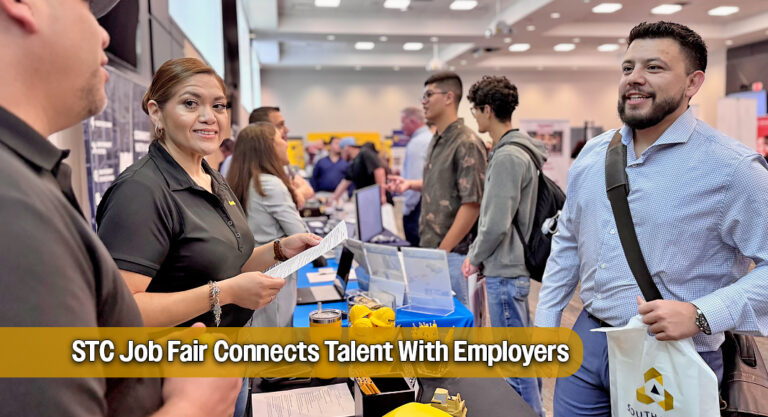
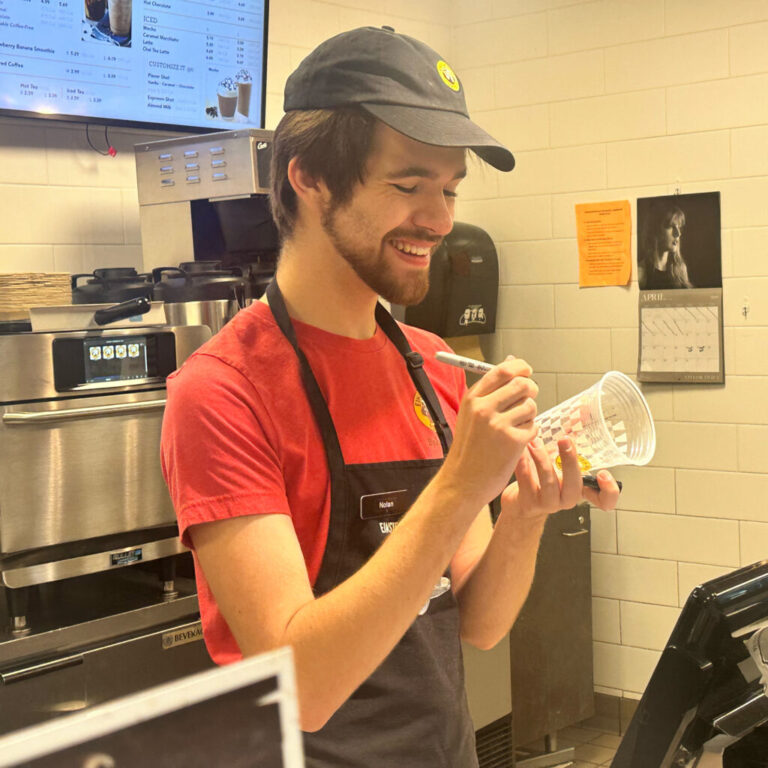
The landscape of work is undergoing a seismic shift, driven primarily by the relentless march of artificial intelligence. What was once the realm of science fiction is now an everyday reality, transforming industries, creating entirely new job categories, and rendering others obsolete. In this rapidly evolving environment, the traditional models of career guidance and preparation are proving increasingly inadequate. Students today need more than just theoretical knowledge; they require practical experience, adaptability, and a deep understanding of how technology, especially AI, will shape their professional futures. This urgent need underscores the value of initiatives like the hands-on winter camp for Gulfport students, offering a glimpse into a proactive approach to preparing the next generation for an unpredictable, yet exciting, future.
At the heart of this transformation lies the imperative for experiential learning. Gone are the days when a degree alone guaranteed a clear path. The modern workforce demands skills that can only be honed through direct engagement, problem-solving, and collaboration. It’s about ‘learning by doing’ – a philosophy that empowers individuals to not only grasp complex concepts but also to apply them in real-world scenarios. As an AI specialist and tech enthusiast, I’ve observed firsthand how pivotal this approach is. It cultivates resilience, fosters innovative thinking, and instills a sense of agency that is indispensable when navigating the fluid dynamics of a career in the age of AI. The challenge, and indeed the opportunity, lies in seamlessly integrating this practical immersion with an understanding of AI’s pervasive influence, thereby crafting a robust framework for **AI-driven career exploration**.
AI-driven Career Exploration: A New Paradigm for Development
The advent of artificial intelligence has reshaped nearly every sector, from healthcare and finance to manufacturing and creative arts. Automation, once primarily mechanical, now extends to cognitive tasks, influencing everything from data analysis to customer service. This profound change necessitates a radical rethinking of how we prepare young minds for their professional journeys. Traditional career counseling, often relying on static occupational handbooks and general interest inventories, struggles to keep pace with the exponential growth of new roles and the rapid evolution of existing ones.
Enter the era of **AI-driven career exploration**. Imagine a system that, instead of merely matching interests to existing job titles, analyzes a student’s aptitudes, learning styles, and emerging skills against real-time job market data, predicting future demand, and even suggesting pathways that don’t yet explicitly exist. AI can sift through vast datasets of educational outcomes, employment trends, and industry-specific skill requirements to offer personalized, dynamic career roadmaps. It can identify skill gaps with precision, recommend bespoke learning modules, and even simulate potential work environments, offering a low-stakes platform for students to test out different roles.
For instance, AI algorithms can analyze a student’s performance in various academic subjects, extracurricular activities, and even online courses to discern underlying strengths in areas like logical reasoning, creative problem-solving, or empathy. This data, combined with insights into the rapidly changing job market – such as the explosive growth in fields like prompt engineering, AI ethics, or human-AI interface design – allows for a more nuanced and forward-thinking approach to career guidance. According to a report by the World Economic Forum, AI is projected to create 97 million new jobs by 2025, while displacing 85 million, underscoring the urgency for proactive and informed career planning. This isn’t just about finding a job; it’s about cultivating a mindset of continuous learning and adaptation, crucial for thriving in an AI-permeated world. Embracing platforms that offer **AI-driven career exploration** tools can provide students with an unparalleled advantage, offering clarity amidst complexity and guiding them towards roles where human creativity and critical thinking augment, rather than compete with, artificial intelligence.
The Indispensable Role of Experiential Learning in a Technologically Advanced World
While AI can provide invaluable insights and personalized pathways, the actual development of skills and the cultivation of essential soft attributes still demand human interaction and practical application. This is where experiential learning initiatives, akin to the Gulfport students’ winter camp, become absolutely critical. Such programs bridge the gap between theoretical knowledge and practical competence, offering students a sandbox where they can experiment, fail safely, and learn through direct engagement. Whether it’s a coding bootcamp, a robotics workshop, a simulated data analysis project, or an ethical AI hackathon, these hands-on opportunities are the crucible in which future-proof skills are forged.
Consider the skills that are increasingly valued in an AI-powered economy: critical thinking, complex problem-solving, creativity, emotional intelligence, and collaboration. These are precisely the competencies that AI struggles to replicate and, consequently, are the strengths that humans must cultivate. Experiential learning directly fosters these attributes. When students are tasked with building a small robot, programming an AI to solve a specific problem, or even designing a user interface for a new AI application, they’re not just learning technical skills. They’re developing perseverance, learning to troubleshoot, working effectively in teams, and understanding the iterative nature of innovation. They are exploring potential career avenues directly, gaining real insights into the daily challenges and rewards of different professions. This kind of active engagement deepens understanding far more effectively than passive instruction, helping students to solidify their interests and discover latent talents.
Furthermore, practical experience offers a vital context for abstract concepts. Learning about algorithms in a textbook is one thing; using an algorithm to optimize a logistics route or identify patterns in a large dataset is quite another. This direct application not only makes learning more engaging but also anchors the knowledge in a tangible way, making it more retrievable and adaptable. Initiatives that allow students to simulate entrepreneurship, delve into digital marketing with AI tools, or even engage in community service projects leveraging technology, empower them with agency and real-world acumen. The Gulfport camp, by offering students a taste of different professions, sets a foundational precedent for what **AI-driven career exploration** truly entails: not just theoretical knowledge of what AI can do, but practical experience in how to wield it, ethically and effectively.
Preparing for the Unseen: Skills for the AI-Powered Workforce
The future workforce will not be defined by job titles alone, but by a dynamic portfolio of skills and an unwavering commitment to lifelong learning. As André Lacerda, I often emphasize that preparing for the unseen means equipping individuals with adaptable skills that transcend specific technologies. While technical proficiency in areas like data science, machine learning, and prompt engineering is undoubtedly valuable, equally crucial are the human-centric skills that AI complements rather than replaces.
Key among these is digital literacy, which extends beyond merely using software to understanding the underlying principles of AI, cybersecurity, and data privacy. Data fluency – the ability to interpret, analyze, and communicate insights from data – becomes paramount, as AI tools will generate unprecedented volumes of information. Ethical reasoning is also becoming a non-negotiable skill. As AI systems become more autonomous and influential, professionals must grapple with complex ethical dilemmas, ensuring fairness, transparency, and accountability in their design and deployment. Human-AI collaboration, or the ability to effectively work alongside intelligent systems, will differentiate successful professionals, requiring nuanced understanding of AI’s strengths and limitations.
Beyond these, the ‘soft skills’ become even harder to ignore. Creativity, for instance, will be prized as AI handles routine tasks, leaving humans to innovate, imagine, and conceive novel solutions. Adaptability and resilience are essential given the rapid pace of technological change. The concept of ‘reskilling’ and ‘upskilling’ will not be an occasional event but a continuous process throughout one’s career. Programs that foster these skills through experiential learning – whether it’s collaborative projects where students design AI solutions for local problems, or workshops focusing on ethical AI principles through case studies – are investing in true future-proofing.
The Gulfport students’ experience, by allowing them to ‘explore careers,’ touches upon this fundamental need for practical engagement. Expanding such initiatives to explicitly incorporate AI tools and challenges will amplify their impact. Imagine students using AI to analyze market trends for a small business project, or employing natural language processing to understand public sentiment on a social issue. These tangible experiences not only demystify AI but also empower students to see themselves as active participants and innovators in the AI revolution. This proactive engagement, fueled by insightful **AI-driven career exploration**, will ensure that the next generation is not just prepared for the future, but actively shaping it.
In conclusion, the confluence of rapid AI advancements and the undeniable need for hands-on learning marks a pivotal moment in educational and career development. The traditional pathways that once guided students are quickly becoming outdated, necessitating a more dynamic, personalized, and experiential approach. Initiatives that allow students, like those in Gulfport, to dive deep into potential career fields are not just extracurricular activities; they are essential incubators for the skills, mindset, and adaptability required to thrive in the AI era. My conviction as an AI specialist is that the future belongs to those who are not afraid to get their hands dirty, to experiment, and to continuously learn, using AI as a powerful co-pilot in their professional journey.
As we look ahead, the challenge for educators, policymakers, and industry leaders is to collectively foster an environment where every student has access to robust, **AI-driven career exploration** tools and meaningful experiential learning opportunities. It’s about cultivating a generation that views AI not as a threat, but as an unparalleled opportunity – a powerful tool to augment human potential, solve complex problems, and create a more innovative and prosperous world. By embracing this philosophy, we can empower individuals to navigate the uncharted waters of tomorrow with confidence, curiosity, and the critical skills necessary to shape their own remarkable destinies.