

In an era defined by rapid technological advancement and unprecedented change, the landscape of employment is continually reshaped. Artificial intelligence, automation, and evolving global economies demand a workforce that is not only skilled but also adaptable and forward-thinking. Against this backdrop, initiatives that actively bridge the gap between jobseekers and employers become more critical than ever, serving as vital catalysts for economic resilience and individual empowerment.
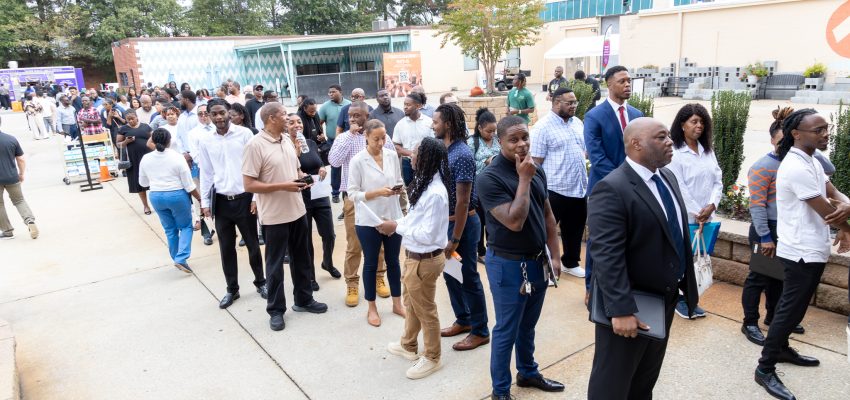
One such impactful event recently unfolded in metro Atlanta, a vibrant economic hub. On Thursday, September 26, more than 600 jobseekers converged at the Impact Event Center for a free career networking event. This wasn’t just another job fair; it was a strategically orchestrated collaboration between the MWI Workforce Institute and technology giant Microsoft, aimed at opening new doors to opportunity across high-demand sectors: tech, construction, and logistics. The immediate success was palpable, with over 100 on-site hires and scheduled interviews, demonstrating the tangible impact of proactive Future of Work strategies. As an AI specialist and tech enthusiast, I see these events as crucial checkpoints in our collective journey toward a more skilled and future-ready society, highlighting the symbiotic relationship between human potential and technological progress.
Future of Work: Bridging Gaps in a Dynamic Economy
The Atlanta job fair served as a microcosm of the larger global challenge: how do we ensure our workforce is equipped for the jobs of today and, more importantly, the jobs of tomorrow? The collaboration between MWI Workforce Institute and Microsoft offers a compelling blueprint. MWI Workforce Institute, with its mission to connect individuals to meaningful employment and provide the necessary training, perfectly complements Microsoft’s broader commitment to global skilling initiatives. Microsoft has made significant investments in training programs worldwide, recognizing that the advancement of technology, particularly AI, necessitates a parallel growth in human capability. Their involvement in local events like this underscores a shared understanding that innovation must be accompanied by inclusive economic opportunity.
The event’s focus on tech, construction, and logistics is particularly insightful. These sectors are at the forefront of technological disruption, experiencing immense growth and transformation fueled by data, automation, and AI. For instance, the tech industry continues its relentless expansion, creating a diverse array of roles from software development to cybersecurity and data analytics. Construction, traditionally seen as less technology-driven, is rapidly integrating building information modeling (BIM), drone technology for site surveys, and AI for project management and safety. Logistics, the backbone of global commerce, is being revolutionized by AI-driven supply chain optimization, autonomous vehicles, and sophisticated predictive analytics, demanding new skills in data science, automation engineering, and digital operations management.
These shifts create a crucial need for effective workforce development programs. Many existing jobs are being augmented or replaced by AI, while entirely new categories of jobs are emerging. This necessitates a proactive approach to reskilling and upskilling. Job fairs, especially those focused on specific, high-growth sectors, provide a direct channel for individuals to understand these evolving demands and connect with employers who are actively seeking these new competencies. The success of the Atlanta event, measured in immediate hires and scheduled interviews, underscores the effectiveness of direct engagement in navigating the complexities of the modern job market and preparing for the true Future of Work.
The Shifting Landscape of Tech, Construction, and Logistics
Delving deeper into the sectors highlighted by the job fair reveals the profound impact of technology. The tech industry, for one, is no longer solely about coding; it encompasses a vast ecosystem of innovation. The demand for AI engineers, machine learning specialists, prompt engineers, and ethical AI strategists is skyrocketing. Microsoft, a leader in AI research and deployment, understands this firsthand. Their presence at the job fair likely sought candidates not just with traditional IT skills but also those with an aptitude for learning and adapting to AI-powered tools and methodologies. According to a recent report by the World Economic Forum, AI and machine learning specialists, data analysts, and data scientists are among the fastest-growing job roles globally, reflecting a fundamental reorientation of industry needs. Events like this allow companies to tap into a local talent pool eager to embrace these cutting-edge opportunities, shaping the local Future of Work.
In construction, the stereotype of manual labor is quickly being replaced by images of digitally integrated project sites. Drones perform aerial surveys and monitor progress, robots handle repetitive tasks like bricklaying, and AI algorithms optimize schedules, manage resources, and predict potential delays or safety hazards. This digital transformation requires a workforce proficient in digital literacy, operating advanced machinery, and interpreting data from various sensors and software. Project managers now benefit from AI-powered analytics to make more informed decisions, enhancing efficiency and reducing costs. The job fair likely attracted candidates interested in roles that blend traditional construction knowledge with technological prowess, from BIM technicians to drone operators and construction data analysts—all critical components for modernizing the industry and adapting to the Future of Work.
Logistics, the often-unsung hero of the global economy, is undergoing a profound metamorphosis. E-commerce growth and the increasing complexity of global supply chains necessitate sophisticated solutions. AI is at the heart of this, powering predictive inventory management, optimizing delivery routes to save time and fuel, and automating warehouse operations with robotics. The rise of autonomous vehicles, while still evolving, promises to redefine freight transport. For jobseekers, this means a shift from purely manual roles to positions requiring skills in data analysis, automation systems management, and supply chain optimization software. Companies in logistics are actively seeking professionals who can leverage technology to enhance efficiency, reduce costs, and improve customer satisfaction, signaling a significant evolution in what constitutes a valuable employee in this dynamic sector. This evolution is a clear indicator of the multifaceted nature of the Future of Work.
Empowering the Workforce: Strategies for Lifelong Learning and Adaptability
The success of the Atlanta job fair is more than just the number of hires; it’s a testament to the power of proactive workforce development and the critical importance of lifelong learning. As André Lacerda, I firmly believe that the most vital skill in the age of AI is adaptability – the capacity to learn, unlearn, and relearn continuously. This isn’t just a corporate buzzword; it’s an economic imperative for individuals and nations alike. Organizations like MWI Workforce Institute play a pivotal role in this by connecting individuals with the training resources and opportunities needed to acquire new skills. Their partnership with a tech giant like Microsoft amplifies this impact, bringing world-class educational tools and industry insights directly to jobseekers.
Beyond job fairs, comprehensive strategies for empowering the workforce include robust reskilling and upskilling programs. Governments, educational institutions, and private companies must collaborate to create accessible pathways for learning. This could involve micro-credentialing for specific AI tools, vocational training in automated manufacturing, or online courses in data science. Microsoft’s own ‘Global Skilling Initiative,’ for example, aims to help 25 million people worldwide acquire digital skills, underscoring the scale of this challenge and opportunity. Furthermore, fostering a culture of ‘AI literacy’ across all professions is crucial. Understanding how AI functions, its ethical implications, and how to effectively collaborate with AI-powered tools will be as fundamental as basic computer literacy once was.
Crucially, as we embrace the technological advancements that define the Future of Work, we must also recognize and cultivate the uniquely human skills that AI cannot replicate. Critical thinking, creativity, emotional intelligence, complex problem-solving, and interpersonal communication will become even more valuable. These are the competencies that allow humans to innovate, lead, and adapt in ways machines cannot. Therefore, true workforce empowerment involves not just technical training but also the nurturing of these essential human attributes. Events like the Atlanta job fair are vital because they facilitate human connection, allowing jobseekers to showcase their potential beyond a resume and employers to identify individuals with the right blend of technical aptitude and human ingenuity.
The metro Atlanta job fair, a collaboration between MWI Workforce Institute and Microsoft, provides a compelling snapshot of how communities can proactively address the evolving demands of the job market. By connecting over 600 jobseekers with concrete opportunities in critical sectors like tech, construction, and logistics, the event not only facilitated immediate employment but also offered a glimpse into the ongoing transformation of these industries. It underscored the urgent need for continuous workforce development and the importance of strategic partnerships in preparing individuals for a landscape increasingly shaped by artificial intelligence and automation.
As we look ahead, the lessons from Atlanta resonate deeply. The Future of Work is not a distant concept; it is being built today through every training program, every job fair, and every act of skill acquisition. For individuals, embracing a mindset of lifelong learning and adaptability is paramount. For organizations and governments, investing in robust educational and reskilling initiatives is an economic imperative. The collaboration witnessed in Atlanta is a powerful example of how purposeful action can empower individuals, strengthen economies, and ensure that human potential remains at the heart of our technologically advanced future. It is a future I, André Lacerda, am passionately optimistic about, where AI serves to augment, rather than diminish, human capability and creativity.










