

In a world increasingly shaped by the relentless march of artificial intelligence, the very fabric of our professional lives is undergoing a profound transformation. As an AI specialist and a fervent advocate for technological literacy, I often find myself pondering a critical question: how do we adequately prepare the next generation for roles that are rapidly evolving, or in many cases, don’t even exist yet? Traditional educational paradigms, while foundational, often struggle to keep pace with the exponential growth of industries, particularly in high-tech sectors like AI, data science, and advanced engineering.
The disconnect between academic curricula and real-world industry demands has long been a challenge. Students graduate with theoretical knowledge but sometimes lack the practical experience or the specific, in-demand skills that employers desperately seek. This gap creates friction, leading to prolonged job searches for graduates and talent shortages for companies. However, a new wave of innovative educational models is emerging, promising to bridge this chasm. These models emphasize deep collaboration between academic institutions and industry leaders, co-designing programs that not only meet immediate workforce needs but also lay robust foundations for the **Future Career Pathways** that technology, especially AI, will undoubtedly open.
### Future Career Pathways: Redefining Education for a Dynamic World
The landscape of employment is no longer static. Automation, advanced analytics, and machine learning are fundamentally altering job functions across nearly every sector, from manufacturing and logistics to healthcare and creative industries. The World Economic Forum’s Future of Jobs Report consistently highlights a rapid shift in required skills, emphasizing critical thinking, complex problem-solving, creativity, and digital fluency as paramount. This dynamic environment necessitates an equally dynamic approach to education and skill development.
At the heart of this new paradigm is the concept of integrated learning, where theoretical knowledge is inextricably linked with practical application. Consider the traditional university model: often, a student spends years in lecture halls, absorbing information, before facing the often-daunting task of translating that knowledge into a marketable skill set in the professional world. While valuable, this sequential approach can leave graduates unprepared for the immediate demands of a fast-paced industry.
Contrast this with models where colleges and employers actively co-design programs from the ground up. This involves industry experts collaborating directly with educators to develop curricula that are not just academically rigorous but also directly aligned with current and projected industry needs. For instance, in an era where AI ethics and responsible AI development are crucial, a co-designed curriculum might integrate modules on ethical AI frameworks, data privacy regulations, and fairness algorithms, ensuring graduates are not only technically proficient but also socially conscious in their practice. This proactive approach ensures that educational offerings remain relevant, equipping students with the specific competencies that make them immediately valuable upon graduation.
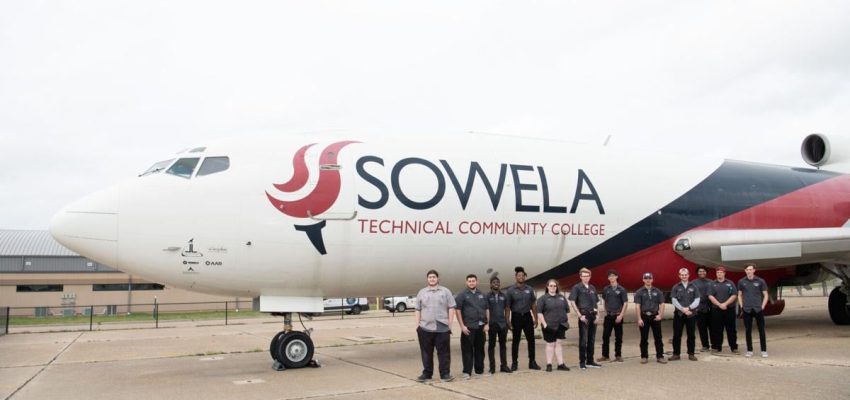
A recent successful initiative in the aviation sector, for example, demonstrated how such a partnership can create a direct conduit from classroom to career. By involving employers in the program’s design, the curriculum could be meticulously tailored to the precise skills required for high-demand, high-wage roles within the industry. This proactive alignment drastically reduces the time and cost associated with upskilling new hires, benefiting both the graduate and the employer. It’s a blueprint that can and should be applied across various fields, especially in the rapidly expanding realm of AI, where the demand for skilled professionals far outstrips supply.
### The Power of Apprenticeship: Bridging Theory and Practice
One of the most potent mechanisms within these co-designed models is the resurgence of paid apprenticeships. Far from being an antiquated concept, modern apprenticeships are proving to be an exceptionally effective way to cultivate talent, particularly for technical and specialized roles. Unlike traditional internships, which can often be unpaid and unstructured, paid apprenticeships offer a structured pathway that combines on-the-job training with formal education, all while providing a living wage.
The benefits are manifold. For students, apprenticeships offer an unparalleled opportunity to gain hands-on experience, learn from seasoned professionals, and apply theoretical knowledge in real-world scenarios – all without accruing crippling student debt. Imagine an aspiring AI engineer spending part of their week developing machine learning models for a tech company, and the other part studying advanced algorithms at a college. This experiential learning accelerates skill acquisition and fosters a deeper understanding of industry practices and expectations. Data from the U.S. Department of Labor consistently shows that individuals who complete apprenticeships have higher retention rates and earn significantly more over their careers than their non-apprenticed peers.
Employers, in turn, gain a bespoke talent pipeline. Instead of recruiting from a general pool and then investing heavily in post-hire training, companies can shape apprentices to fit their specific organizational culture and technical requirements. This leads to higher employee retention, reduced recruitment costs, and a workforce that is precisely aligned with strategic objectives. For industries like AI, where specialized skills are at a premium, this model is particularly attractive. Developing AI solutions often requires a blend of theoretical understanding (e.g., neural networks, natural language processing) and practical implementation (e.g., using TensorFlow or PyTorch, deploying models to cloud platforms, managing data pipelines). An apprenticeship program can seamlessly integrate these elements, preparing individuals for roles such as AI developers, machine learning engineers, data scientists, or AI product managers, roles that define the **Future Career Pathways** in this field.
Moreover, the mentorship aspect of apprenticeships cannot be overstated. Learning directly from experienced professionals provides invaluable insights, guidance, and networking opportunities that are difficult to replicate in a purely academic setting. This interaction helps apprentices not only master technical skills but also develop crucial soft skills like teamwork, communication, and problem-solving within a professional context – attributes highly valued in any AI-driven enterprise.
### Co-Design and Industry Collaboration: The Blueprint for Success
The true power of these innovative educational approaches lies in the depth of collaboration between educational institutions and the industries they serve. It’s not merely about industry providing feedback on a pre-existing curriculum; it’s about a dynamic, iterative process of co-creation. This often involves industry professionals serving on academic advisory boards, contributing directly to curriculum development, providing real-world projects as case studies, and even offering guest lectures or serving as adjunct faculty. The goal is to ensure that the skills being taught are not just relevant today, but also forward-looking enough to anticipate tomorrow’s needs.
Consider the rapid evolution of AI. A curriculum designed five years ago would likely be outdated today, missing critical advancements in areas like generative AI, explainable AI, or quantum machine learning. Through constant dialogue and collaboration, industry partners can alert educational institutions to emerging technologies, shifting skill demands, and new ethical considerations, allowing curricula to adapt with unprecedented agility. This responsiveness is vital for creating effective **Future Career Pathways** in fast-paced fields.
Furthermore, this collaborative model can extend beyond curriculum design to encompass shared resources and infrastructure. Companies might provide access to specialized equipment, software licenses, or data sets that colleges might not otherwise be able to afford, enriching the learning experience. In return, educational institutions can become valuable research partners for companies, fostering innovation and providing access to academic expertise. This symbiotic relationship creates a powerful ecosystem that benefits all stakeholders: students gain superior education and job prospects, employers secure a highly skilled and relevant workforce, and educational institutions enhance their relevance and impact.
This blueprint for success moves beyond simply preparing students for jobs; it cultivates a continuous learning mindset. In a world where technologies like AI are constantly evolving, the ability to adapt, learn new skills, and remain agile is paramount. By instilling these values through programs that blend academic rigor with practical application and ongoing industry exposure, we are not just training for today’s jobs, but empowering individuals to navigate the complex and exciting **Future Career Pathways** that lie ahead.
In conclusion, the paradigm shift towards co-designed educational programs and paid apprenticeship models represents a critical evolution in how we prepare individuals for the demands of the modern workforce, particularly in the age of artificial intelligence. By forging deep, reciprocal partnerships between academia and industry, we can ensure that learning is not just theoretical but deeply experiential, providing students with the practical skills, ethical grounding, and professional networks essential for success.
These innovative approaches are not merely about filling current job vacancies; they are about proactively shaping the workforce of tomorrow, building resilient and adaptable professionals who can thrive amidst technological disruption. As AI continues its transformative journey, the models that prioritize real-world relevance, hands-on experience, and continuous collaboration will be the ones that effectively unlock the vast potential of human talent, paving the way for a more skilled, engaged, and prosperous future for all.










