
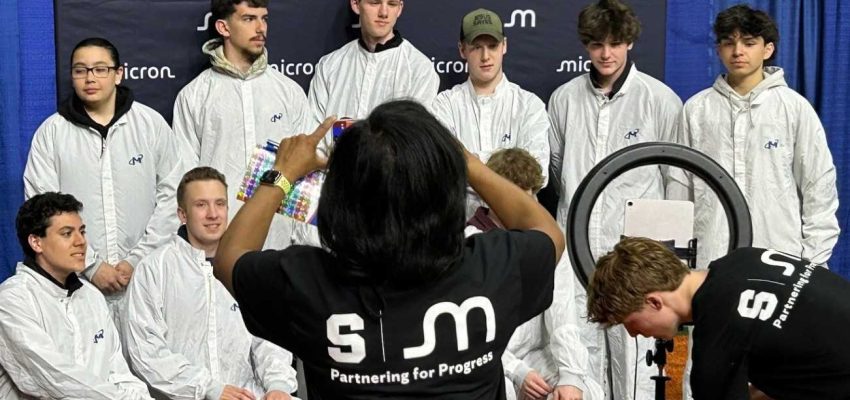

In an era defined by relentless technological advancement, the landscape of career opportunities is shifting at an unprecedented pace. For students navigating the complex choices of their future, understanding these emerging frontiers is not merely advantageous – it’s imperative. As an AI specialist and tech enthusiast, I’ve witnessed firsthand how quickly industries evolve, creating new roles and demanding fresh skill sets. This makes initiatives like Syracuse University’s recent Micron Day not just events, but critical junctures for talent development, offering a tangible glimpse into the vast and varied possibilities that await.
The event, held in collaboration with Micron Technology, served as a vibrant nexus, bringing together dozens of technology companies, innovative programs, and invaluable educational opportunities. Its core mission was clear: to expose students to a wide spectrum of technologies and potential career trajectories, many of which transcend the traditional requirement of a four-year college degree. In a world increasingly driven by skills and adaptability, this emphasis on diverse entry points into the tech sector is revolutionary, democratizing access to high-growth professions and nurturing the next generation of innovators and problem-solvers.
### Technology Career Pathways: A New Horizon for Students
The notion that a single, prescribed educational path is the sole gateway to a successful career in technology is rapidly becoming outdated. Events like Micron Day at Syracuse University powerfully illustrate the expanding universe of Technology Career Pathways available to ambitious students. Micron Technology, a global leader in memory and storage solutions, is a titan in the semiconductor industry, underpinning everything from smartphones and data centers to artificial intelligence and autonomous vehicles. Their significant investment – a staggering $100 billion over the next two decades to build a cutting-edge memory manufacturing facility in Clay, New York – is set to create approximately 9,000 direct jobs and thousands more indirect roles across the region. This monumental undertaking is not just about building a factory; it’s about establishing an entire ecosystem of innovation and opportunity.
What does this mean for students? It signifies a diverse array of roles that span far beyond traditional engineering. While advanced research and development, chip design, and materials science will undoubtedly be critical, the operational demands of such a facility are immense. We’re talking about opportunities in advanced manufacturing, process automation, supply chain logistics, quality control, cybersecurity, data analytics, and even specialized IT support. The beauty of this expansion is its inherent multidisciplinarity. A student interested in robotics might find a place optimizing manufacturing lines, while someone passionate about sustainability could contribute to energy efficiency protocols within the plant. The modern tech landscape embraces diverse talents, from the highly specialized to the broadly skilled, creating a dynamic environment where various aptitudes can flourish.
Crucially, Micron Day highlighted that many of these roles, particularly in the operational and technical support domains, do not exclusively demand a bachelor’s degree. This aligns perfectly with a growing global trend towards skill-based hiring, micro-credentials, apprenticeships, and vocational training programs. As industries accelerate, the speed at which traditional university curricula can adapt often lags behind. This has led to a recognition that practical skills, acquired through specialized training, certifications, or hands-on experience, are often more immediately valuable than a theoretical degree in certain roles. For instance, an associate’s degree in electromechanical technology, a certification in industrial automation, or a robust apprenticeship in semiconductor fabrication can directly qualify an individual for high-demand, well-paying positions. This shift is a game-changer, leveling the playing field and providing accessible routes into the lucrative tech sector for a broader demographic of students. It underscores the idea that passion and practical aptitude can be just as, if not more, valuable than a traditional four-year degree when navigating the myriad Technology Career Pathways opening up today.
### Bridging Academia and Industry: The Micron Day Model
The success of an event like Micron Day lies in its ability to effectively bridge the gap between academic theory and real-world application. Syracuse University, by hosting such an immersive experience, transformed its campus into a vibrant marketplace of ideas and opportunities. Imagine dozens of technology companies, from established giants like Micron to agile startups, setting up interactive booths and demonstrations. Students wouldn’t just hear about cutting-edge tech; they’d see it, touch it, and perhaps even manipulate it. This experiential learning is invaluable. They could witness augmented reality applications used in factory maintenance, engage with AI-powered diagnostic tools, or learn about the intricacies of secure data management directly from industry professionals.
These interactions are far more profound than simply attending a career fair. They foster dialogue between students and potential employers, allowing for questions about daily responsibilities, company culture, and the practical skills truly valued in the workplace. Programs showcased might have included specialized coding bootcamps, advanced manufacturing certifications, or even dual enrollment options where high school students can earn college credit while gaining vocational skills. The educational opportunities presented were likely diverse, ranging from university degree programs designed to align with industry needs to more focused, short-term training initiatives. This comprehensive approach ensures that students, regardless of their current academic standing or long-term educational plans, could find relevant information and inspiration.
Moreover, events like Micron Day serve as crucial networking platforms. For students, it’s a chance to make invaluable connections, gain mentorship, and even secure internships or co-op positions that can dramatically accelerate their entry into a professional career. For companies, it’s an opportunity to scout fresh talent, understand the aspirations of the next generation, and shape future curricula by providing direct feedback to educational institutions. This symbiotic relationship is essential for creating a robust talent pipeline, ensuring that the skills taught in academia truly meet the demands of a rapidly evolving industry. By exposing students to the tangible applications of their studies and the diverse Technology Career Pathways available, such collaborations transform abstract learning into concrete professional ambitions.
### Preparing for Tomorrow’s Tech Landscape: Adaptability and Lifelong Learning
The pace of technological change shows no sign of slowing. As an AI specialist, I can attest that artificial intelligence, machine learning, and automation are not just buzzwords; they are fundamentally reshaping industries and redefining job roles. For students looking to embark on successful Technology Career Pathways, adaptability and a commitment to lifelong learning are paramount. Events like Micron Day are merely the spark; the sustained flame requires continuous engagement with new knowledge and skills.
Consider the impact of AI on fields from manufacturing to data analysis. While some fear job displacement, the reality is often a transformation of roles, requiring humans to work alongside intelligent systems. This necessitates new skills: understanding AI ethics, prompt engineering for generative models, data literacy, and the ability to interpret and act upon AI-driven insights. Cybersecurity, another area likely highlighted at Micron Day, is a perpetually evolving field, demanding constant updates to knowledge as new threats emerge. Cloud computing, quantum technologies, and biotechnology are all examples of sectors that are not only growing but constantly innovating, meaning that what is cutting-edge today could be foundational tomorrow.
Therefore, students must cultivate a ‘growth mindset’ – an eagerness to learn, unlearn, and relearn throughout their careers. This means embracing online courses, pursuing micro-credentials, engaging in personal projects, and staying abreast of industry trends through blogs, webinars, and professional communities. Soft skills, often overlooked, are also increasingly critical: critical thinking, complex problem-solving, creativity, emotional intelligence, and effective communication are essential for collaborating in interdisciplinary teams and leading innovation. The beauty of the modern tech landscape is that it often values these foundational human skills alongside technical expertise, recognizing that a well-rounded professional is better equipped to navigate ambiguity and drive progress.
Micron Day, in its essence, served as a potent reminder that the future of technology is not a distant, monolithic entity, but a dynamic, accessible realm bursting with possibilities. By bringing together students, educators, and industry leaders, Syracuse University and Micron have illuminated the incredibly diverse and promising Technology Career Pathways that lie ahead, many of which are open to individuals from various educational backgrounds and skill levels. This initiative perfectly encapsulates the spirit of modern workforce development: proactive, inclusive, and forward-thinking.
As we look to the coming decades, the demand for skilled tech professionals will only intensify. The success of our communities and economies will hinge on our ability to cultivate talent that is not only technically proficient but also adaptable, curious, and collaborative. Events like Micron Day are more than just showcases; they are vital incubators of future talent, inspiring a generation to explore, learn, and ultimately shape the technological world of tomorrow. It is through such strategic partnerships and visionary educational outreach that we can truly unlock the full potential of every aspiring innovator and ensure a robust pipeline of talent for the ever-evolving digital age.










