

As humans, we are inherently driven by curiosity, a relentless desire to understand, and a profound urge to build. From the earliest tools crafted by our ancestors to the intricate algorithms powering artificial intelligence today, engineering has always been the silent, yet powerful, force propelling humanity forward. It’s the discipline that translates abstract ideas into tangible realities, solving the world’s most complex challenges, and consistently redefining the boundaries of what’s possible.
In an increasingly complex and interconnected world, the demand for innovative thinkers and skilled problem-solvers has never been greater. This is where the profound importance of robust engineering education comes into play – programs designed not just to impart knowledge, but to cultivate a mindset of relentless innovation and practical application. As an AI specialist and tech enthusiast, I’ve seen firsthand how quickly industries evolve, and it’s clear that the foundational skills learned in engineering are more vital than ever, serving as the bedrock for the breakthroughs of tomorrow. But what does it truly take to embark on a fulfilling journey in this exciting field, and how are modern educational programs preparing the next generation for success?
### Engineering Careers: A Gateway to Innovation and Impact
At its core, engineering is about applying scientific principles and mathematical tools to design, build, and maintain structures, machines, systems, and processes. Yet, to distill it merely to a definition is to miss its boundless scope and profound impact on every facet of our lives. From the seamless flow of traffic on a bridge designed by civil engineers to the life-saving precision of a medical device developed by biomedical engineers, and the invisible networks managed by software engineers that connect us globally, engineers are the architects of our modern world.
The field of engineering is vast and incredibly diverse, offering a multitude of pathways for those with a passion for problem-solving. Mechanical engineers design everything from tiny sensors to large industrial machinery. Electrical engineers power our world, creating circuits, electronics, and power grids. Chemical engineers transform raw materials into everyday products. Aerospace engineers push the boundaries of flight and space exploration. Environmental engineers work to protect our planet, developing sustainable solutions for water, air, and waste management. New specializations are also constantly emerging, such as robotics engineering, data engineering, and materials science engineering, each addressing unique challenges and offering exciting prospects.
What unites these disparate disciplines is a shared commitment to innovation and a systematic approach to overcoming obstacles. A career in engineering isn’t just a job; it’s an opportunity to contribute meaningfully to society, to leave a lasting legacy through groundbreaking work. The demand for qualified engineers is consistently high across the globe. The U.S. Bureau of Labor Statistics, for instance, projects continued growth in many **engineering careers** over the next decade, with median salaries often well above the national average, reflecting the specialized skills and critical thinking these roles require. This robust job market, combined with the intellectual stimulation and the chance to make a tangible difference, makes **engineering careers** incredibly attractive. Modern educational programs are designed to give students a comprehensive overview, not just of the theoretical underpinnings, but also the practical implications and diverse opportunities within these vital professions.
### Beyond Theory: The Power of Hands-On Learning and Certification
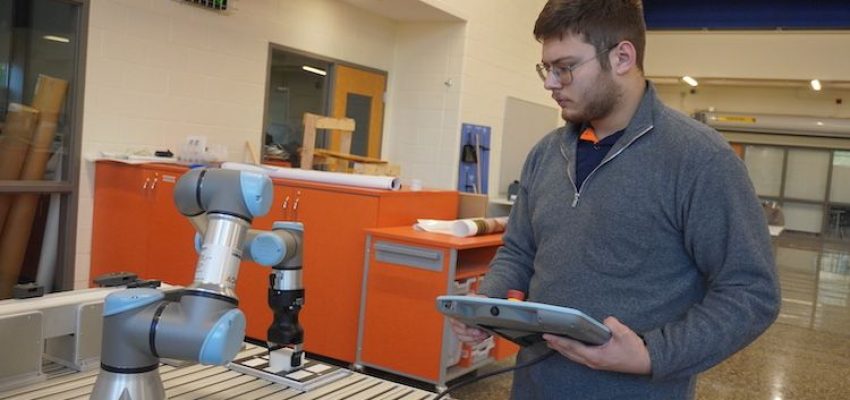
While a strong theoretical foundation is indispensable in any engineering discipline, it is only one half of the equation. Engineering is inherently a practical field; it’s about making things work. Therefore, true mastery and preparedness for real-world challenges necessitate extensive hands-on experience. This is precisely why leading engineering programs are shifting away from purely classroom-based instruction towards immersive, experiential learning models. These programs focus on giving students invaluable insights into manufacturing and engineering careers through direct engagement with the tools, processes, and problem-solving scenarios they will encounter in their professional lives.
Imagine a student learning about structural mechanics not just from a textbook, but by designing, building, and testing a miniature bridge model in a lab. Or understanding circuit design by actually assembling and troubleshooting an electronic device. These practical experiences, often facilitated through workshops, state-of-the-art laboratories, capstone projects, and internships, bridge the critical gap between academic knowledge and industrial application. They foster critical thinking, teamwork, problem-solving under pressure, and the invaluable skill of iterating and refining designs based on real-world constraints and feedback. Students learn not just *what* to do, but *how* to do it, gaining an intuitive understanding that classroom lectures alone cannot provide. This direct exposure to the manufacturing process, from conceptualization to production, is crucial for developing a holistic understanding of **engineering careers**.
Furthermore, beyond the academic curriculum, the acquisition of industry certifications plays a pivotal role in distinguishing a graduate in a competitive job market. These certifications are formal, industry-recognized credentials that validate a professional’s specific skills and knowledge in a particular area. For instance, a student might earn a certification in CAD software like SolidWorks or AutoCAD, demonstrating proficiency in computer-aided design, a fundamental skill for many **engineering careers**. Others might pursue certifications in project management (like the CAPM or PMP), Lean Manufacturing principles, or specific programming languages and platforms relevant to their chosen specialization. These certifications signal to employers that a candidate not only possesses theoretical knowledge but also has practical, verifiable skills that are directly applicable from day one. They enhance employability, open doors to specialized roles, and often lead to higher starting salaries, providing a tangible return on investment for dedicated students. They are an indispensable tool for future engineers looking to accelerate their entry into rewarding **engineering careers**.
### Preparing for Tomorrow: Engineering, AI, and the Evolving Landscape
As we look ahead, the landscape of **engineering careers** is continuously being reshaped by technological advancements, with artificial intelligence (AI) at the forefront of this transformation. My own journey as an AI specialist underscores the profound impact AI is having across all engineering disciplines. AI is not just creating new fields; it is revolutionizing traditional ones, making them more efficient, more precise, and capable of achieving previously unimaginable feats.
Consider how AI is transforming mechanical engineering through predictive maintenance, where algorithms analyze sensor data from machinery to anticipate failures before they occur, drastically reducing downtime and maintenance costs. In civil engineering, AI-powered systems are optimizing traffic flow in smart cities, designing more resilient structures, and monitoring infrastructure health. Biomedical engineers are using AI for advanced diagnostics, drug discovery, and personalized treatment plans. Software engineering, of course, is at the heart of AI development itself, with a growing demand for AI engineers who can design, implement, and manage complex machine learning systems.
The convergence of traditional engineering with AI, machine learning, robotics, and the Internet of Things (IoT) means that the engineers of tomorrow will need a diverse and adaptable skill set. Beyond core engineering principles, future professionals will require strong computational thinking, data literacy, and an understanding of how AI systems are built, trained, and deployed responsibly. Ethical considerations surrounding AI, such as bias, privacy, and accountability, will also become increasingly important facets of any engineering project. This requires a shift in educational focus, preparing students not just for current technologies, but for an environment where continuous learning and adaptation are the norms.
The future engineer will likely be an interdisciplinary thinker, capable of collaborating across different fields and integrating AI-powered tools into their workflows. They will use AI to accelerate design processes, simulate complex scenarios, optimize performance, and automate repetitive tasks, freeing up human ingenuity for higher-level problem-solving and creative innovation. The programs that equip students with both robust engineering fundamentals and an acute awareness of AI’s capabilities and ethical implications will undoubtedly produce the leaders of the next generation of technological advancement.
In conclusion, the journey into **engineering careers** is one filled with boundless potential, demanding both intellectual rigor and practical expertise. The most effective educational programs understand this duality, focusing not only on theoretical mastery but also on providing rich, hands-on experiences that truly immerse students in the realities of manufacturing and engineering. By actively fostering practical skill development and encouraging the pursuit of industry-recognized certifications, these programs empower students with a distinct competitive advantage, ensuring they are not just knowledgeable, but truly capable and job-ready.
As the world continues its rapid technological evolution, spearheaded by advancements in artificial intelligence, the role of the engineer becomes even more critical. The next wave of innovation will be forged by those who possess a strong foundation in engineering principles, coupled with a deep understanding of emerging technologies and a commitment to lifelong learning. These are the individuals who will design our sustainable future, build intelligent systems, and continue to push the boundaries of human achievement, shaping a world that is smarter, more connected, and more efficient for generations to come.










