
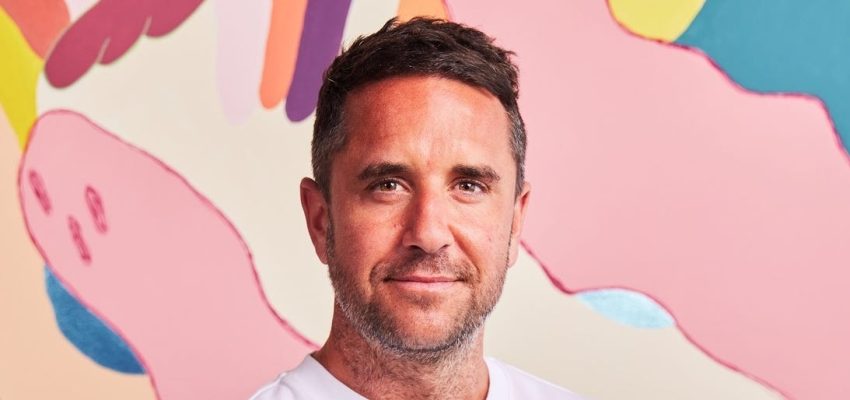

In an era defined by rapid technological advancement and ever-evolving industries, the concept of a linear career path is increasingly becoming a relic of the past. Today, professionals are not just adapting to change; they are actively orchestrating profound transformations in their working lives. It’s a compelling narrative that speaks to courage, adaptability, and the sheer power of transferable skills. Perhaps no story encapsulates this spirit more vividly than that of Daniel Walton, a seasoned advertising executive who, after two decades immersed in the dynamic world of Madison Avenue, embarked on an extraordinary journey that culminated in a coveted position at Meta.
His experience serves as a powerful testament to the idea that a career break isn’t a pause, but often a catalyst, and that deep industry experience, even outside traditional tech, can be a profound asset in the digital age. As an AI specialist and enthusiast myself, I find immense inspiration in stories like Daniel’s, illustrating not only personal growth but also the broader implications for how we perceive skill sets and professional trajectories in a world increasingly shaped by artificial intelligence.
Career Shift to Meta: Embracing the Unknown after Two Decades
Imagine dedicating two decades of your professional life to a single, albeit vibrant, industry. For Daniel Walton, that industry was advertising. For twenty years, he navigated the complex landscape of brand building, consumer psychology, market campaigns, and client relations. Advertising, especially in the pre-digital and early digital age, was a high-stakes, high-pressure environment, demanding creativity, strategic thinking, and an acute understanding of human behavior. It was an industry undergoing its own profound digital transformation, even before the full impact of social media and programmatic advertising took hold. Agencies were grappling with the shift from traditional media buys to targeted digital campaigns, demanding new skill sets and a more data-driven approach.
Yet, even with such a rich history and deep expertise, Daniel made a pivotal decision: he left his advertising job. This wasn’t a lateral move; it was a deliberate step into the unknown. He embarked on a six-month period of travel, a break that, for many, would signify a winding down, a retreat from the professional rat race. Instead, for Daniel, it became a period of introspection and rejuvenation, an opportunity to gain perspective and perhaps, unconsciously, to recalibrate his professional compass. It was during this very break, while exploring the world, that he began interviewing for a role at Meta, then still known as Facebook. His hiring in 2017 marked not just a new job, but a dramatic **career shift to Meta**, a move from a traditional creative industry to the heart of Silicon Valley’s tech behemoth.
This transition highlights a crucial point: career breaks are not just for burnout recovery. They can be strategic intervals for reflection, skill assessment, and identifying new directions. Data from organizations like LinkedIn often shows that professionals who take planned career breaks can return to the workforce with renewed vigor, diverse perspectives, and often, a clearer sense of purpose. For Meta, a company with an enormous global reach and an ever-expanding ecosystem of products—from Facebook and Instagram to WhatsApp and the burgeoning metaverse initiatives—diverse perspectives are not just a luxury; they are a necessity for understanding a global user base. Daniel’s background, steeped in understanding what motivates people and how to communicate effectively, would prove to be an invaluable asset in this environment.
From Madison Avenue to Menlo Park: Deconstructing Transferable Skills
The leap from traditional advertising to a tech giant like Meta might appear daunting, a chasm too wide to bridge. However, Daniel’s success underscores a fundamental truth about modern careers: skills are increasingly transferable, often in unexpected ways. What exactly did two decades in advertising equip him with that Meta found so appealing? It certainly wasn’t direct coding experience or a computer science degree. Instead, it was a robust suite of what are often called “soft skills” and strategic acumen, refined over years in a demanding, client-facing environment.
Consider the core competencies developed in advertising: strategic thinking, problem-solving, understanding consumer behavior, market analysis, brand storytelling, client management, project leadership, and persuasive communication. These are not merely industry-specific traits; they are universal pillars of effective business operation. A company like Meta, whose revenue engine is largely driven by advertising and whose products revolve around connecting people, thrives on these very capabilities. Understanding how to segment audiences, craft compelling messages, interpret campaign performance data, and manage complex cross-functional projects are all directly applicable, whether you’re selling toothpaste or a new virtual reality experience.
In 2017, Meta (Facebook) was a global advertising powerhouse. Its sophisticated targeting capabilities and vast user data made it an indispensable platform for marketers worldwide. Daniel’s intimate knowledge of the advertiser’s mindset, their challenges, and their desired outcomes would have provided an invaluable internal perspective. He could bridge the gap between Meta’s technological offerings and the practical needs of its advertising clients. Furthermore, the ability to lead teams, navigate complex organizational structures, and drive projects to completion—all hallmarks of a successful advertising career—are critical in any large organization, especially one as dynamic and fast-paced as Meta.
The interview process at tech giants like Meta is notoriously rigorous, often involving multiple rounds focused on behavioral, technical, and strategic thinking. For someone without a traditional tech background, demonstrating how past experiences and skills translate to future roles is paramount. Daniel’s journey likely involved articulating his advertising expertise through the lens of Meta’s needs, showcasing his adaptability, and proving his capacity for continuous learning. His successful **career shift to Meta** wasn’t just about what he knew, but how he framed his knowledge and his potential.
The Modern Career Blueprint: Adaptability in the Age of AI
Daniel Walton’s narrative is more than just an inspiring personal story; it’s a blueprint for the modern professional in an age where AI is rapidly reshaping industries. The traditional boundaries between sectors are blurring, and the demand for interdisciplinary talent is on the rise. We are moving towards a workforce where the ability to adapt, learn new paradigms, and apply existing wisdom to novel challenges is more valuable than ever before. AI, for instance, is transforming advertising, automating routine tasks, and demanding a greater focus on strategic oversight, ethical considerations, and creative problem-solving from human professionals. Daniel’s strategic background, enhanced by his new environment, positioned him uniquely to understand these evolving dynamics.
Today, AI is not just a technological advancement; it’s a profound cultural and economic force. It necessitates that even deeply experienced professionals like Daniel be open to relearning, retooling, and reassessing their roles. The skills that once defined a career in advertising—like understanding audience segments and campaign optimization—are now heavily augmented, if not outright managed, by AI algorithms. This shift means that the human element increasingly moves towards higher-level strategy, creative ideation, ethical governance of AI systems, and the crucial ability to interpret and act upon AI-generated insights.
Daniel’s successful **career shift to Meta** exemplifies the growing importance of a growth mindset. It demonstrates that deep experience in one domain can provide a unique vantage point when entering another, particularly if one is willing to embrace new technologies and methodologies. This isn’t just about moving to a new company; it’s about pivoting one’s professional identity. The tech industry, often perceived as exclusive to those with computer science degrees, is increasingly recognizing the value of diverse backgrounds—from liberal arts to business, from healthcare to the creative arts. These varied perspectives are essential for building products that resonate with a global, diverse user base. They foster innovation by challenging conventional wisdom and encouraging fresh approaches to problem-solving. This trend is only accelerated by AI, which requires human oversight and diverse perspectives to ensure its development is beneficial and equitable.
In conclusion, Daniel Walton’s remarkable journey from a two-decade advertising veteran to a key player at Meta is a compelling narrative of career reinvention and the enduring power of transferable skills. His story reminds us that experience gained in one field can be profoundly valuable in another, especially within the dynamic landscape of big tech. It underscores the importance of taking calculated risks, embracing periods of personal growth, and understanding how foundational human-centric skills like strategy, communication, and problem-solving remain paramount, regardless of the industry.
As we navigate an increasingly AI-driven future, the ability to adapt, to pivot, and to continuously learn will define professional success. Daniel’s experience serves as an encouraging beacon, illustrating that a rich professional past is not a barrier to an exciting new future, but rather a robust foundation upon which to build. His transition is a testament to the belief that the most impactful careers are often those that dare to cross traditional boundaries, proving that with courage and foresight, a truly impactful **career shift to Meta**—or any ambitious new frontier—is not only possible but can lead to extraordinary outcomes.










