
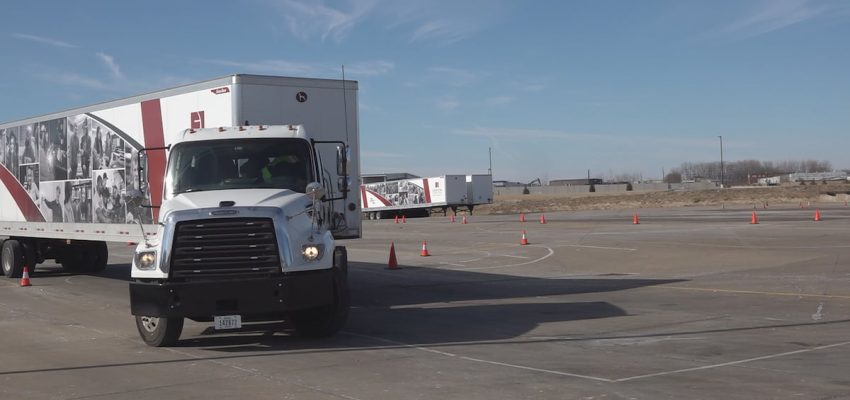

The journey from military service to civilian life is often fraught with unique challenges, requiring immense resilience, adaptability, and unwavering support. Our veterans, who have selflessly dedicated years to defending our freedoms, frequently face a complex landscape when seeking to translate their invaluable skills and experiences into new professional avenues. It is a critical imperative for society to ensure that these courageous individuals are equipped with every opportunity to thrive in their post-service careers. It is within this context that initiatives designed to facilitate their integration into the civilian workforce become not just beneficial, but essential.
Recently, a significant step in this direction was announced: Eastern Iowa Community Colleges (EICC) secured nearly $80,000 in federal funding specifically earmarked to assist veterans in transitioning into trucking careers. This grant, though seemingly focused on a traditional industry, represents far more than just financial aid for training. It embodies a commitment to recognizing the latent potential within our veteran community and strategically channeling it into a sector vital to national infrastructure and economic stability. As an AI specialist and tech enthusiast, I often view such initiatives through a lens that anticipates future transformations, recognizing that even the most established industries are not immune to, but rather enriched by, technological advancement. This program is a testament to the powerful synergy between human dedication and strategic investment, paving the way for a brighter future for those who have served.
Veteran Career Transition: A Critical Imperative
The challenges faced by service members returning to civilian life are multifaceted. Beyond the often-discussed psychological adjustments, there’s the practical hurdle of finding meaningful employment. Military skills, while highly sophisticated and transferable, sometimes lack direct civilian counterparts or require translation for civilian employers. The structured environment of military service contrasts sharply with the often ambiguous job market, leading to what some describe as a ‘culture shock’ in the workplace.
Statistics paint a clear picture of this challenge. While overall veteran unemployment rates have generally declined in recent years, underemployment remains a significant concern. Many veterans find themselves in jobs that do not fully utilize their leadership, problem-solving, or technical skills honed during their service. Furthermore, studies consistently show that access to quality training programs, career counseling, and networking opportunities are crucial determinants of successful post-service employment. It’s not merely about finding a job; it’s about finding a career that offers stability, purpose, and growth.
This is precisely where the federal grant awarded to Eastern Iowa Community Colleges steps in. The nearly $80,000 in funding will directly support veterans pursuing Commercial Driver’s License (CDL) training programs. This isn’t just a handout; it’s an investment. It covers tuition, testing fees, and other essential costs that might otherwise be barriers to entry for individuals looking to embark on a new career path. For a veteran, knowing that these financial burdens are alleviated can be the difference between pursuing a promising career and settling for less. The choice of trucking is particularly astute. The industry offers stable employment, competitive wages, and a sense of independence and purpose that often resonates with the values instilled by military service. This program significantly bolsters the path for
Moreover, the discipline, attention to detail, and ability to operate complex machinery — skills inherently developed in military service — are directly transferable to the demands of professional truck driving. Veterans are often adept at adhering to strict protocols, performing under pressure, and maintaining equipment, all of which are paramount in the logistics sector. By providing targeted training for this high-demand industry, EICC is not just filling job vacancies; it is empowering individuals with a clear, direct, and economically viable professional pathway. This initiative is a prime example of how localized support, backed by federal funding, can create significant, positive ripple effects for individuals and the broader economy, fostering a more effective
Navigating the Road Ahead: The Trucking Industry’s Evolving Landscape
The trucking industry, often seen as the lifeblood of modern economies, is undergoing a profound transformation. Responsible for moving over 70% of all freight in the United States, it is a sector characterized by constant movement, tight deadlines, and an insatiable demand for efficiency. However, it’s also an industry facing significant challenges, most notably a persistent driver shortage. According to the American Trucking Associations (ATA), the industry was short approximately 80,000 drivers in 2021, a figure projected to grow in the coming years if current trends continue. This shortage impacts everything from consumer prices to supply chain reliability, making the recruitment of new, qualified drivers a national priority. Programs facilitating a
Against this backdrop, the infusion of skilled and disciplined veterans into the trucking workforce is a strategic boon. Their military background equips them with a unique readiness for the rigors of the road, including long hours, meticulous planning, and adherence to safety regulations. Furthermore, the industry itself is becoming increasingly sophisticated, demanding drivers who are not just skilled behind the wheel but also adept at leveraging modern technologies. Today’s trucks are often equipped with advanced telematics systems, GPS navigation with real-time traffic updates, electronic logging devices (ELDs) for compliance, and sophisticated engine management systems. These tools, while enhancing efficiency and safety, also require a tech-savvy approach from drivers.
Looking further down the road, the discussions around automation and Artificial Intelligence (AI) in trucking are gaining momentum. While fully autonomous, human-free trucking on all roads is still some distance away, advancements in Advanced Driver-Assistance Systems (ADAS) are already prevalent. Features like adaptive cruise control, lane-keeping assist, automatic emergency braking, and driver fatigue monitoring are becoming standard. These technologies don’t eliminate the need for human drivers but rather augment their capabilities, enhancing safety and reducing fatigue. For new drivers, especially veterans, understanding and interacting with these systems will be a crucial part of their training, preparing them for an increasingly technologically integrated profession. This context is vital when considering any
The future of trucking envisions a blend of human expertise and AI efficiency. AI-powered route optimization, predictive maintenance for vehicles, and sophisticated logistics planning are already transforming the back-end operations. While these innovations streamline supply chains and improve profitability, the human element remains irreplaceable for complex decision-making, navigating unpredictable road conditions, and providing the flexibility required for last-mile delivery and specialized freight. Therefore, programs like the one at EICC are not training drivers for an obsolete industry, but for a dynamic and technologically evolving one where human skill and technological integration will coexist for the foreseeable future, making the
Empowering Futures: Technology, Training, and the Human Element
The success of any
Imagine, for instance, how AI could revolutionize the training process itself. Beyond traditional classroom learning and practical driving, AI-powered simulations could offer highly personalized learning experiences, adapting to each veteran’s pace and specific needs. Virtual reality (VR) and augmented reality (AR) environments could simulate various driving conditions, complex maneuvers, and emergency scenarios, providing a safe and effective space for skill development before ever hitting the open road. This type of advanced training, while perhaps not yet fully integrated into every grant-funded program, represents the future of professional development, making the
Furthermore, AI-driven analytics could help identify the optimal career paths for individual veterans, matching their unique military skills, personality traits, and aspirations with specific roles within the logistics and transportation sector. This ‘smart matching’ goes beyond simple resume keywords, delving into a deeper understanding of human potential. For instance, a veteran with extensive experience in tactical logistics might be ideally suited for a role involving dispatch and route optimization, leveraging their strategic planning abilities in a new context.
The human element, particularly the strengths veterans bring, remains paramount. Military service instills an unparalleled sense of discipline, responsibility, problem-solving under pressure, and adaptability—qualities that are indispensable in any profession, especially one as dynamic as trucking. These are precisely the ‘soft skills’ that AI, despite its increasing sophistication, struggles to replicate. While AI can optimize routes, it cannot navigate the nuances of human interaction, troubleshoot unexpected breakdowns in remote locations with limited resources, or make ethical judgments in unprecedented situations. Therefore, investing in
Moreover, these programs contribute to a broader societal conversation about the future of work. As AI and automation continue to reshape industries, the focus shifts from fearing job displacement to embracing job transformation. Proactive initiatives like the EICC grant ensure that vital roles are filled by highly capable individuals, while also demonstrating how technology can be a powerful tool for empowerment rather than disruption. It’s about leveraging technology to augment human capabilities, making careers more efficient, safer, and ultimately, more rewarding. This forward-thinking approach is crucial for any meaningful
The strategic deployment of federal funding for
Ultimately, this grant for Eastern Iowa Community Colleges is more than just financial assistance; it is an investment in human potential and economic stability. It underscores a fundamental truth: while technology will continue to advance and redefine what is possible, the human spirit, with its capacity for dedication and innovation, remains the most invaluable asset. By thoughtfully integrating our veterans into critical sectors and preparing them for a technologically advanced future, we honor their service and build a more robust, resilient, and prosperous society for all.










