
As an AI specialist, writer, and tech enthusiast, I’m constantly observing the currents of change that Artificial Intelligence ushers into every sector of our lives. From healthcare to finance, manufacturing to entertainment, AI is not just a tool; it’s a foundational shift. But beyond the algorithms and data, the true power of this transformation lies in the people driving it – and critically, in who those people are. That’s why recent news from United Illuminating, a company at the heart of our essential infrastructure, caught my attention, resonating deeply with the broader narrative of diversity and progress in technology.
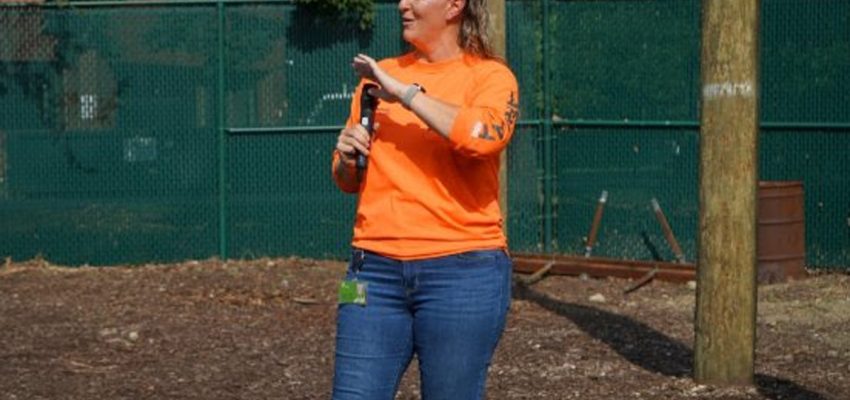
United Illuminating recently announced the promotion of a long-time employee with extensive leadership experience to Senior Director of Electric Operations. While the news itself highlights internal corporate advancement, its underlying message transcends the boardroom: this leader hopes to inspire women and girls to pursue careers in utilities. This is more than just a job promotion; it’s a beacon of inspiration, signaling a pivotal moment for traditionally male-dominated industries to embrace new perspectives and, crucially, to recognize the indispensable role of diverse leadership in a world increasingly shaped by AI.
In my view, this development isn’t merely about gender representation in a specific industry. It’s about recognizing that the challenges and opportunities in the utilities sector—a bedrock of modern society—are increasingly intertwined with technological innovation, particularly AI. The journey of breaking barriers in electric operations mirrors the urgent need for diversity, equity, and inclusion in the very heart of AI development and its application across all industries. This is a story of leadership, vision, and the profound impact one individual can have in shaping the workforce of tomorrow, especially as AI continues to redefine the landscape of work.
Empowering Women in AI and Tech: A New Dawn for Industry Leadership
The narrative of women breaking through the glass ceiling is one that, while becoming more common, still warrants celebration and deep reflection. The utilities sector, historically, has been a fortress of traditional engineering and operational roles, predominantly occupied by men. According to a 2021 study by the Edison Electric Institute, women represented only about 25% of the utility workforce, with even fewer in senior leadership or technical roles. This isn’t unique; the technology sector, despite its forward-thinking image, also grapples with significant gender disparity, particularly in technical and executive positions. Reports from organizations like the National Center for Women & Information Technology (NCWIT) consistently show that women hold only about 28% of computing and mathematical occupations, and even less in leadership. This stark reality underscores why a promotion like the one at UI is so significant, serving as a powerful visual testament to progress and potential.
It demonstrates that competence, experience, and leadership transcend traditional gender stereotypes. Furthermore, it highlights a crucial point: as industries evolve under the influence of AI, they need not only technical prowess but also a broader range of perspectives to navigate complexity and foster innovation. A diverse leadership team, encompassing varied backgrounds, experiences, and genders, has been repeatedly shown to lead to more robust problem-solving, enhanced creativity, and ultimately, better financial performance. Research by McKinsey & Company, for instance, has consistently found that companies with diverse executive teams are more likely to outperform their less diverse peers in terms of profitability.
This is precisely where the intersection of traditional industries and emerging technologies becomes fascinating. As AI continues to automate routine tasks and create entirely new categories of work, the emphasis shifts from manual labor and repetitive processes to critical thinking, creativity, and interdisciplinary collaboration. These are areas where diverse teams, including those with strong female representation, naturally excel. The leader at UI, by stepping into a role that will undoubtedly be reshaped by AI-driven solutions in the coming years, embodies the very essence of **Empowering Women in AI and Tech**, showcasing that leadership in the digital age requires adaptability and a commitment to fostering future talent.
The Symbiotic Relationship: AI, Utilities, and Diverse Talent
Let’s delve deeper into how AI is not just impacting but fundamentally transforming the utilities sector, creating a fertile ground for diverse talent. The modern electric grid is no longer a static network of wires and power plants. It’s becoming an intelligent, dynamic, and interconnected system – often referred to as a ‘smart grid.’ AI plays a pivotal role in this evolution, enabling predictive maintenance, optimizing energy distribution, integrating renewable energy sources (like solar and wind) more seamlessly, and enhancing cybersecurity measures. For example, AI algorithms can analyze vast datasets from sensors across the grid to predict equipment failures before they occur, reducing costly downtime and improving reliability. They can also manage the fluctuating supply from renewables with the variable demand from consumers, ensuring grid stability. Furthermore, AI-powered systems are crucial in detecting and responding to cyber threats that target critical infrastructure, a growing concern in our increasingly digitized world.
These advancements are not merely technical; they demand a workforce with new skills and perspectives. The traditional electrical engineer, while still vital, is now joined by data scientists, AI ethicists, machine learning engineers, and human-computer interaction specialists. The challenges of integrating renewable energy, managing complex data streams, and ensuring the resilience of critical infrastructure against both physical and cyber threats require interdisciplinary approaches and innovative thinking. This transformation creates unique opportunities for women to enter and excel in roles that might not have existed a decade ago. It levels the playing field, emphasizing skills like analytical thinking, problem-solving, and collaboration over sheer physical strength or traditional pathways that might have historically excluded women.
In this evolving landscape, the promotion of a female leader in electric operations sends a clear message: the future of utilities, like the future of AI, depends on intellectual diversity and the ability to adapt to rapid technological change. Her leadership will not only guide operations but also likely influence the adoption and integration of these cutting-edge AI technologies within UI. A diverse team brings varied experiences and problem-solving approaches, which is invaluable when dealing with the novel challenges presented by AI integration. Ensuring that AI systems are developed and deployed ethically and without inherent biases requires a broad spectrum of voices, and women’s perspectives are crucial in preventing technology from inadvertently perpetuating existing societal inequalities. This symbiotic relationship – where AI transforms industries, and diverse talent drives AI innovation – is the bedrock of a truly progressive and sustainable future.
Cultivating the Next Generation: Inspiring Through Action
The most profound impact of a leader like UI’s new Senior Director extends beyond her immediate responsibilities: it lies in her ability to inspire the next generation. For young girls and women considering their career paths, seeing a woman in a high-profile, influential position in a traditionally male-dominated field like electric operations is incredibly powerful. As the adage goes, “You can’t be what you can’t see.” Role models are essential for breaking down perceived barriers and encouraging aspirations. When a young girl interested in STEM sees a woman leading a critical infrastructure division, it concretizes the possibility that she, too, can achieve similar heights. This visibility is vital, especially when considering the significant drop-off of girls pursuing STEM fields as they progress through their education.
Inspiration is not just about presence; it’s about action. Leaders who genuinely wish to foster diversity will actively mentor, sponsor, and advocate for emerging talent. They will work to create inclusive environments where all voices are heard, contributions are valued, and opportunities for growth are equitable. This includes challenging unconscious biases that can subtly deter women from leadership roles or technical tracks. For example, studies by the Harvard Business Review have shown that women are often evaluated more harshly than men in performance reviews, and that their leadership styles are sometimes perceived negatively even when effective. Proactive leadership can mitigate such biases by focusing on merit, output, and potential.
Connecting this back to AI, encouraging girls and women to pursue careers in technology and AI is not just about fairness; it’s a strategic imperative. The ethical implications of AI, the need for robust and unbiased algorithms, and the drive for truly innovative solutions demand a workforce that reflects the diversity of society it serves. If AI is developed predominantly by one demographic, there’s a higher risk of baked-in biases that can lead to discriminatory outcomes in areas ranging from healthcare diagnostics to financial lending. Therefore, initiatives that expose young women to coding, robotics, data science, and AI at an early age – coupled with inspiring role models like the leader at UI – are critical. They help to cultivate the technical skills necessary for the AI-driven economy, while simultaneously nurturing the confidence and vision required to lead.
The future of industry, whether it’s powering our homes or powering our AI models, relies on a diverse and highly skilled workforce. Leaders like the one at UI are not just managing current operations; they are actively shaping that future, one inspired woman at a time, ensuring that the pool of talent entering critical sectors is as broad and rich as possible. Their example transcends the specific industry, offering a blueprint for how all sectors, including the burgeoning field of AI, can achieve true inclusivity and harness the full spectrum of human potential.
In conclusion, the promotion of a female leader at United Illuminating to a vital role in electric operations is a clear indicator of progress, extending far beyond the immediate context of the energy sector. It serves as a powerful testament to the breaking down of barriers and the growing recognition of the indispensable value that diverse perspectives bring to complex, critical industries. As an AI specialist, I see this not just as a win for women in utilities, but as a significant step forward for the entire landscape of technology and innovation. It underscores the urgent need to continue fostering environments where talent is recognized and cultivated regardless of gender, especially as AI continues to redefine the very nature of work and leadership.
The journey toward true diversity and inclusion in STEM, and particularly in the rapidly evolving fields of AI and advanced technology, is ongoing. However, every step taken by pioneering individuals like the new Senior Director at UI reinforces the message that the future is not only digital but also equitable and inclusive. By celebrating and amplifying such achievements, we can collectively inspire a new generation of women to pursue their passions in science, technology, engineering, and mathematics, ensuring that the minds shaping our AI-powered world are as diverse and dynamic as the world itself. The path forward for AI is intrinsically linked to the paths we create for all individuals to contribute, innovate, and lead.