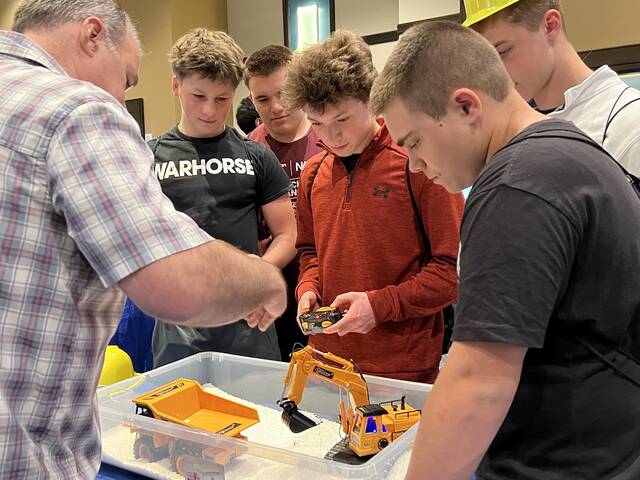
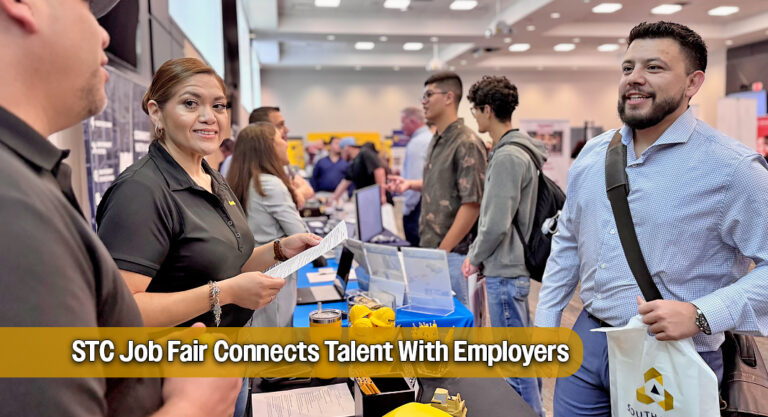
The landscape of work is undergoing a seismic shift, driven by unprecedented technological advancements, global interconnectedness, and evolving societal needs. For young minds standing at the precipice of their educational journey, understanding this fluid environment is not just an advantage—it’s a necessity. Events designed to bridge the gap between academic learning and real-world employment are more crucial than ever before. One such proactive initiative, the inaugural “Careers on Wheels” event in Columbus County, set to engage over 3,400 students, serves as a powerful testament to this vital educational foresight. While the premise might sound simple – bringing industries to students – its implications for shaping the next generation’s understanding of their **future career opportunities** are profound. This article, penned from the perspective of an AI specialist and tech enthusiast, delves into the critical sectors highlighted by this event—technical, public safety, and healthcare—and explores how artificial intelligence and emerging technologies are reshaping these paths, offering exciting and often unforeseen professional avenues for students today.
### Future Career Opportunities in Technical Fields: Beyond the Code
The technical sector has long been a bedrock of innovation and economic growth, but its definition continues to expand at a dizzying pace. When we speak of technical **future career opportunities**, we’re no longer confined to just software development or traditional IT support. The digital revolution, supercharged by AI, machine learning (ML), and automation, has spawned a multitude of specialized roles that demand a blend of analytical prowess, creativity, and adaptability. Students exploring technical fields today are entering a world hungry for talent in areas like data science, cybersecurity, robotics, and cloud computing.
Data scientists, for instance, are the architects of insight in an increasingly data-rich world. They not only analyze vast datasets to identify trends and patterns but also build predictive models that inform business strategies, medical diagnoses, and even public policy. The U.S. Bureau of Labor Statistics projects significant growth in data-related roles, with data scientists, in particular, expected to see a 36% increase in employment between 2021 and 2031. This isn’t just about statistics; it’s about understanding the narrative hidden within numbers, a skill greatly enhanced by AI tools that process information at speeds and scales impossible for humans alone.
Cybersecurity specialists are another critical component of our digital future. As more aspects of our lives migrate online, the threats posed by cybercriminals intensify. From protecting sensitive personal data to safeguarding national infrastructure, these professionals are on the front lines of digital defense. AI plays a dual role here: it helps automate threat detection and response, but it also arms attackers with more sophisticated tools, making the human element—with its strategic thinking and ethical judgment—irreplaceable.
Beyond these digital frontiers, the technical sector also encompasses a thriving landscape of skilled trades. Electricians, welders, HVAC technicians, and advanced manufacturing specialists are no less “technical” than their coding counterparts. In fact, their roles are increasingly sophisticated, integrating smart systems, automation, and AI-driven diagnostics. For example, a modern HVAC technician might use AI-powered sensors to predict equipment failures, or a welder might employ robotic arms for precision work, overseeing the process with augmented reality interfaces. These are stable, high-demand **future career opportunities** that often require vocational training or apprenticeships, offering excellent earning potential without the traditional four-year degree path. According to recent reports, there’s a significant shortage of skilled trades workers, indicating robust demand for years to come. Such roles embody practical innovation, blending traditional craft with cutting-edge technology to build and maintain the physical infrastructure of our AI-driven world.
### Public Safety in the AI Era: Protecting Communities with Intelligence
Public safety is an arena undergoing profound transformation, where technology, particularly AI, is being leveraged to enhance efficiency, predictive capabilities, and overall community protection. The **future career opportunities** in this vital sector extend beyond the traditional roles of police officers, firefighters, and EMTs, evolving to include specialists in digital forensics, emergency management, and smart city infrastructure security.
Consider the role of law enforcement. While the human element—community engagement, ethical judgment, and critical decision-making—remains paramount, AI is increasingly becoming a powerful ally. Predictive policing algorithms, while raising important ethical and privacy considerations, can analyze crime data to identify high-risk areas and times, allowing for more strategic resource deployment. Drone technology equipped with AI-powered cameras can assist in search and rescue operations, monitor large crowds, or assess disaster zones, providing crucial real-time information to first responders. Furthermore, the rise of digital crime demands a new breed of public safety professional: the digital forensics expert, who uses advanced tools to trace cyberattacks, recover digital evidence, and dismantle online criminal networks.
Fire and rescue services are also seeing technological integration. AI-powered sensors can detect early signs of fire, predict its spread, and optimize evacuation routes. Robotics can be deployed in hazardous environments to assess damage or search for survivors, reducing risks to human personnel. EMTs and paramedics are benefiting from AI-driven diagnostic tools that can assist in rapid on-scene assessments, helping them make more informed decisions about patient care and transport.
Moreover, the concept of a “smart city” inherently requires robust public safety technology. Experts in urban planning and emergency management now need to understand how to integrate AI-driven traffic management systems, intelligent surveillance networks (again, with careful ethical oversight), and sensor networks to create safer, more responsive urban environments. These are **future career opportunities** that demand not just bravery and a commitment to service, but also a sophisticated understanding of technology, data analytics, and the ethical implications of using AI to protect society. The public sector is actively seeking individuals who can bridge the gap between traditional safety protocols and cutting-edge technological implementation, ensuring security in an increasingly complex world.
### Healthcare’s Digital Heartbeat: AI-Driven Care and Compassion
Perhaps no sector is being as profoundly reshaped by AI and technology as healthcare. The **future career opportunities** within healthcare are vast and diverse, spanning direct patient care, medical research, biotechnology, and health informatics. For students considering a career in healing, the tools and methodologies they will employ are light-years ahead of what their predecessors used, thanks largely to the accelerating pace of AI innovation.
Traditional roles like nurses, doctors, and surgeons remain central, but their practices are being augmented by AI. In diagnostics, AI algorithms can analyze medical images (X-rays, MRIs, CT scans) with remarkable accuracy, often identifying subtle anomalies that might escape the human eye. This doesn’t replace radiologists but provides them with a powerful second opinion, improving early detection of diseases like cancer or neurological conditions. In personalized medicine, AI can analyze a patient’s genetic profile, lifestyle data, and medical history to predict their susceptibility to certain diseases and recommend highly individualized treatment plans.
Drug discovery, a historically lengthy and expensive process, is being revolutionized by AI. Machine learning models can sift through vast databases of chemical compounds, predict their interactions, and accelerate the identification of potential drug candidates, drastically cutting down research and development timelines. This opens up **future career opportunities** in pharmaceutical research, bioinformatics, and computational biology, where a blend of scientific knowledge and coding skills is highly prized.
Telemedicine and remote patient monitoring are other rapidly expanding areas, accelerated by recent global events. AI-powered wearables can continuously track vital signs, detect irregularities, and alert healthcare providers, allowing for proactive intervention, especially for chronic disease management or care in remote areas. This creates roles for telehealth coordinators, IT support specialists for medical devices, and data analysts who can manage and interpret the deluge of patient health information.
However, it’s crucial to remember that AI in healthcare is a tool, not a replacement for human empathy and judgment. The **future career opportunities** in healthcare will emphasize a symbiotic relationship between advanced technology and the indispensable human touch. Professionals will need to be tech-savvy clinicians, capable of leveraging AI tools while retaining the compassion, ethical reasoning, and critical thinking skills that are the hallmarks of quality care. From geriatric care, which increasingly uses AI for patient monitoring and cognitive support, to mental health services, where AI chatbots can provide initial screening or support, the human-AI collaboration will define the next era of health and wellness.
### Preparing for a Dynamic Future
The “Careers on Wheels” event in Columbus County is more than just an exhibition; it’s a critical step in preparing students for a world where change is the only constant. The **future career opportunities** across technical, public safety, and healthcare sectors are not static pathways but dynamic landscapes constantly shaped by innovation, particularly in artificial intelligence. For today’s students, success hinges not just on acquiring specific skills, but on developing a mindset of lifelong learning, adaptability, and interdisciplinary thinking.
As an AI specialist, I believe that while technology will continue to automate routine tasks, it will also create entirely new professions that demand uniquely human attributes: creativity, critical thinking, emotional intelligence, and ethical reasoning. The most promising **future career opportunities** will lie at the intersection of human ingenuity and technological prowess, where individuals can leverage AI to amplify their capabilities and solve complex problems. By exposing students early to these evolving sectors, communities like Columbus County are empowering the next generation to not just adapt to the future, but to actively shape it, ensuring a robust and skilled workforce ready for the challenges and opportunities ahead. The journey into tomorrow’s workforce is an exciting one, and proactive guidance is the compass that will lead students to their ultimate potential.