
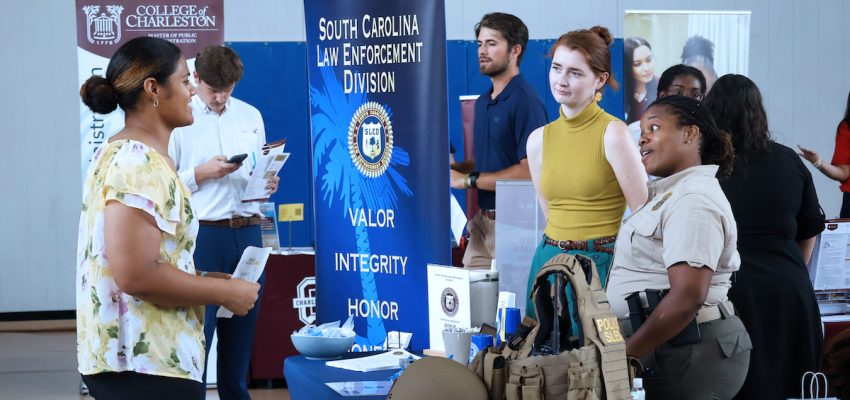

In an era defined by accelerating technological advancement, particularly in the realm of artificial intelligence, the landscape of career development is undergoing a profound transformation. While the traditional pathways to professional success might seem stable, the underlying skills, opportunities, and even the very nature of work are evolving at an unprecedented pace. It is within this dynamic context that events like the recent career and graduate school fair hosted by Presbyterian College assume even greater significance.
These gatherings, often seen as mere logistical checkpoints for students, are in fact crucial crucibles where aspirations meet opportunities, and where the theoretical knowledge gained in academia begins to coalesce with the practical demands of the workforce. For students, it’s a chance to meet prospective employers, explore internship possibilities, and lay the groundwork for their professional journey. But for us, as observers of technological shifts, these events offer a fascinating microcosm of how educational institutions and industries are collectively striving to prepare the next generation for a future that is increasingly powered by intelligent machines and sophisticated algorithms.
Career and Graduate School Fair: A Timeless Bridge to the Future Workforce
The concept of a career and graduate school fair has deep roots, tracing back to the early days of structured recruitment. For decades, these events have served as vital connectors, bridging the gap between academic life and professional pursuit. At its core, the purpose remains consistent: to provide students with direct access to a diverse range of organizations and educational programs, enabling them to make informed decisions about their future. Presbyterian College’s recent fair exemplified this enduring model, offering its students a dedicated platform to engage with employers and graduate program representatives.
Such events offer invaluable benefits that go beyond a mere exchange of resumes. They provide a unique opportunity for students to practice their networking skills, learn about various industries firsthand, and gain insights into the culture and values of potential employers. For many, it’s their first interaction with the corporate or academic world outside the classroom, offering a tangible sense of what lies ahead. Discussions around internships, which often serve as critical stepping stones, are central to these interactions, providing practical experience that complements academic learning. Moreover, for those considering advanced studies, a career and graduate school fair presents a streamlined way to compare programs, understand application requirements, and even connect with faculty members or admissions officers.
However, the modern career fair is not just a replay of its predecessors. It operates within a backdrop where technology has reshaped industries from finance to healthcare, and where AI is poised to redefine virtually every job function. The questions students ask, the skills employers seek, and the very nature of career planning are all subtly, yet profoundly, influenced by this technological revolution. Understanding this shift is paramount for both students attending and institutions organizing these pivotal events.
Navigating an Evolving Landscape: Skills for the AI Era
As an AI specialist, I often emphasize that the advent of artificial intelligence is not about replacing human capabilities entirely, but rather augmenting them. This means the skills valued by employers are shifting. While technical proficiency remains crucial, the emphasis is increasingly placed on uniquely human attributes that complement AI’s analytical power. Therefore, attending a career and graduate school fair today requires students to think strategically about how their skill set aligns with these emerging demands.
One primary area of focus is **data literacy**. With AI systems driven by vast datasets, the ability to understand, interpret, and critically evaluate data is becoming a universal requirement, not just for data scientists. Employers across sectors—from marketing firms to healthcare providers—are seeking candidates who can make data-informed decisions, understand the ethical implications of data use, and communicate insights effectively. This often means having a foundational understanding of statistical concepts, basic programming (like Python for data manipulation), and visualization tools.
Beyond technical skills, the so-called **”soft skills”** are escalating in importance. Creativity, critical thinking, complex problem-solving, and emotional intelligence are now considered paramount. AI excels at repetitive tasks, pattern recognition, and logical deduction. It struggles, however, with nuanced human interaction, innovative conceptualization, and ethical dilemmas that lack clear-cut solutions. Therefore, students who can demonstrate strong communication, collaboration, adaptability, and ethical reasoning will be highly valued. For instance, in a world where AI can draft initial reports, the human skill lies in refining the narrative, injecting empathy, or strategically presenting the information for maximum impact. A student engaging with a recruiter at a career and graduate school fair should be prepared to articulate not just what they know, but how they think and how they interact.
Furthermore, **adaptability and a growth mindset** are more critical than ever. The pace of technological change means that job roles will continue to evolve throughout a person’s career. The willingness to learn new tools, acquire new skills, and embrace continuous professional development is a non-negotiable trait for success in the AI era. Students should use the interactions at a career and graduate school fair not just to find a job, but to identify companies that value and invest in continuous learning.
Beyond the Booth: Leveraging AI and Data for Career Success
It’s not just the skills required by the job market that are changing; the very process of job searching and career development is being transformed by AI. Students today have an arsenal of AI-powered tools at their disposal that can significantly enhance their prospects before, during, and after attending a career and graduate school fair.
Consider the pre-fair preparation: AI can assist in crafting highly optimized resumes and cover letters by analyzing job descriptions and suggesting keywords that resonate with applicant tracking systems (ATS). Tools powered by natural language processing can provide feedback on resume clarity, conciseness, and impact. Similarly, AI-driven platforms can help students practice interview responses, offering real-time feedback on verbal cues, tone, and content, preparing them for the crucial face-to-face interactions at a fair.
During and after the event, AI can help in networking. While shaking hands and exchanging business cards remain vital, AI-powered CRM tools (customer relationship management) or even sophisticated LinkedIn features can help students manage their contacts, track follow-ups, and identify common interests with professionals they meet. This intelligent management of a growing professional network can turn casual connections from a career and graduate school fair into enduring opportunities.
Moreover, understanding how AI is being deployed within industries can help students identify burgeoning career paths. Roles like AI ethicists, prompt engineers, data storytellers, and AI product managers are becoming increasingly common. Even traditional roles in finance, law, or marketing are being redefined by AI tools, requiring professionals who can effectively leverage these technologies. Students who actively seek out companies at a career and graduate school fair that are at the forefront of AI adoption, and who can articulate how they can contribute to an AI-driven environment, will stand out.
In conclusion, the traditional career and graduate school fair, exemplified by Presbyterian College’s recent event, remains an indispensable platform for students to connect with their future. However, its true value in the 21st century lies not just in the connections made, but in how students interpret and apply the insights gained within the broader context of an AI-transformed world. The future workforce demands a blend of deeply human skills – creativity, empathy, critical thinking – amplified by a robust understanding of technology, particularly artificial intelligence.
As André Lacerda, I firmly believe that preparing for tomorrow’s careers means embracing lifelong learning, cultivating adaptability, and strategically integrating AI literacy into every aspect of professional development. The next generation of leaders and innovators will be those who can harness the power of AI as a tool for problem-solving and value creation, rather than viewing it as a mere disruptor. Events like the Presbyterian College career and graduate school fair are not just about finding a job; they are about inspiring and equipping individuals to shape the future.










