
In an era defined by the breathtaking acceleration of technological innovation, where artificial intelligence is not merely a concept but a palpable force reshaping industries and societies, the conversation around education has never been more critical. As an AI specialist and a passionate advocate for technological literacy, I often reflect on the foundational steps required to prepare the next generation for a world that will be profoundly different from the one we inhabit today. It’s not enough to simply react to change; we must proactively cultivate the skills and mindsets that will allow future leaders, innovators, and citizens to thrive. This is precisely why a seemingly modest initiative in Highland, Illinois, approximately 45 minutes east of St. Louis, has captured my attention.
In Highland, a school has embarked on a forward-thinking mission: making basic career and tech skills a required course for all 7th and 8th graders. While the immediate focus might appear to be on practical proficiencies, the underlying significance of this program extends far beyond the classroom walls. It’s a proactive stride towards an **AI-driven education**, a model that understands the imperative of early exposure to technology, not just as a vocational pathway, but as a fundamental component of modern citizenship. This initiative, which also emphasizes giving back to the community, serves as a powerful microcosm of the educational paradigm shift we desperately need globally. It’s a testament to the idea that equipping our youth with the right tools, right now, is the most profound investment we can make in their future and, by extension, in the future of our society.
AI-driven education: Shaping the Workforce of Tomorrow
The phrase ‘basic career and tech skills’ might evoke images of typing classes or rudimentary computer operation from a bygone era. However, in the context of an accelerating technological landscape, especially with the pervasive influence of artificial intelligence, these ‘basic’ skills have evolved into foundational competencies. For 7th and 8th graders in Highland, this likely translates into an immersive experience covering digital literacy, computational thinking, an introduction to coding logic, data fundamentals, and perhaps even an understanding of how algorithms function. These are not merely niche technical proficiencies; they are the new literacy, as essential as reading and writing were in the industrial age.
The imperative for such programs is starkly illuminated by global economic trends. Reports from institutions like the World Economic Forum consistently highlight the burgeoning demand for tech talent and the widening skill gap in areas critical to the digital economy. While AI is poised to automate many routine tasks, it simultaneously creates entirely new categories of jobs that require human oversight, ethical judgment, creative problem-solving, and a deep understanding of technological systems. Early exposure to these concepts, through an **AI-driven education** framework, demystifies technology and cultivates a generation comfortable with iterating, experimenting, and adapting.
Consider computational thinking, for instance. It’s not just about writing code; it’s a problem-solving methodology that involves breaking down complex problems into smaller, manageable parts, recognizing patterns, designing algorithms, and abstracting solutions. These cognitive skills are invaluable across all disciplines, from science and engineering to the humanities and arts. When students learn to think computationally, they are not just preparing for a tech career; they are equipping themselves with a versatile mental toolkit applicable to any future challenge, many of which we cannot yet foresee.
Furthermore, early mandatory courses in technology help democratize access and opportunity. Not every student comes from a background where access to computers or mentors in STEM fields is readily available. By making these skills a required part of the curriculum for all, schools like Highland are ensuring that every child, regardless of socioeconomic status or gender, has the chance to explore their aptitude for technology. This can spark interest in fields where diversity is still lacking, fostering a more inclusive future workforce that mirrors the diversity of our society – a crucial element for developing ethical and unbiased AI systems.
The goal isn’t necessarily to turn every 7th grader into a software engineer or an AI researcher, but to foster digital fluency and a critical understanding of the tools that will shape their lives. It’s about empowering them to be informed users, responsible creators, and active participants in an increasingly digital world, rather than passive consumers of technology. This approach forms the bedrock of a truly effective **AI-driven education** strategy.
Beyond the Classroom: Tech Skills for Community Impact and Ethical AI
What truly elevates the Highland initiative beyond a mere vocational training program is its explicit commitment to “giving back to the community.” This dimension adds a layer of profound importance, transitioning technological education from an individual pursuit to a collective good. When students learn tech skills with a community-centric mindset, they begin to understand technology not just as a tool for personal gain, but as a powerful lever for positive societal change.
Imagine 7th and 8th graders applying their newfound digital design skills to create websites for local small businesses, helping them establish an online presence in a competitive market. Or perhaps, using data analysis techniques to help local non-profits visualize and understand community needs, leading to more targeted interventions. They might even develop simple applications or digital resources to address local challenges, such as improving recycling rates or organizing community events. These real-world applications not only solidify their learning but also instill a sense of civic responsibility and demonstrate the tangible impact of their skills.
This integration of technology with community service also provides a crucial platform for introducing the ethical considerations of AI. As future generations will be the primary users and developers of AI, it is paramount that they understand its societal implications. Discussions around data privacy, algorithmic bias, the potential for job displacement, and the responsible deployment of AI should not be reserved for university-level ethics courses. When students are building or even just interacting with technology, they can be prompted to ask: Who benefits from this? Who might be disadvantaged? Is this solution fair and equitable?
Programs that connect learning to local needs naturally encourage empathy and critical thinking—human skills that AI cannot replicate. These soft skills—collaboration, communication, creativity, and critical thinking—become even more valuable in an AI-powered world. They are the differentiators that will allow humans to work synergistically with AI, leveraging its power while safeguarding human values. By fostering a service-oriented approach to technology, Highland’s program cultivates not just technically proficient individuals, but ethically aware digital citizens prepared for the complexities of an AI-infused future. It’s an example of how **AI-driven education** can extend beyond technical know-how to encompass broader societal responsibility.
The Highland Model: A Blueprint for Future-Proofing Generations
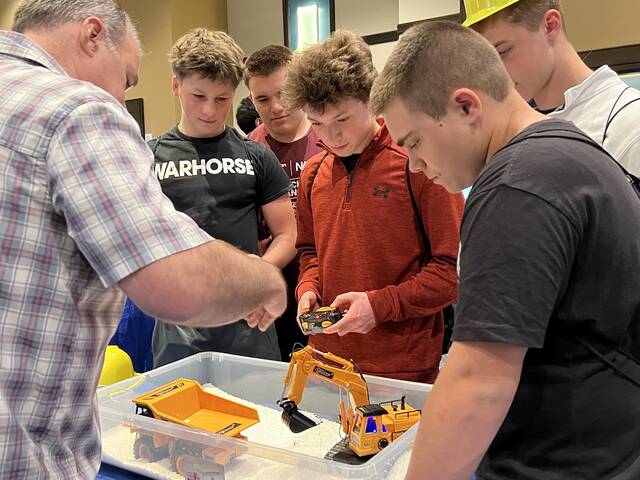
The initiative in Highland, IL, stands out as a pragmatic and prescient model for education in the 21st century. While the details of their specific curriculum are not publicly exhaustive, one can infer a pedagogical approach centered on hands-on learning, project-based assignments, and a blend of hard and soft skills. Instead of abstract theories, students are likely engaged in practical exercises that translate directly into transferable competencies. This might include anything from an introduction to Python or Scratch for basic programming, to design thinking workshops for problem-solving, or even robotics kits that teach engineering principles and teamwork.
The benefits of such an approach are manifold. For students, it makes learning engaging and relevant. The abstract world of technology becomes concrete and accessible. For educators, it offers an opportunity to innovate and connect traditional subjects with modern applications. For the community, it cultivates a homegrown talent pool and encourages local innovation. By making this course mandatory for 7th and 8th graders, Highland is effectively creating a baseline level of tech literacy that will serve as a launchpad for more advanced studies or direct entry into entry-level tech roles later in life.
This model is particularly vital when we consider the speed at which AI is evolving. The jobs of tomorrow are being created today, and many will demand comfort with sophisticated digital tools and analytical thinking. A strong foundation built in middle school means students are better prepared to pursue STEM pathways in high school and college, and ultimately, to contribute meaningfully to an economy increasingly driven by AI and automation. It’s about building resilience and adaptability into their skill sets, making them future-proof against technological disruption.
The Highland example should serve as a blueprint, not just for other schools in the Metro East region, but for educational institutions worldwide. It underscores the necessity of a curriculum that is dynamic, responsive, and forward-looking. Scaling such initiatives requires commitment from school boards, investment in teacher training, and a willingness to step away from outdated educational paradigms. However, the return on this investment, measured in terms of a more capable, engaged, and ethically conscious future generation, is immeasurable. It is a true commitment to **AI-driven education** that prepares students not just for jobs, but for life in a rapidly transforming world.
The strides being made in Highland, IL, offer a powerful lesson: preparing students for an AI-powered future isn’t about teaching them to be subservient to machines, but rather to master the tools, understand the ethics, and harness the potential of artificial intelligence for the betterment of humanity. By embedding essential career and tech skills into the core curriculum for young adolescents, this community is cultivating a generation that is not merely digitally literate but digitally empowered, ready to innovate, create, and contribute meaningfully to their world.
As we navigate the complexities and opportunities presented by AI, it is these foundational programs, embracing a holistic **AI-driven education**, that will ultimately define our collective success. They demonstrate that the future of education lies in proactive engagement with technology, informed by a strong sense of community and ethical responsibility. The torch has been passed to these young learners, and with initiatives like Highland’s, they are being equipped to carry it forward brightly, illuminating a path towards a more intelligent, equitable, and human-centric future.