

In an era defined by rapid technological advancements and evolving economic landscapes, the question of how to prepare a skilled and adaptable workforce has become a global imperative. From silicon valleys to manufacturing hubs, communities worldwide grapple with talent gaps, the rapid obsolescence of certain skills, and the emergence of entirely new job categories. It’s a challenge that demands foresight, collaboration, and decisive action.
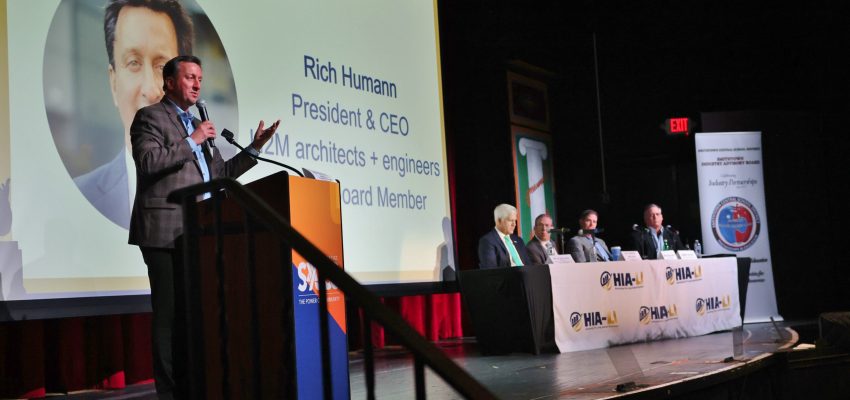
Against this backdrop, Long Island is proactively addressing its future. The recent HIA-LI Workforce Summit brought together a diverse group of leaders from academia, industry, and government to chart a course for strengthening career pathways and aligning educational offerings with the pressing demands of local employers. This gathering, far from being a mere talking shop, represents a critical step in cultivating a resilient local economy and ensuring that the next generation of Long Islanders is equipped to thrive in the jobs of tomorrow, many of which are still being defined by innovations like artificial intelligence.
As an AI specialist and someone deeply invested in the future of work, I find such initiatives incredibly encouraging. They reflect an understanding that building a robust talent pipeline isn’t just about filling current vacancies, but about future-proofing an entire region. Let’s delve deeper into how Long Island is tackling this monumental task and what lessons can be drawn from their strategic approach to human capital development.
Workforce Development: A Global Imperative, A Local Focus
The concept of workforce development is more than just a buzzword; it’s a strategic framework for ensuring that a region’s human capital meets the demands of its economy. On Long Island, this challenge is particularly acute. The region, known for its diverse economic sectors ranging from healthcare and advanced manufacturing to technology and professional services, faces a dynamic labor market. Employers consistently report difficulties in finding candidates with the right mix of technical skills and soft skills—critical thinking, problem-solving, adaptability—that are increasingly essential in a world augmented by artificial intelligence.
The HIA-LI Workforce Summit served as a crucial forum for stakeholders to confront these realities head-on. The HIA-LI, a leading business advocacy organization, played a pivotal role in convening educators, business owners, human resources professionals, and policymakers. Their discussions centered on bridging the persistent gap between what educational institutions teach and what industries actually need. This isn’t a new problem, but its urgency has been amplified by the accelerating pace of technological change. For instance, the demand for data analysts, cybersecurity experts, and AI ethicists has exploded in recent years, often outpacing the supply of qualified graduates.
A key objective of the summit was to foster stronger relationships between Long Island’s vibrant educational ecosystem—including its universities, community colleges, and vocational schools—and its diverse business community. Historically, these two pillars have sometimes operated in silos, leading to curricula that may not fully reflect current industry best practices or future skill requirements. The summit aimed to break down these barriers, creating direct lines of communication and collaboration. This proactive approach to workforce development is vital for Long Island to remain competitive and attractive to both businesses and talented individuals.
Demographic trends also play a significant role. Long Island, like many established regions, faces an aging workforce, meaning a substantial number of experienced professionals will be retiring in the coming decade. This creates both a challenge and an opportunity: a challenge to replace institutional knowledge and expertise, and an opportunity to inject fresh perspectives and new skills into the labor market. Strategic investments in educational pathways and training programs are essential to ensure a continuous pipeline of talent capable of navigating the complexities of modern industry.
The commitment shown by Long Island’s leaders at the summit signals a collective understanding that a strong economy is fundamentally built on a skilled and adaptable workforce. By aligning educational outcomes with employer needs, the region can not only fill current vacancies but also cultivate a dynamic talent pool prepared for the future’s unpredictable demands.
Bridging the Gap: Apprenticeships, Pathways, and the AI Revolution
One of the most effective strategies discussed at the HIA-LI Summit for strengthening career paths and meeting employer needs is the expansion of apprenticeships and other experiential learning pathways. Apprenticeships, long a cornerstone of skilled trades, are experiencing a resurgence and evolution, extending far beyond traditional fields into areas like IT, healthcare, and even creative industries. They offer a powerful model where individuals learn practical skills on the job while simultaneously receiving related technical instruction, often leading to nationally recognized credentials. This ‘earn while you learn’ model is incredibly appealing, reducing student debt and providing a direct route to stable, well-paying careers.
The beauty of apprenticeships lies in their ability to precisely tailor training to specific employer needs. Companies invest in developing their future employees, ensuring they acquire the exact competencies required for their operations. For students, it’s an unparalleled opportunity to gain real-world experience, build professional networks, and often secure employment immediately upon completion. Expanding these programs is a critical component of robust workforce development, particularly for Long Island’s diverse sectors.
Beyond apprenticeships, creating clear and accessible career pathways is paramount. This involves providing students, even at the high school level, with better guidance on potential career options, the educational requirements for those roles, and the various routes to achieve them. Initiatives like early college programs, internships, and mentorship opportunities are vital for demystifying career choices and inspiring students to pursue fields in demand. For instance, exposing students to the exciting applications of AI in healthcare or finance early on could spark an interest in STEM fields they might not have considered otherwise.
And this brings us to the undeniable elephant in the room: the AI revolution. As an AI specialist, I’ve witnessed firsthand how artificial intelligence is not just a technology but a transformative force reshaping every industry. From automating routine tasks to powering complex data analytics and personalizing customer experiences, AI’s impact is profound. This means that Long Island’s workforce development strategies must not only address current skill gaps but also anticipate the competencies required for an AI-augmented future.
What skills will be crucial? Beyond technical proficiency in areas like machine learning and data science, ‘human’ skills become even more valuable. Critical thinking, complex problem-solving, creativity, emotional intelligence, and ethical reasoning are skills that AI currently cannot replicate. Furthermore, understanding how to effectively collaborate with AI—prompt engineering, interpreting AI outputs, and managing AI systems—will become a core competency across many professions. Long Island’s schools and businesses must work together to integrate these future-forward skills into curricula and training programs, ensuring that students and incumbent workers alike are prepared to leverage AI as a powerful tool rather than be displaced by it.
Forging a Future-Ready Long Island: Collaboration and Innovation
The success of Long Island’s ambitious workforce development goals hinges critically on sustained collaboration and a willingness to embrace innovation. The HIA-LI Summit underscored the imperative for a tripartite partnership involving educational institutions, businesses, and local government. Each entity brings unique resources and perspectives to the table, and only by working in concert can a truly comprehensive and responsive strategy be forged.
For educators, this means actively engaging with industry advisory boards, regularly reviewing curriculum to reflect emerging trends, and investing in faculty development to keep pace with technological advancements. It also entails exploring alternative credentials and flexible learning models, such as micro-credentials, bootcamps, and modular online courses, which can provide targeted skills training more rapidly than traditional degree programs. Imagine a scenario where a local manufacturing plant identifies a need for employees skilled in predictive maintenance using AI, and within months, the local community college can launch a specialized, short-term program to meet that demand.
Businesses, in turn, must be active participants, not just consumers, of the talent pipeline. This includes offering internships, apprenticeships, and externships; providing guest lecturers for college courses; donating equipment; and offering valuable insights into future skill requirements. They also have a responsibility to invest in upskilling and reskilling their existing employees, recognizing that continuous learning is no longer a luxury but a necessity in the modern economy. Many forward-thinking companies are already implementing internal AI training programs for their staff, ensuring their human capital remains relevant.
Government agencies play a crucial role in facilitating these connections, providing funding for innovative programs, streamlining regulatory processes for apprenticeships, and conducting labor market analyses to identify emerging trends. They can also create incentives for businesses to engage in **workforce development** initiatives and help promote career opportunities within the region. For example, tax credits for companies that host apprenticeships or grants for schools developing cutting-edge AI-focused curricula could accelerate progress significantly.
The economic impact of a robust workforce development ecosystem cannot be overstated. A highly skilled workforce attracts new businesses, fosters innovation, and increases overall economic productivity. It creates a virtuous cycle where talented individuals are drawn to the region for its opportunities, and businesses choose to locate or expand there due to the availability of skilled labor. This translates into higher wages, greater prosperity, and a stronger tax base for the entire Long Island community.
Looking at other regions, we see successful models that Long Island can emulate. Cities like Pittsburgh, once an industrial powerhouse, have reinvented their economies by focusing on technology and healthcare, largely through aggressive partnerships between universities and industry. Germany’s renowned dual education system, heavily reliant on apprenticeships, serves as a global benchmark for vocational training. Long Island has the foundational elements—strong educational institutions, diverse industries, and engaged leadership—to adapt these lessons and forge its own path to a future-ready workforce.
A Future Forged Together
The HIA-LI Workforce Summit represents more than just a gathering; it signifies Long Island’s proactive commitment to shaping its economic destiny. In a world where change is the only constant, particularly with the accelerating pace of AI innovation, the ability to adapt and equip a **workforce development** program with relevant skills is paramount. By strengthening career pathways, expanding apprenticeship opportunities, and fostering unprecedented collaboration between schools, businesses, and government, Long Island is laying a solid foundation for sustainable growth and prosperity.
As we navigate the complexities of the 21st century, the human element remains at the core of all progress. Investing in our people—their education, their skills, and their future—is the smartest investment any community can make. Long Island’s dedication to this principle ensures that its residents will not only be prepared for the jobs of tomorrow but will be at the forefront of creating them, contributing to a vibrant and innovative regional economy for generations to come.










